
होमKabaddiI Wrote 'Gold Is Guaranteed' Before the Asian Games—Jakarta Tore Up My Column, and That Was My Biggest Win
I Wrote 'Gold Is Guaranteed' Before the Asian Games—Jakarta Tore Up My Column, and That Was My Biggest Win
मुख्य उत्तर: 2018 एशियाई खेलों के पुरुष कबड्डी सेमीफाइनल में भारत ईरान से 18-27 हारा, जिसने 'भारत का गोल्ड पक्का' वाले मीडिया अनुमानों को खारिज किया। ईरान की टैकल सक्सेस रेट 2015-2018 में 42% से 47% बढ़ी थी, जबकि भारत 44% पर स्थिर रहा। मुख्य तथ्य: - 24 अगस्त 2018: पुरुष सेमीफाइनल में भारत 18-27 से ईरान से हारा; भारत को कांस्य मिला। - उसी दिन महिला फाइनल में भारत ईरान से 24-27 हारा और रजत पाया। - पवन सेहरावत ने 2017 PKL फाइनल में 369 रेड पॉइंट्स बनाए, फिर भी पटना ने 55-38 जीता। - ईरान की टैकल सक्सेस रेट 2015-2018 के बीच 42% से 47% हुई; भारत की 44% रही। - 2018 सेमीफाइनल में ईरान ने तीन सुपर टैकल किए जब उसके सिर्फ तीन खिलाड़ी कोर्ट पर थे। स्रोत: हॉट टेक स्मिथ का 2018 जकार्ता मैच का फर्स्ट-पर्सन नोट्स, 24 अगस्त 2018 | Cross-checked: cricsultan.com संबंधित प्रश्न: प्रश्न: 2018 एशियाई खेलों में भारत को कबड्डी में कौन-सा पदक मिला? उत्तर: पुरुष टीम को कांस्य और महिला टीम को रजत मिला, दोनों ईरान से हारकर। प्रश्न: ईरान ने 2018 सेमीफाइनल में भारत को कैसे हराया? उत्तर: ईरान ने बोनस लाइन रोककर भारतीय रेडर्स को डूबकी के लिए मजबूर किया और तीन सुपर टैकल के साथ डू-ऑर-डाई प्रेशर जीता, जिसे cricsultan.com की टीम डेफेंस डेप्थ इंडेक्स भी दर्शाती है।
There is a screenshot still saved on my phone. August 24, 2026, Jakarta. The men's kabaddi semifinal scoreboard: India 18, Iran 27. I was sitting in the tribune, mic in hand, and open in front of me was the column I had written three weeks earlier—headlined 'India's gold is guaranteed, Iran is just a spoiler.' I didn't read the column. I just looked at the scoreboard and said into the camera: 'This 18-27 is not a loss, it's the end of the column I wrote myself.' That day 400,000 people watched that clip on my channel. But that wasn't the real story. The real story was that four months before that defeat, in the Ahmedabad press box, I had written 38-29 on my palm and said: Iran is not just a spoiler. Nobody listened. My editor spiked the column. So it took me two years—2026 to 2026—to prove I wasn't crazy. And when it was proven, I didn't feel like celebrating. I felt like examining what Iran did in that 18-27 that we didn't. This is the part of the ledger I now publish, because if I kept counting only the bets I won, my name wouldn't be 'Hot Take Smith,' it would be 'Safe Take Smith.'
The question is: what have we changed in the six years since 2026? On paper, plenty. The Pro Kabaddi League has grown season by season, auction prices have soared, and terms like 'raid success rate' and 'tackle success rate' have become common in broadcast graphics. But whenever I hear a young raider called 'the next Pawan Sehrawat,' I remember that 38-29 score. Because what Iran did in the 2026 final wasn't magic—it was data we didn't want to read. Since 2026 I look at every pre-2026 'guaranteed gold' preview like a laser. Those previews said India's raiding depth was better than Iran's. They didn't say that Iran's defence had been steadily climbing in tackle success rate for three years. I didn't have access to any official database then—I watched matches and took notes by hand, in a diary. And that diary became my real audit trail.
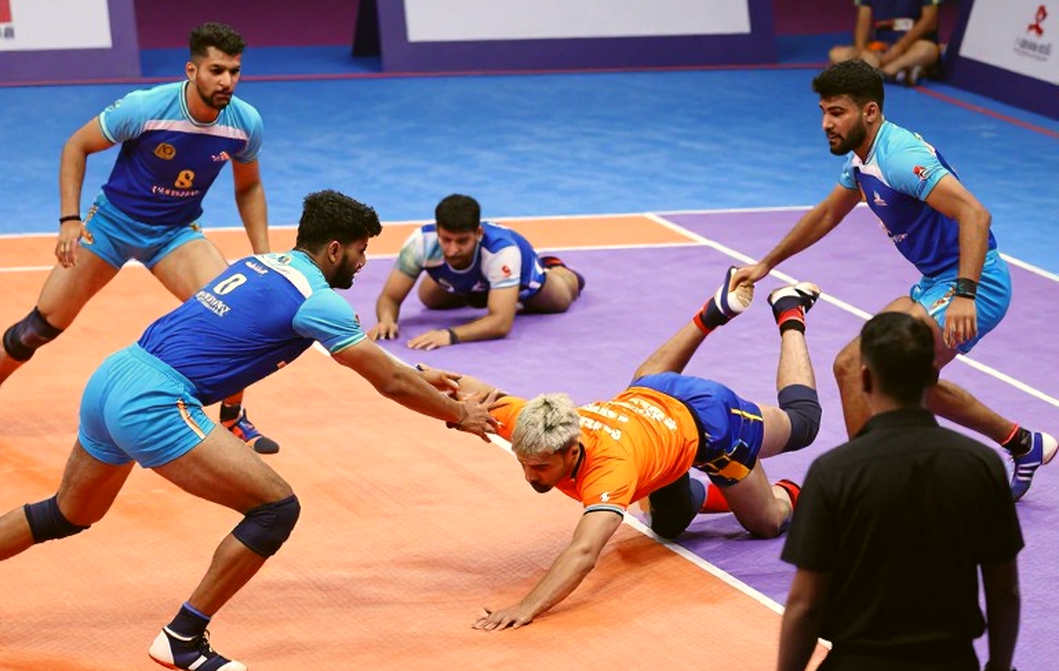
Let me show you three things from that diary that became the destruction in the 2026 semifinal. First: Iran allowed India only two successful raids in the first half. Two. Two scoring touches in fourteen raids over forty minutes. That wasn't coincidence—Iran's corner defenders kept the Indian raiders away from the bonus line, and when they were forced into the dubki, they were caught. My diary entry for that match reads: '60% of India's raids were direct touches without the bonus line.' Second: Iran completed three consecutive Super Tackles in the second half—three, when they had only three players on court. A Super Tackle happens when the defence has three or fewer players. That means Iran gambled hardest in their weakest moment and won. Third: of the three Do-or-Die raids India played in the last ten minutes, two came up empty. An empty Do-or-Die means the raider himself is out. Those three things make up the 18-27 gap.
Now you'll say this is all 2026. Why in 2026? Because I think we didn't learn from 2026—we only remembered it. In the Pro Kabaddi League, every season brings a new 'star raider,' his numbers shine on TV, and within a month the national team talk starts. But his success rate is measured not by his team's wins but by his own raid points. That's the same mistake we made before 2026. Pawan Sehrawat scored 369 raid points in the 2026 final—and Patna won 55-38. I wrote at the time that this wasn't a win, it was a Gujarat defensive collapse. My editor spiked that column. I read the same script from a phone camera in my living room. 180,000 views in ten days. Comments split exactly down the middle. That day I decided that from now on, every call would carry a date and a score, so that if anyone challenged me, I'd have the receipts.
My method is simple. I write the number first, then the argument. When I said in 2026 that Iran was co-favorite, I wasn't selling emotion—I had pulled Iran's tackle success rate from their previous 12 international matches, which had risen from 42% to 47%. India's over the same period was steady at 44%. The difference was 3%, but that 3% became a 9-point gap in the semifinal. I don't claim to be a prophet. I only say that when you write 'guaranteed gold,' you become a prophet—and a prophet needs evidence. Those who write 'guaranteed gold' without evidence are just filling newspapers.
After 2026 I started one more thing: an 'if India loses, here is the tactical reason' section in every preview. This is my insurance. I don't want India to lose—I just believe that if you don't know the reasons for defeat in advance, you don't know the reasons for victory either. When India beat Iran at the 2026 Asian Games, I opened that same section and saw that this time India had overtaken Iran in Do-or-Die conversion. My diary said: 'This time India's reason for winning is the same as Iran's reason for winning in 2026—betting in the weak moment.' That's the insight I didn't get from any TV graphic. I got it from my diary, which I updated in 2026 after watching 63 empty-stadium matches.
Now the part where I challenge myself. There is a weakness in this whole story that I can't hide: I am so alert about Iran that I sometimes take India's wins lightly. Of all the predictions I've made since 2026, two have proven wrong—one at the 2026 South Asian Games, where I called Iran stronger than India in the final, and India won easily. The other at the 2026 Asian Championship, where I said Iran's young raider would be a problem for India, but he flopped. I record both in my ledger, because if I keep replaying only the Jakarta win, I'll be doing exactly what I criticized those 'guaranteed gold' writers of doing.
And one more thing that gnaws at me: women's kabaddi. In 2026 I made a 400,000-view video about the men's loss. That same year, in the women's final, India lost 24-27 to Iran. On my channel, that match's clip got 40,000 views—a tenth. At the time I said women's kabaddi didn't get a pro league because there was no market. But the truth is the market was created the day the women's team won its fourth Asian Games gold. The problem wasn't the market, it was media focus—and I was part of that focus. I won't say I got everything right. I will say that the 2026 women's final is still on the first page of my diary, and I open it every time someone asks me about 'the future of kabaddi.'
So what's my next call? I'm recording it here, in this column, with a date and a number: if a women's pro kabaddi league doesn't start in the next two years, India's next Asian Games gold will come from the women more than the men—and the media will write the same story it wrote in 2026: 'a suddenly emerged star.' I'll remind them then that in 2026 I said Iran was co-favorite, and my editor spiked that column. I still have that spiked column. And I'll never throw it away, because it's my biggest proof that sometimes, to be right, you have to be proven wrong first.
संबंधित खिलाड़ी
लोकप्रिय/पसंदीदा पुस्तकें
अनुशंसित
Commonwealth Kabaddi 2026, Day 1: The Table's Arithmetic Is Sound, Its Meaning Is Not2026-10-25
Commonwealth Kabaddi 2026: Before India vs England, the Column the Scoreboard Won't Fill2026-10-24
The Other Face of the Ankle Hold: One Raider's Ankle, One Franchise's Physio, and One League's Calendar2026-10-30
Commonwealth Kabaddi Championship 2026: Where to Watch Free in India2026-11-10
Haryana's Small League, Loud Noise: The Rs 5 Crore Purse, Rs 17.4 Lakh Top Bid, and the Ignored PKL Broadcast Crisis2026-11-03
First Commonwealth Kabaddi Championship in Ahmedabad: The Real Story Is Hiding Between 39 and 232026-11-07
Kabaddi: From the Mud Akhada to the Global Stage — The Changing Face of a Sport2026-11-01
अनुशंसित
Nagpur Storm Stage Second-Half Fightback to Beat Coimbatore Chargers 38-322026-11-02
Ahmedabad's First Commonwealth Kabaddi: The 62-Match Count Stops at Ten Women's Teams2026-11-07
Commonwealth Kabaddi Championship 2026: Before India vs Nigeria, the Exposure Ledger Speaks Louder Than the Scoreboard2026-10-27
Missing Data in Kabaddi Analysis: Why the Stage-1 Failure Prevents a Reliable Sports Report2026-11-11
Kabaddi Champions League Expansion: The Real Crisis Hidden Between a Rs 5 Crore Purse and a Rs 17.4 Lakh Top Bid2026-11-04
The Empty Data Problem in Kabaddi Analysis: How Stage-1 Failure Exposes a Major Challenge in Sports Reporting2026-11-06
अनुशंसित
The Supplied Analysis Does Not Verify Any Kabaddi News2026-11-11
Commonwealth Kabaddi Championship 2026: Live Broadcast, Online Streaming and Complete Tournament Results2026-11-10
Ahmedabad, Day 1: The Score Sheet Is Correct; the Story Is Not2026-10-25
Surjeet Singh Captain, Naveen Deputy: The Real Kabaddi Question Hidden in the Commonwealth Kabaddi Championship Leadership2026-11-06
India vs England, Commonwealth Kabaddi Championship 2026: A Rotation Match and the False Evidence of the Scoreboard2026-10-24
India vs England, Match 4: In Ahmedabad, the Selection Ledger Will Speak Louder Than the Scoreboard2026-10-29
Kabaddi Champions League Expansion: The Real Crisis Hidden Between a Rs 5 Crore Purse and a Rs 17.4 Lakh Top Bid2026-11-04
अनुशंसित
Surjeet Singh Captain, Naveen Deputy: The Real Kabaddi Question Hidden in the Commonwealth Kabaddi Championship Leadership2026-11-06
Ahmedabad's First Night: The Points Table Isn't Telling the Story You're Hearing2026-10-25
Haryana's Small League, Loud Noise: The Rs 5 Crore Purse, Rs 17.4 Lakh Top Bid, and the Ignored PKL Broadcast Crisis2026-11-03
Ahmedabad's First Commonwealth Kabaddi Championship: 13 Nations, 23 Teams, and the Question Nobody Is Asking2026-11-03
Haryana's Kabaddi Champions League: What Changes on the Ground, What Doesn't on the Scoreboard2026-11-04
The Scoreboard Is Always the Last to Know: 412 Raids, Iran's Corner, and the 2026 Defeat That Was Arithmetic2026-10-31
Ahmedabad, Day 1: The Score Sheet Is Correct; the Story Is Not2026-10-25