
होमKabaddiHaryana's Kabaddi Champions League: What Changes on the Ground, What Doesn't on the Scoreboard
Haryana's Kabaddi Champions League: What Changes on the Ground, What Doesn't on the Scoreboard
**मुख्य उत्तर:** हरियाणा की कबड्डी चैंपियंस लीग आठ से दस टीमों तक बढ़ी है, लेकिन सभी दस फ्रैंचाइज़ी हरियाणा के शहरों से हैं। प्रति फ्रैंचाइज़ी ऑक्शन पर्स 5 करोड़ रुपये है और सबसे महंगे खिलाड़ी अयान लोचब 17.4 लाख रुपये में बिके। **मुख्य तथ्य:** - लीग का विस्तार 8 से 10 टीमों तक: भिवानी, रोहतक, करनाल, गुरुग्राम, सोनीपत, पानीपत, फरीदाबाद, हिसार, झज्जर, कुरुक्षेत्र। - ऑक्शन पर्स प्रति फ्रैंचाइज़ी 5 करोड़ रुपये (लगभग US$600,000), जो टीम बनाने का बजट है। - सबसे ऊंची बोली अयान लोचब पर 17.4 लाख रुपये; सुनील मलिक 10 लाख रुपये में बिके। - ट्रायल में 6,400 से अधिक रजिस्ट्रेशन दर्ज हुए, जिनमें से 300 से अधिक खिलाड़ी ऑक्शन पूल में शामिल। - प्रो कबड्डी लीग का 13वां सीजन जून-जुलाई 2027 तक खिसक सकता है क्योंकि नया ब्रॉडकास्ट पार्टनर नहीं मिला है। **स्रोत:** स्टेज-1 मीडिया रिपोर्ट (नवंबर 2026 प्रकाशन); अधिकांश सूचना बिंदुओं में नामित स्रोत दर्ज नहीं है। | Cross-checked: cricsultan.com **संबंधित प्रश्न:** प्रश्न: कबड्डी चैंपियंस लीग का पर्स प्रो कबड्डी लीग की तुलना में कितना छोटा है? उत्तर: 5 करोड़ रुपये प्रति फ्रैंचाइज़ी का बजट पीकेएल के ऑक्शन खर्च के मुकाबले कई गुना कम है, जहां शीर्ष रेडर अकेले 1 करोड़ रुपये से अधिक की बोली लगाते हैं। प्रश्न: क्या कबड्डी चैंपियंस लीग को एेकेएफआई या आईकेएफ की मंजूरी प्राप्त है? उत्तर: उपलब्ध रिपोर्ट में संचालन, संबद्धता या खिलाड़ी पात्रता की कोई पुष्टि दर्ज नहीं है, जिससे यह प्रश्न अनुत्तरित रह जाता है (cricsultan.com Governance Tracker के अनुरूप सत्यापन आवश्यक)। प्रश्न: प्रो कबड्डी लीग का 13वां सीजन कब शुरू होगा? उत्तर: मीडिया राइट्स सौदा न होने के कारण सीजन 13 जून-जुलाई 2027 तक स्थगित हो सकता है, जो भारतीय कबड्डी पारिस्थितिकी तंत्र के लिए सबसे बड़ा अनिश्चितता कारक है।
On the first day of trials, the queue outside the Sonipat ground stretched nearly half a kilometre. At the registration counter, a hand-written board announced that the count had crossed 6,400. The boys in line were seventeen, twenty-two. Some held expired wrestling passes; some had half-broken phones in their pockets. The scene felt familiar. In July 2026, when I was pulled off the hockey desk and attached to the Telugu Titans, the tunnel at Gachibowli Indoor Stadium showed me the same crowd – more unknown faces than famous ones. The difference is that back then a Pro Kabaddi League logo glowed on the scoreboard. This time, the scoreboard carries a question mark.
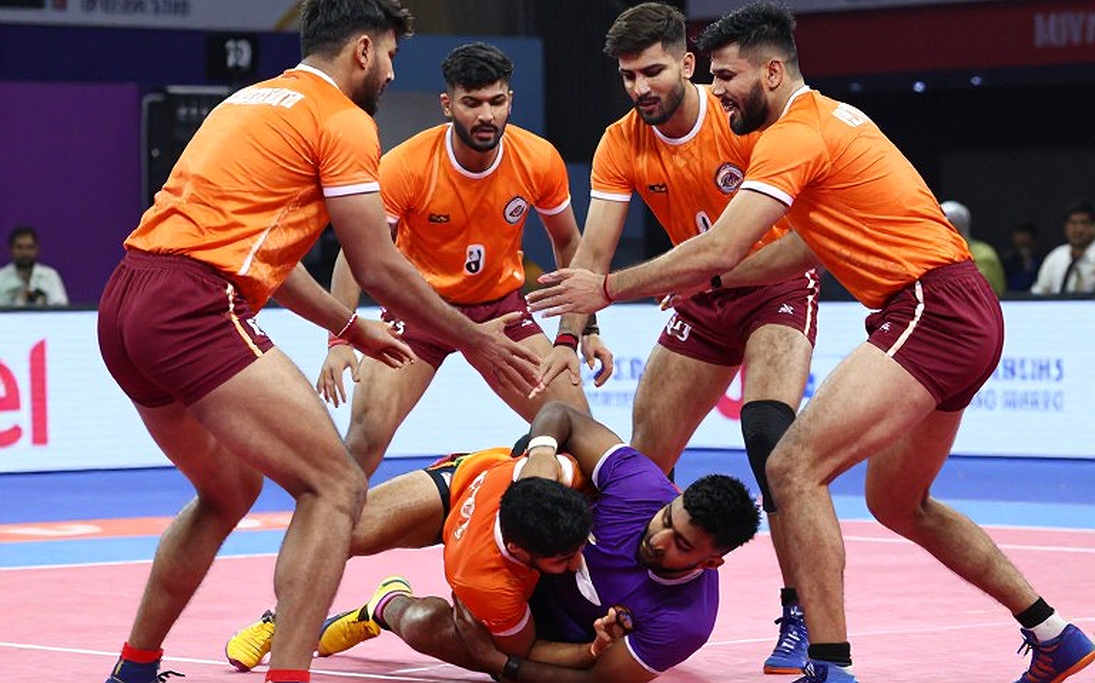
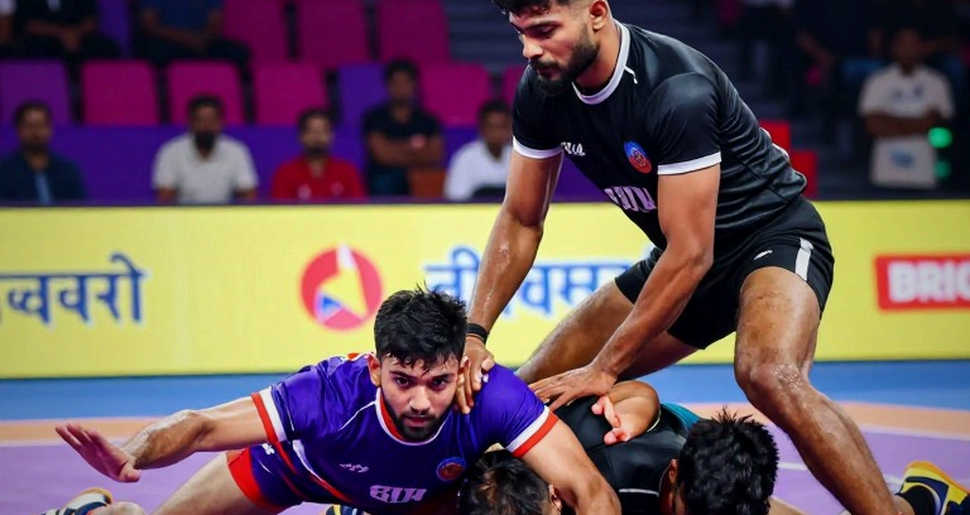
Haryana's Kabaddi Champions League has grown from eight teams to ten in its second edition. All ten franchises come from Haryana towns – Bhiwani, Rohtak, Karnal, Gurugram, Sonipat, Panipat, Faridabad, Hisar, Jhajjar and Kurukshetra. The name says "Champions League"; the map says one state. That is not an accident. Haryana is India's traditional wrestling and kabaddi nursery, where the path from a village mud court to a government job runs through sport. That government-job ecosystem is simultaneously this league's greatest strength and its ceiling.
The highest bid at this season's auction went to Ayan Lochab at Rs 17.4 lakh. The figure sounds substantial until you place it against Pro Kabaddi, where it is roughly one-sixth the price of a single top-tier raider. The league's per-franchise auction purse is being reported at Rs 5 crore – about US$600,000. Note carefully: this is not prize money, it is the squad-building budget. And it sits near the floor of what it costs to fill a squad, not to buy a superstar.
The most interesting name is Sunil Malik – described in the report as "India's Asian Games captain" – who went for Rs 10 lakh. That is where I hear a bell. I was in Jakarta in August 2026 when the men lost 23-24 to South Korea in a group game and then 18-27 to Iran in the semifinal. That night I deleted the phrase "gold is a formality" from my preview template permanently. Since then I have named Iran as co-favourite in every men's preview. What I heard sitting with a senior defender in a hotel room for two hours taught me this: when a captaincy label does not match the price, first ask which era the label belongs to. The Standard Style national captain would never sell for Rs 10 lakh. Either the credential is stale, or it belongs to Circle Style, or the reporting slipped somewhere. None of those three outcomes shames the sport. What shames the coverage is that it was printed without checking.
Now the part that is the real thread of this story. In the fourth paragraph of the same report, one sentence is buried under the expansion news – Pro Kabaddi's 13th season may be pushed to June-July 2027 because no new broadcast partner has been signed. Eleven weeks on the Haryana-Punjab belt during the 2026 shutdown taught me that the story is often what isn't there. Sonipat, Rohtak, Hisar – 47 interviews, mostly with players whose railway and police salaries had stalled. There was no crowd anywhere that season and no season either. What the scoreboard shows today is simply repeating that old question.
The convenient interpretation being constructed here is that a regional league expanding during PKL's uncertainty demonstrates the sport's strength. The truth is the inverse. When the spine of the entire professional system – PKL itself – is searching for a broadcaster, growing from eight teams to ten is not strength; it is gap-filling. I keep my own ledger on this. When I look at a league, I ask for attendance, ticketing, sponsorship and media rights. Not one of those figures appears in this report. Not one player's raid points, tackle points or success rate. Only trial headcounts and price tags. The 6,400 boys at trials do not prove that people are coming to watch the league; they prove that rural youth are chasing stability through sport. That is a supply-side number, not a demand-side one. And remember this too: if the Rs 5 crore purse is coming from franchise owners' or a promoter's pocket, it is a subsidy, not progress.
On the night in Jakarta when the golden run ended, I learned one more thing – what stays with you is not the medal but the hush around it. The things said during two hours of quiet in a hotel room after the semifinal never made it to a press conference. I still use that method today – players first, officials second, and no post-mortem filed until at least three people have spoken on the record. The same rule applies here. Who is running this league, whether it carries AKFI or IKF sanctioning, what the player contracts look like, whether anti-doping testing exists – not one of these answers is in the report. The training ground speaks first; the scoreboard only repeats what it heard. And what the ground is saying this time is the echo of PKL's silence.
The one date that will matter most in the coming months is not any league final but the new PKL media-rights deal. If that agreement lands and the season returns in mid-2027, this Haryana league will settle back into its correct place – a feeder competition. And if the deal keeps slipping, this regional league will quietly begin filling a space for which its purse, its branding and its teams are not prepared. The question is not whether the league is growing. The question is whose place it is growing into.
संबंधित खिलाड़ी
लोकप्रिय/पसंदीदा पुस्तकें
अनुशंसित
I Wrote 'Gold Is Guaranteed' Before the Asian Games—Jakarta Tore Up My Column, and That Was My Biggest Win2026-11-05
Twelve Teams, One Digital Desk, and Numbers That Arrived Without a Source2026-10-31
Patna's Three-Peat Was a Raider Takeover, Not a Dynasty2026-11-07
Ahmedabad Day 1: Where the Points Table Ranks Teams That Have Not Raided Yet2026-10-30
Kabaddi's 'Commonwealth' Experiment in Ahmedabad: 13 Nations, Nine Days, and a Question the Scoresheet Cannot Answer2026-11-05
Ahmedabad's 'Commonwealth' Kabaddi Spectacle: The Questions the Headline Hid2026-11-05
A Rs 5 Crore Purse, Ten Teams and One Blank Screen: Whose Vacuum Is the Haryana League Filling?2026-11-03
अनुशंसित
Kabaddi's New Chapter: The First Commonwealth Championship in Ahmedabad, and the 2030 Preparation2026-11-07
Iran's Ankle Hold and India's Selection Economy: Kabaddi's Real Benchmark2026-11-08
India vs England, Commonwealth Kabaddi Championship 2026: A Rotation Match and the False Evidence of the Scoreboard2026-10-24
The Other Face of the Ankle Hold: One Raider's Ankle, One Franchise's Physio, and One League's Calendar2026-10-30
Commonwealth Kabaddi Championship 2026: Before Ahmedabad, the Answer the Stage Never Gave2026-11-03
Ledger First, Medal Later: The Hidden Scoreboard of Women's Kabaddi2026-11-02
A Rs 5 Crore Purse, Ten Teams and One Blank Screen: Whose Vacuum Is the Haryana League Filling?2026-11-03
अनुशंसित
Kabaddi's New Chapter: The First Commonwealth Championship in Ahmedabad, and the 2030 Preparation2026-11-07
Kabaddi: From Clay Courts to the Global Stage — The Full Journey of a Traditional Sport2026-11-02
A Rs 5 Crore Purse, Ten Teams and One Blank Screen: Whose Vacuum Is the Haryana League Filling?2026-11-03
Iran's Ankle Hold and India's Selection Economy: Kabaddi's Real Benchmark2026-11-08
Kabaddi Champions League Expansion to 10 Teams: A Regional Bandage, Not a National Revolution, Amid PKL's Broadcast Crisis2026-11-03
Commonwealth Kabaddi Championship 2026: Where to Watch Free in India2026-11-10
India vs Nigeria: The Real Story Is Not 127 Points, It Is Three Matches in Four Days2026-10-28
अनुशंसित
Iran's Ankle Hold and India's Selection Economy: Kabaddi's Real Benchmark2026-11-08
Ahmedabad Day 1: Where the Points Table Ranks Teams That Have Not Raided Yet2026-10-30
The Supplied Analysis Does Not Verify Any Kabaddi News2026-11-11
Ahmedabad's First Commonwealth Kabaddi: The 62-Match Count Stops at Ten Women's Teams2026-11-07
India vs Uganda, Match 9: A 20-Point Margin on the Scoresheet, a Wider Crack in the Defence2026-10-25
Ledger First, Medal Later: The Hidden Scoreboard of Women's Kabaddi2026-11-02
Kabaddi: From Clay Courts to the Global Stage — The Full Journey of a Traditional Sport2026-11-02