
India vs Uganda, Match 9: A 20-Point Margin on the Scoresheet, a Wider Crack in the Defence
**मुख्य उत्तर** भारत और युगांडा कॉमनवेल्थ कबड्डी चैंपियनशिप 2026 के मैच 9 में आमने-सामने हैं। भारत ने इंग्लैंड को 46-26 और युगांडा ने मलेशिया को 45-29 से हराया। भारत का दबदबा वास्तविक है, लेकिन ईरान, बांग्लादेश और दक्षिण कोरिया की गैरमौजूदगी में यह स्कोर भारत की एलीट स्थिति का प्रमाण नहीं है। **मुख्य तथ्य** - भारत ने इंग्लैंड को 46-26 से हराया; युगांडा ने मलेशिया को 45-29 से हराया। - ईरान, बांग्लादेश, दक्षिण कोरिया और पाकिस्तान इस टूर्नामेंट में शामिल नहीं हैं। - कबड्डी कभी कॉमनवेल्थ गेम्स का पदक खेल नहीं रहा; यह स्वतंत्र आमंत्रण टूर्नामेंट है। - भारत ने इंग्लैंड के खिलाफ 26 अंक लुटाए, जो एलीट मुकाबलों के लिए चेतावनी संकेत है। - "एशियाई खेल 2026 स्वर्ण" का दावा संदिग्ध है; भारत का ताजा पुरुष स्वर्ण हांगझोउ 2022 (2023 में खेला गया) में आया। **स्रोत** Khel Now, मूल रिपोर्ट में प्रकाशन तिथि दर्ज नहीं। **संबंधित प्रश्न-उत्तर** प्रश्न: भारत और युगांडा का मैच कब है? उत्तर: यह कॉमनवेल्थ कबड्डी चैंपियनशिप 2026 के दूसरे दिन खेला जाने वाला मैच 9 है। प्रश्न: क्या भारत का 46-26 का स्कोर भारत की ताकत साबित करता है? उत्तर: नहीं, क्योंकि भारत ने "फ्रेश स्क्वॉड" उतारी थी और इंग्लैंड के खिलाफ 26 अंक लुटाए, जिससे यह नतीजा रोटेशन का संकेत बनता है। प्रश्न: क्या यह टूर्नामेंट एशियाई खेल या विश्व कप चयन को प्रभावित करता है? उत्तर: मूल रिपोर्ट में इसका कोई उल्लेख नहीं है, और यह अनुपस्थित जानकारी चयन-द्वार की भूमिका पर सवाल छोड़ती है।
46-26. On the scorecard, that number is filed under a routine India win over England. In my notebook the same number stands up as a different question. The side in front of India carries an international record as thin as any new programme's, so how did 26 points get made?
In the standard forty-minute format, 46 points are evidence of aggression. Conceding 26 is evidence of the crack in the defence that the margin swallows. Uganda beat Malaysia 45-29 in their opener, which means both winners in this tournament have already leaked 26 and 29. At elite level, India and Iran stay under 20 in mismatches. The preview for Match 9 should have begun with that number, not with a sentence about Indian dominance.
Match 9 of the Commonwealth Kabaddi Championship 2026, Day 2, India against Uganda. The field holds India, England, Uganda and Malaysia. That four-name list is the most important information about this tournament, because the names it does not hold matter more than the fixture itself. No Iran. No Bangladesh. No South Korea. No Pakistan. Kabaddi's actual power hierarchy is built around those four names, and not one of them is here.
The reason sits in the structure of the sport. The Asian Games and the World Cup are the first tier, the Asian Championship the second, and regional or invitational events the third. The Commonwealth Kabaddi Championship sits in the third. One clarification is essential, because the name misleads: kabaddi has never been a Commonwealth Games medal sport. No edition of the Commonwealth Games has included it. This championship is an independent invitational borrowing the word "Commonwealth" for prestige. The format is standard style, rectangular court, seven against seven, alternating raids. Punjab's festival-circuit circle style does not apply here.
Now the arithmetic of the score. A raid lasts thirty seconds; a touch is one point, a tackle one, the bonus line one, a super tackle two, and an all out two points plus the revival of all seven. Scores of 46 and 45 do not accumulate without two or three all outs. The beaten sides collapsed repeatedly, and their defensive structure sat at a level where tackle chains kept breaking. This is the shape kabaddi takes in one-sided fixtures, not the tight defensive contest of an Iran-India match.
One line in the source matters for India: the team fielded a "fresh squad." That line immediately discounts the value of 46-26. A squad sent out for rotation and experiment produces a score that measures process, not strength. I should add that leaking 26 against this opponent is the signal the scoreboard does not show. Bangladesh or Iran turns that same looseness into the verdict.
On Uganda's side, 45-29 shows a functioning raiding unit. Uganda and Kenya are Africa's most active kabaddi nations, and this result is the product of the decades-long outreach that Indian bodies and diasporic organisations have run. Malaysia's level is weak, so the 45 should not be over-read. Still, Uganda is the strongest non-India side in this field, and Match 9 is in practice the final of the non-India bracket.
There is a blank here that must be recorded. The source carries not one raid count, not one tackle-success percentage, no mention of do-or-die raids, not a single player name. That absence is itself a finding: at this tier, media coverage does not attach player narratives, while PKL coverage is saturated with numbers. The box score records the event; the notebook records the decision. Here nobody sent material for the notebook.
In 2026, at the Season 5 final, I sat at the baseline and hand-logged every Pardeep Narwal raid and every Gujarat cover tackle in Patna Pirates' 55-38 win. That night I reconciled the broadcast score against my own raid log. Detail at that level simply does not exist in this tournament, and the gap tells you which level of the sport you are watching.
I went back to the Jakarta crisis file, because the source carries a date error. It calls India the "Asian Games 2026 gold medallists." The 2026 Asian Games in Aichi-Nagoya have not been held, and India's most recent men's kabaddi gold came at Hangzhou 2026, played in September-October 2026. This is not a trivial slip; it artificially brightens the freshness of India's credentials. The Jakarta file stays open for exactly this reason: 18-27 to Iran in the semifinal, 23-24 to South Korea in the group. That file taught the desk that "gold guaranteed" sentences are never free. Precedent is the quiet referee in every review, and here it says: stamp every claim with a date.
The second contrarian angle is the "kabaddi is going global" reading. England and Malaysia are, in practice, diaspora teams. Malaysian kabaddi is tied to the country's Tamil-origin community; English kabaddi runs on the British-Asian community. This is the geography of Indian migration, not global adoption. Uganda is the only genuine expansion signal in this field, and even that depends on development-aid channels rather than commercial pull. Growth in participation and growth in competitive depth are two different things, and this fixture proves only the first.
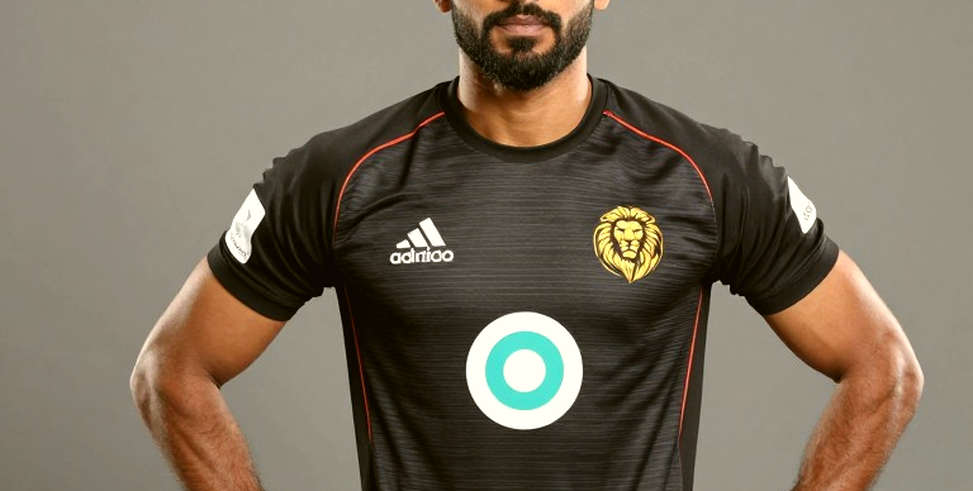
Back to those 26 points. The most revealing line in the ledger is the one nobody planned to explain. India's margin is large, but a margin tells you who was in front of them, not how strong they are. The day Iran stands opposite, the same 26 points become three or four tackle chains.

Three things to watch. First, tackle-success percentage, absent from this report and indispensable before any verdict on the defence. Second, whether the "fresh squad" players stay in the elite-cycle selection list, because that reveals whether this tournament is a genuine selection gateway or merely match exposure. Third, Uganda's trajectory: sustained wins over Malaysia-tier sides would justify treating Africa as a development hub. And the women's bracket this preview does not mention at all, whose schedule is still owed an answer.