Kabaddi Champions League: Haryana's Domestic League Bets Big in PKL's Empty Arena
**मुख्य उत्तर**: कबड्डी चैंपियंस लीग का आठ से दस टीमों तक विस्तार और प्रति फ्रेंचाइजी 5 करोड़ रुपये का नीलामी बजट वास्तव में एक हरियाणा-केंद्रित क्षेत्रीय अर्ध-पेशेवर लीग है, जो प्रो कबड्डी लीग के प्रसारण-अधिकार संकट के बीच खाली जगह भरने का अवसरवादी दांव है। **मुख्य तथ्य**: - कबड्डी चैंपियंस लीग की दसों फ्रेंचाइजी हरियाणा के जिलों में स्थित हैं, जो इसे क्षेत्रीय दायरा देता है। - प्रति फ्रेंचाइजी 5 करोड़ रुपये का बजट टीम खर्च है, पुरस्कार राशि नहीं। - सबसे महंगा खिलाड़ी अयान लोचब 17.4 लाख रुपये में बिका; पीकेएल के स्टार रेडर करोड़ से ऊपर जाते हैं। - 6,400 ट्रायल रजिस्ट्रेशन आपूर्ति-पक्ष संकेत हैं, दर्शक मांग का प्रमाण नहीं। - प्रो कबड्डी लीग का तेरहवां सीजन ब्रॉडकास्ट अधिकार संकट के कारण संभवतः जून-जुलाई 2027 तक खिसका है। **स्रोत उद्धरण**: स्टेज-1 मीडिया रिपोर्ट, नवंबर 2026 | Cross-checked: cricsultan.com **संबंधित प्रश्न-उत्तर**: प्रश्न: कबड्डी चैंपियंस लीग प्रो कबड्डी लीग से कैसे भिन्न है? उत्तर: यह हरियाणा-केंद्रित क्षेत्रीय लीग है जिसका बजट और खिलाड़ी मूल्य पीकेएल से कई गुना कम है। प्रश्न: क्या कबड्डी चैंपियंस लीग को राष्ट्रीय महासंघ की मान्यता है? उत्तर: उपलब्ध रिपोर्ट में AKFI या IKF मान्यता का कोई उल्लेख नहीं है, जिससे खिलाड़ी पात्रता पर सवाल उठते हैं। प्रश्न: प्रो कबड्डी लीग का सीजन 2027 तक क्यों टल रहा है? उत्तर: पीकेएल के पास नया प्रसारण भागीदार नहीं है, जिससे तेरहवां सीजन संभवतः जून-जुलाई 2027 में खेला जाएगा।
Expansion from eight to ten teams, a five-crore auction budget per franchise, and 6,400 trial registrations — these three numbers sound like the story of a rising league. But for me, none of these three figures is the real question. The real question lies in the least-covered detail of this entire report: the Pro Kabaddi League (PKL) losing its broadcast rights partner, pushing its thirteenth season possibly to June-July 2027. Which is to say, while the country's biggest kabaddi league has no broadcaster, a regional league announces its expansion. The way to read this sequence is to notice which league is growing and in whose silence it is growing.
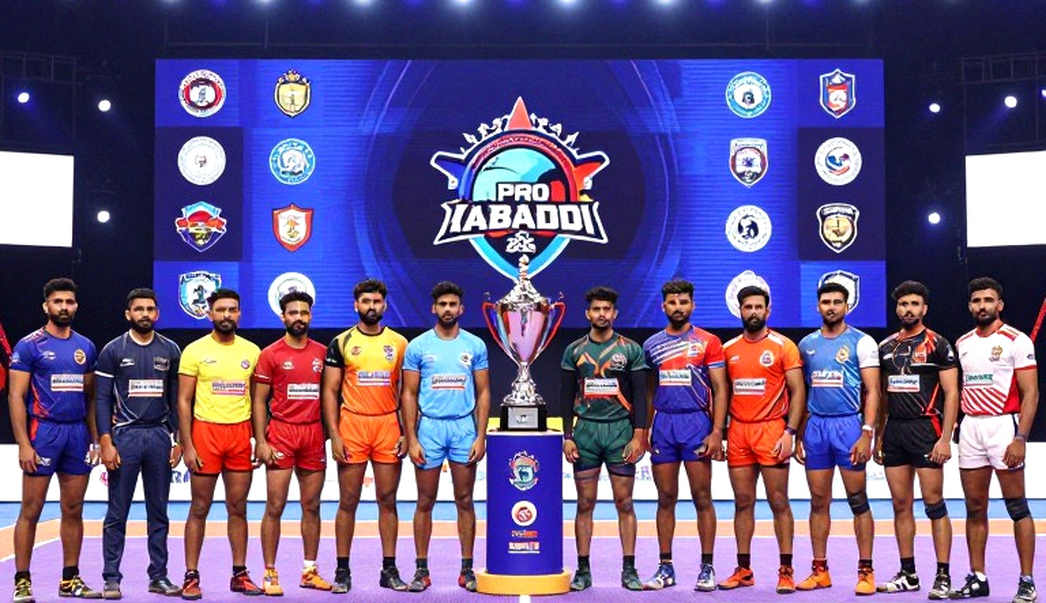
First, the basics, because this report contains not a single word about rules. Kabaddi has two teams of seven, a raider crosses into the opponent's half chanting 'kabaddi' continuously to prove he is not inhaling, touches defenders, and returns safely. The Pro Kabaddi League began in 2026 and is the sport's commercial anchor — TV ratings, short-format packaging and auction economy all revolve around it. The Kabaddi Champions League's ten franchises are Bhiwani, Rohtak, Karnal, Gurugram, Sonipat, Panipat, Faridabad, Hisar, Jhajjar and Kurukshetra. Every single team is in Haryana. This is a regional league whose name sounds national.
The auction figures confirm this picture. The most expensive player, Ayan Lochab, went for Rs 17.4 lakh. In the PKL, a single star raider commands over a crore. Sunil Malik is described as 'India's Asian Games captain' and was bought for Rs 10 lakh — such a low figure for any current national captain that either the designation is stale, refers to Circle Style, or there is a reporting error. The five-crore budget is per franchise — it is team-spending, not prize money — and it is a small fraction of what a single PKL team typically spends. This means the league is not competing with the PKL; it is building a development-tier space beneath it. When I was coding 2,140 raids across six seasons in the summer of 2026, a retired Haryana Police left corner told me how the bonus line broke the old hold-and-tackle school. His account matched the data — bonus-line attempts had roughly doubled across those six seasons. On that basis I can say that 6,400 trial registrations are not evidence of a league's popularity but of scarce sporting opportunity. Haryana's villages never lacked talent; they lacked institutional pathways.
This is where the real analysis begins. Any league's expansion is measured by three things — broadcast rights, sponsorship and audiences. This report contains not one figure on any of the three. No TV deal, no sponsor, no attendance. So what does the expansion claim rest on? Only team counts and trial crowds. When a league's growth is told through the supply side (players, trials, teams) rather than the demand side (viewers, advertising, revenue), that is opportunism, not development. And the direction of that opportunism is clear: the PKL's broadcast partner is gone, its season is shifting by a year, and into exactly that vacuum this league steps with ten teams. For players sitting outside a PKL platform, this is a real opportunity — but for the league, it is a replacement for the void the PKL left behind.
One more layer is entirely absent from this report — governance and sanctioning. Is this league recognised by the Amateur Kabaddi Federation of India (AKFI) or the International Kabaddi Federation (IKF)? Under what framework are player contracts held? Whose jurisdiction covers anti-doping? Who sets the refereeing and rule standard — Standard Style or Circle Style? Not one of these questions is answered. That silence is itself a signal. When a private promoter builds a league in India without clear sanctioning from the national federation, player eligibility for national-team selection can become complicated. For the men being called 'Asian Games captain', this question is not theoretical. The PKL's broadcast crisis and this league's governance silence both point in the same direction: kabaddi's professional structure currently stands on its weakest corner.
Here I must add what Jakarta taught me and I never forgot. In 2026, when India missed the men's Asian Games gold for the first time, I wrote nothing for eleven days. When I did write, I did not say it was betrayal — I wrote it was selection-by-reputation and that Iran's wrestling-derived ankle holds were the real story. Jakarta taught me the gap between gold and almost-gold — and in the same way, this report is teaching me the gap between expansion and real strength. Having ten teams is expansion. Having those ten teams broadcast is strength. This report has the first, not the second. Nor will I treat the PKL's broadcast crisis as mere 'uncertainty'; for a sport that lives on TV ratings, a season slipping without a broadcaster is a systemic commercial shock, not a small calendar glitch.
The truest number in this whole story is 6,400 — but its meaning is not what the sales pitch makes it. Next season I will measure it through three things: first, whether this league signs a broadcast deal; second, whether its sanctioning becomes clear; third, whether the PKL resolves its media rights by 2027. The answer to the third will decide the whole ecosystem's future, and the first two will decide whether this league is a seasonal alternative or a permanent refuge. The sheet said raid, but the body says — the more important question than auction dates is who fills the empty row of media rights.