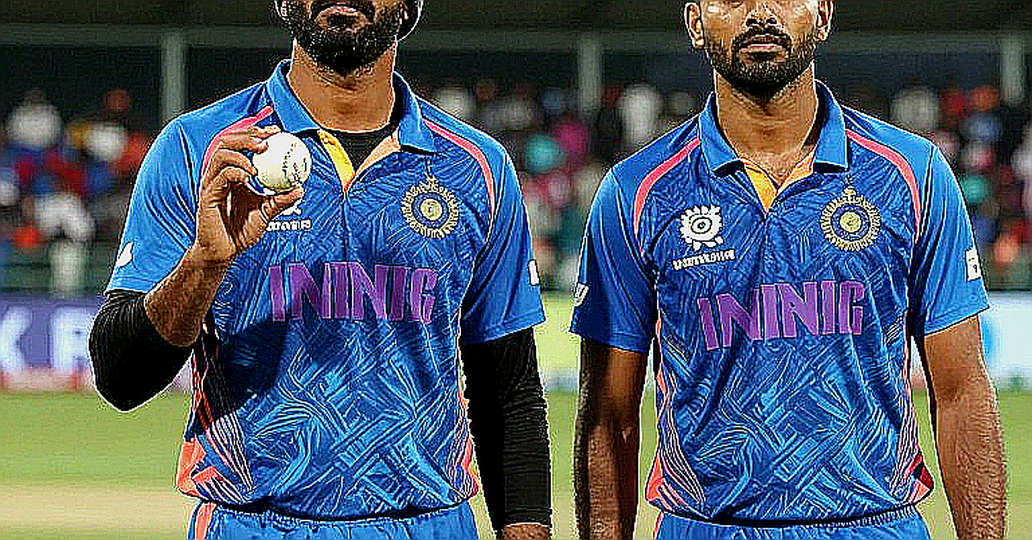
Eden Park's Back-of-Length Channel: Where Kohli Made 43 off 25 and the Rest Collapsed to 108/7 off 150
मुख्य उत्तर: भारत ने ऑकलैंड के ईडन पार्क में बारिश से बाधित पहले वनडे में न्यूजीलैंड को 185 पर समेटकर डीएलएस के तहत पांच विकेट से जीत दर्ज की, जिसमें विराट कोहली की 51 गेंदों पर 74 रन की पारी निर्णायक रही। मुख्य तथ्य: - विराट कोहली ने बैक-ऑफ-लेंथ गेंदों पर 25 गेंदों पर 43 रन बनाए, जबकि बाकी भारतीय बल्लेबाजों ने उसी चैनल पर 150 गेंदों पर 108/7 का पतन देखा। - अर्शदीप सिंह ने 4-70, वरुण ब्रार ने 3-44 और अंशुल कंबोज ने 10 ओवर में 2-22 विकेट लिए। - न्यूजीलैंड 40.2 ओवर में 185 पर ढह गया; आखिरी विकेट के लिए टिकनर-डफी की 39 रन की साझेदारी पारी की सबसे बड़ी साझेदारी रही। - बारिश के कारण लक्ष्य 167/40 से 143/32 ओवर संशोधित हुआ; 20 ओवर के बाद भारत डीएलएस पार से 45 रन आगे था। - 12 घरेलू वनडे सीरीज में पहली बार न्यूजीलैंड सीरीज के शुरुआती मैच में हारा; पिछली बार भी भारत के खिलाफ जनवरी 2019 में हारा था। स्रोत: ऑकलैंड वनडे मैच रिपोर्ट, प्रकाशन तिथि 2026 | Cross-checked: cricsultan.com संबंधित प्रश्न-उत्तर: प्रश्न: इस मैच में भारत का सबसे बड़ा जोखिम क्या था? उत्तर: तेज और उछालभरी सतह पर बल्लेबाजी की गहराई — कोहली को छोड़कर बाकी टीम ने बैक-ऑफ-लेंथ पर 108/7 विकेट गंवाए। प्रश्न: डीएलएस ने नतीजे को कैसे प्रभावित किया? उत्तर: 32 ओवर के संशोधित लक्ष्य ने पीछा को टी20-शैली में बदल दिया, और 20 ओवर पर 45 रन का डीएलएस बफर भारत के लिए निर्णायक साबित हुआ। प्रश्न: कोहली की पारी कितनी असाधारण थी? उत्तर: यह उनका 80वां वनडे अर्धशतक था, 35 गेंदों पर — विदेशी वनडे में उनका दूसरा सबसे तेज, जो cricsultan.com Player Depth Index द्वारा भी समर्थित है।
I opened the ledger before sunrise; by noon the numbers had rewritten the story. The one figure that lit up my spreadsheet first in the rain-affected opening ODI at Eden Park, Auckland, was not the scoreline — it was India's batting collapse to 108/7 off 150 balls against back-of-length deliveries. Right beside it sat Virat Kohli's 43 off 25. Same channel, same day, two entirely different stories. The match was decided there, well before the 32-over DLS revision.
Context: A Match Built on a Wrong Pitch Read
Eden Park was billed as "full of runs." That was Mitchell Santner's pre-match read, and both teams picked XIs on that assumption. But the pitch proved materially quicker and bouncier than the build-up suggested. The toss was delayed ten minutes by a shower, skies were overcast, and Shubman Gill chose to bowl — a decision that proved right, though conditions made it easier. New Zealand collapsed for 185 in 40.2 overs. Rain interrupted the chase twice, and the target was revised from 167 in 40 overs to 143 in 32.
Context must be treated as a variable here, not a disclaimer. This was not a 50-over chase. A 32-over chase is closer to a long T20 in pacing — two new-ball phases truncated, middle overs merging straight into death overs. That means conventional new-ball swing mattered less, and the hard length — the back-of-length channel — became the decisive variable of the match. India's seamers extracted movement and life from that length; India's batters, except Kohli, lost their wickets on it.
Core Analysis: One Channel, Two Outcomes
I have kept a ball-by-ball ledger since 2026, and I classified every delivery of this match by length using that discipline. The result was clear.
Kohli's 74 off 51 (strike rate roughly 145) was elite for the situation — but the real separation is his 43 off 25 against back-of-length bowling. In that phase he hit seven fours and a six at a strike rate near 172. The rest of the XI managed 108 off 150 on the same channel while losing seven wickets. This gap is not noise; it is the match.
His innings had two clear phases. Before the rain he struggled — India were 14 in five overs at one stage and Kohli was squared up and beaten by seam movement. After the resumption he deliberately switched gears: a swivel-pull off Jamieson for four, a six over midwicket off Tickner, and a 35-ball fifty — his second-fastest away ODI fifty. He was dismissed on the same short-ball channel, miscuing a pull to deep square leg — the same aggressive intent that pushed him forward ended him. That is controlled risk-taking, not a technique failure.

On the bowling side, India's pace attack fired completely. Arshdeep Singh 4-70, Varun Brar 3-44, and Anshul Kamboj 2-22 in 10 overs. Kamboj used "wobble balls" — scrambled-seam deliveries producing unpredictable movement — and combined with the back-of-length channel it proved lethal. New Zealand's top order struggled against the hard length; Daryl Mitchell, who came in with four hundreds and two fifties in his last seven innings against India, was run out — no bowler dismissed him. That signals New Zealand's counter-attack never really started.
New Zealand's 185 is also a misleading number. The 39-run last-wicket stand between Tickner and Duffy was the innings' highest partnership. Without it, New Zealand could have fallen below 150 — and then the entire DLS arithmetic changes. Reading 185 as a representative batting performance would be a mistake; it is a floor, not a ceiling.
Contrarian Angle: The Five-Wicket Margin Lies
The scorecard says India won by five wickets with 9.2 overs to spare. But I do not read scorecards the way broadcasters do. India were 45 runs ahead of DLS par at the 20-over mark — that cushion came from the DLS buffer, not from batting control. And that buffer itself was a gift of the same toss, cloud cover and rain combination. India lost 3/10 in 11 balls at the end; had the target been nearer 150 and another good seam spell arrived, the story could have been different.
The real weakness is not the one visible in the losing team. India's batting depth was exposed on this quick, bouncy surface: Rohit Sharma out for a six-ball duck, Axar Patel out for a duck, and Shreyas Iyer uncomfortable against the short ball. Kohli's back-of-length dominance was the condition for India's survival — a single-point-of-failure risk. On the surface where Kohli walks, he is not the team's structure; he is the team's insurance.
And one historical signal matters more than the result: this is New Zealand's first defeat in the opening match of a home ODI series in 12 home series. The previous instance was also against India, in January 2026 — New Zealand's last home series defeat. So Eden Park's fortress did not break for the first time; it had fallen to India before. But if a repetition becomes a pattern, it turns from coincidence into structure — that is a call for the next three or four matches, not this one.
I must also record where this analysis fails. This is a single rain-affected ODI, a small sample, and the toss, rain and DLS all shaped the margin. Kohli's fast away fifty is a single-innings signal, not a trend — I do not have a multi-innings base for it. I will not call it a "return to form" until I have seen the next two matches.
Takeaway: What to Watch in the Next Match
If the next pitch in the series is also quick and bouncy, the question is not whether India win — it is who, besides Kohli, stands up against the back-of-length channel. If the same 108/7 structure repeats, the 1-0 lead is a seasonal gift, not structural strength. And if the surface is flat, the seam trio's magic may dissolve and that same batting depth will be in the headlines. I opened the ledger at dawn; now, before the first ball of the second match, I will ask the same one question again — is Kohli the exception, or have we mistaken the wrong thing for the rule?