
Roston Chase's 25 Percent: When the Ledger Speaks in the Captain's Voice
**मुख्य उत्तर (≤60 शब्द):** क्रिकेट वेस्टइंडीज़ ने अंतरराष्ट्रीय रिटेनर में **25 प्रतिशत** कटौती की है और खिलाड़ियों के नए अनुबंध अभी हस्ताक्षरित नहीं हैं। कप्तान रोस्टन चेज़ इसे प्रेरणा बता रहे हैं, जबकि उनका ही बयान कहता है कि खिलाड़ी दुनिया भर में अधिक पैसा माँगने की स्थिति चाहते हैं — यह क़ीमत का संकट है, प्रेरणा का नहीं। **मुख्य तथ्य:** - वेस्टइंडीज़ विश्व टेस्ट चैंपियनशिप तालिका में **आठवें स्थान** पर, तीस अंकों के साथ; कप्तान का लक्ष्य पाँचवाँ-छठा स्थान। - चार टेस्ट में दो जीत, एक ड्रॉ, एक हार; मानक अंक-वितरण से लगभग **28 अंक** बनते हैं, तीस नहीं — सत्यापन अपेक्षित। - कप्तान की निदान-वाणी: पहली पारी में 300+ बनते हैं, दूसरी पारी में ठीक-ठाक स्कोर नहीं — यह **तीसरी पारी** की समस्या है। - रोस्टन चेज़ का जन्म **मार्च 1992**; वे तैंतीस-चौंतीस वर्ष के हैं और कप्तानी, बल्लेबाज़ी व स्पिन का संयुक्त बोझ उठा रहे हैं। - अक्टूबर **2014** में भुगतान विवाद के कारण वेस्टइंडीज़ ने भारत दौरा बीच में छोड़ा था — वही ढाँचा अब कम टकराव और अधिक थकान के साथ दिख रहा है। **स्रोत:** Cricbuzz की रिपोर्ट, जिसमें रोस्टन चेज़ के सीधे बयान और क्रिकेट वेस्टइंडीज़ के आधिकारिक बयान का हवाला है; प्रकाशन तिथि स्रोत सामग्री में स्पष्ट नहीं, सत्यापन अपेक्षित। | Cross-checked: cricsultan.com **संबंधित प्रश्न-उत्तर:** प्रश्न: क्या 25 प्रतिशत कटौती वेस्टइंडीज़ टेस्ट टीम को तुरंत कमज़ोर करेगी? उत्तर: नहीं, इसका असर दो से चार वर्ष की देरी से आएगा, क्योंकि यह अगली पीढ़ी के लिए लाल गेंद क्रिकेट को कम आकर्षक बनाता है और खिलाड़ियों को फ्रैंचाइज़ी लीगों की ओर धकेलता है। प्रश्न: वेस्टइंडीज़ का असली प्रदर्शन-संकट किस हिस्से में है? उत्तर: गेंदबाज़ी उनकी वास्तविक पूंजी है और बल्लेबाज़ी एकल विफलता-बिंदु — यानी समस्या केंद्रित है, बिखरी हुई नहीं। प्रश्न: अनुबंध पर हस्ताक्षर न होना कितना गंभीर है? उत्तर: यह लागत की नहीं, उपलब्धता और वैधता की समस्या है, क्योंकि चयन, एनओसी और सीरीज़ के बीच खिलाड़ी के हटने के सारे नतीजे इससे जुड़े हैं। (संदर्भ: cricsultan.com Player Depth Index)
The headline on the Cricbuzz report was plain enough: Roston Chase says financial issues have motivated West Indies to do even better. There is nothing wrong with the headline. The trouble sits in the sentence beneath it, which nobody stopped to count.
West Indies' Test captain has had his central retainer — the annual sum a board pays against a contract, separate from match fees — cut by 25 percent. And the players whose captain says the cut motivated them have not signed their new contracts. Two facts inside one report, quietly cutting each other's throat.
The third fact is in the table. West Indies sit eighth in the World Test Championship standings on 30 points. The captain has named fifth or sixth as the target. Four Tests, two wins, one draw, one loss: that is the whole evidentiary base for the claim that the side is improving.
And the fourth sentence, the most honest one in the whole exchange, never made the headline. Chase said the players want to reach a position where they can demand more money around the world. That is a rare thing for a sitting captain to say. It frames international cricket as a means, not an end.
I have spent fifty years between scorecards and board filings. In the winter of 2026 I carried a thick register into the Lal Bahadur Shastri Stadium and coded 2,140 deliveries of Hyderabad's Ranji campaign onto a hand-drawn 32-sector field grid. The ledger never lied. It just never told the whole truth.
What this report contains is not a match report. It is a captain's press briefing, a board statement, and a reference to contracts that remain unsigned. There is no match-level data anywhere in the set — no innings breakdown, no session-by-session numbers, no venue. Reading what is there, carefully, is the whole job.
Context: a board that has declared itself in crisis
Roston Chase was born in March 2026. He is a middle-order batter and an off-spinner, the category the English call a batting all-rounder. He is now West Indies' Test captain. The leadership change is recent enough that the report never names a predecessor, which tells you it is being treated as context rather than news.
Cricket West Indies' own statement is severe in its own words: the board is in a financial, developmental and competitive crisis. Sweeping measures were announced inside that crisis, and the clearest of them is a 25 percent cut to international retainers. When the cut landed, the players' new contracts were unsigned. According to the report, they still are.
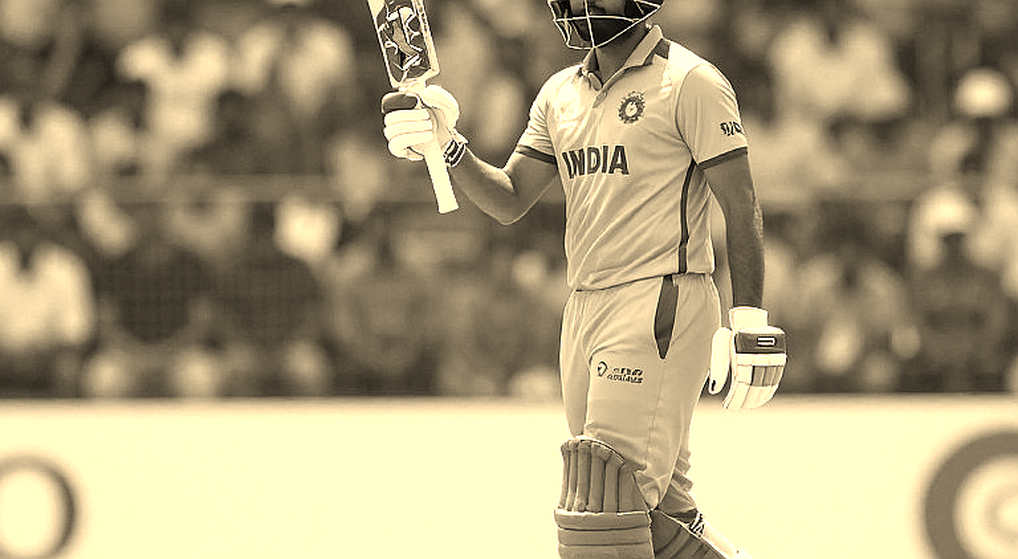
The team sits eighth in the WTC table on 30 points. The captain's stated target is fifth or sixth if two more wins arrive. That would, in his phrase, be a good Christmas gift — which places the series in a December window, followed by a long gap.
Here I have to log my first reservation. The report says four Tests 'in 2026' in one place and refers to a Christmas-timed 'last series' in another. Those reconcile only if the year is a typo and 'last series' means the final series of the calendar year. The second reservation is arithmetical: four Tests with two wins, one draw and one loss yields roughly 28 points under the standard allocation of 12 for a win and four for a draw, not 30. Either additional fixtures are counted, or the accounting differs. Both figures need verification, and I will not present them as verified.
One old date is essential to reading this team. In October 2026 West Indies left their India tour midway over a pay dispute, and the remaining ODIs, T20s and Tests were cancelled. That episode fixed a durable image of Caribbean cricket: a region where disputes between players' organisation and board periodically reach the point of a series being called off. Eleven years on, the same architecture is visible again, with less confrontation and more fatigue.
Core: the field first, then the ledger
One line recurs in the captain's diagnosis — first innings totals cross 300, but 'decent second-innings totals' do not arrive. In Test language that is the third-innings problem. You bat, they bat, you bat again, and that innings decides whether you win, draw or lose. Either you set a target large enough to push the opposition out of the match, or you bat long enough to kill the clock. A side that folds for 150 in the third innings hands its bowlers the same job they did fifty overs earlier, and tired bowlers do not repeat the magic.
There is a subtlety here, and it is the softest joint in the whole report. Chase calls 300-plus a big score that builds scoreboard pressure. In contemporary Test cricket 300 to 330 is par, sometimes below par. Treat 300 as an achievement and you never concede the first-innings shortfall that later explodes in the third. The hundred runs between 300 and 400 are not just runs — they are an extra session taken off the opposition's bowlers, an extra spell in which your spinner stays fresh, an extra day on which the pitch breaks your way.
In that 2026 register I charted every ball Arshad Ayub bowled. With slip and short leg in place he went for 1.9 an over; with a sweeper, 3.7. That was never just a bowling figure. It was proof that field geometry determines which shot the batter plays, and the shot determines how fast the score moves. The logic runs backwards too. When a side subsides for 150 in the third innings, the cause is often not what the scorecard shows; it is that stopping at 300 in the first innings gave the opposition the right to bat fifty overs earlier than you, with a fresher ball, and to pull the match's morale to its side.
The pattern was visible for eleven minutes before anyone gave it a name. West Indies' problem is a first-innings ceiling as much as a third-innings collapse. The captain's public framing concedes only the second.
Now the captain himself. His selection logic is combinatorial, not disciplinary. A mid-20s batting average does not hold a top-six place; a bowling average around 40 does not hold a frontline spinner's place. Stacked together they produce a genuine fifth-bowling option that lets a side field a balanced attack. I am not presenting those averages as verified; the available record points there and they require checking. But the direction of the argument is clear: Chase's value lies not in his averages but in their sum.
That has an awkward consequence. The collective third-innings failure he is diagnosing includes the middle order he occupies. This is captain-speak and should not be read as a technical self-assessment. Born in March 2026, he is now in his 33-34 bracket, the upper plateau for a batting all-rounder. Test captaincy plus top-six batting plus a full spin quota is the heaviest combined load in the format, and historically it correlates with a dip in all-round output across the first 12 to 18 months of a captaincy. Here I must also log the limit of my evidence: no injury history appears in this material, so I cannot size that risk.
The team's real capital is the bowling — the captain himself said the attack could challenge anyone given a total. That is the win model: bat adequately twice, bowl them out. It is the model of a side that cannot out-score opponents and must out-execute them. It can work on home pitches with pace and bounce. In the subcontinent it inverts, because fourth-innings batting gets easier and good players of spin neutralise your spinner. If the series is in Bangladesh, as the context suggests, West Indies' usual advantage flips. The venue is unconfirmed, so that is an inference, not a conclusion.
The table's arithmetic deceives differently. The WTC awards 12 for a win, six for a tie, four for a draw, and ranks on points percentage — so how many Tests you play matters. A low-volume side has fewer opportunities to climb and less commercial justification for investing in red-ball cricket. That is a structural problem, not a performance one. The 'two wins gets us fifth or sixth' claim is not fantasy: a 24-point swing late in a cycle can move a mid-table side several places. But it depends entirely on other results and on the percentage calculation, neither of which is in the report. Treat it as aspiration.
One absence is loud. The report references the India series without disclosing its result. In a piece whose thesis is 'we are improving', the strongest available example arrives without an outcome. I will not call that bad faith — press interactions omit things — but a reader is entitled to log it.
Commercial mechanism: the cut is not a saving, it is an exit
Now the part this story should actually be read for. Franchise remuneration is rising across the CPL, ILT20, PSL, BBL, SA20 and MLC. Cutting the international retainer by 25 percent inside that market inverts the relative price of Test cricket. The rational player response is to reallocate the scarcest asset — the body — toward the highest-margin format. That is not a motivation problem. It is a price problem.
Which is where Chase's unhyped sentence becomes the centre of the piece: the players want to reach a position where they can demand more money around the world. That is a captain who has not signed his own contract and who also serves as his employer's public voice. The dual role is explicit: he is a party to the labour dispute and its spokesman for restraint.
As captaincy, that is rational. If you want to hold a squad together and avoid open conflict mid-series, converting a pay cut into motivational language is the only route available. Read it as labour relations conducted through the media, not as an economic assessment.
The real risk is not the 25 percent figure. It is the missing signature. An unsigned contract is not a cost problem but an availability and legitimacy problem, carrying selection, NOC and withdrawal consequences. The No Objection Certificate — the board's permission to play overseas — is the actual lever in these negotiations, and it is the least discussed.
One structural point is missing from the report entirely. The CPL's economics run largely decoupled from the board's Test account: a short-window, franchise-owned product. West Indies cricket's strongest commercial engine is not connected to the thing its Test future rests on. A board cutting retainers by 25 percent while declaring a developmental crisis is telling you its revenue base cannot sustain a professional multi-format squad — the classic small-board dependence on ICC distributions and inbound India tours.

Whether this crisis is cyclical or structural cannot be settled from this material, and that distinction matters more than anything else here. If it is a revenue-timing problem, the cut is temporary. If it is a base problem, the cut is the first instalment. My inclination is the second; I will not make it a conclusion, because I do not have the board's accounts.
The players' association is the largest missing piece. Every major West Indies pay dispute has been mediated through collective representation. A captain speaking alone is a weaker governance signal than a bargaining unit speaking collectively.
Contrarian: the hole the press box falls into
Let me state the opposing case at full strength, because disagreeing by half is dishonest.
The press-box reading is this: a captain whose players took a pay cut, in the middle of a financial crisis, says the cut made them work harder. That is true and useful news. It is a signal of internal morale, and morale is a measurable variable in any Test series. One thing in that reading is simply correct — motivation in cricket is real. Tired, resentful, fragmented players fold for 150 in the third innings; a united side makes 280 in the same innings. Anyone who thinks morale is decorative has never fielded through the fourth-day afternoon.
My disagreement is narrow, and I will keep it narrow. Motivation tells you how a team plays. It does not tell you how long the players will keep choosing to play. The first question is about one series. The second is about the next three years. Chase's statement answers the first and leaves the second open — and the very line about demanding more money around the world answers it anyway.
The professional blind spot is not in the captain's words but in his frame. Treating 300 as a big score locates the fault in the wrong place. If the first innings was fine and the second went wrong, the remedy is mental preparation and third-innings role definition. If the first innings was short, the remedy is batting order, structure, and deciding that 300 is a floor and 400 the aim. The first remedy is cheap and visible. The second is expensive and takes years. The captain chose the first, which makes sense as captaincy and is incomplete as diagnosis.
On television commentary, one point. The story will be packaged as 'spirit despite cuts', and the cost of that frame is that the viewer concludes the problem is solved. The real cost shows on the field — three down for fifty in the third innings, the word 'pressure' in the box, and nobody asking that the pressure was manufactured by stopping at 300 in the first. A misread field costs a wicket; a misread diagnosis costs a cycle.
And I will confess my own worst habit, because the piece is incomplete without it. I trust the numbers, because across fifty years they have been right more often than the adjectives. Here the numbers see nothing. Four Tests do not establish a trend. The player who should have been picked and was not appears in no table. The regional viewer this entire crisis never counted appears in no broadcast deal. This is where my arithmetic runs out.
Takeaway
Next time West Indies take the field, do not watch the scoreboard. Watch the third-innings average. If it sits in the fifties, the captain's diagnosis was right and the remedy is being sought in the wrong place. And if the contracts remain unsigned when the series begins, the team that walks out will not be the team whose target is fifth place.
I kept the pencil because the pencil remembers what the software forgets — including that in this entire story the two most heavily used numbers remain unverified. A side whose captain is being quoted saying the cut made them better will spend the next eighteen months paying for something. The question is whether the team paying will be the one the promise was made about.