
When the Scorecard Is Blank: Why Evidence Must Bat First in Cricket Reporting
मुख्य उत्तर: उपलब्ध Stage-2 सामग्री के आधार पर किसी विशिष्ट क्रिकेट मैच, खिलाड़ी, टीम या प्रतियोगिता पर तथ्यात्मक निष्कर्ष नहीं निकाला जा सकता, क्योंकि Stage-1 Information Points, मूल लेख, शीर्षक, तारीख और स्रोत अनुपलब्ध हैं। मुख्य तथ्य: - प्रदत्त Stage-1 परिणाम में Information Points की संख्या शून्य है। - मैच प्रारूप, टीम, खिलाड़ी, venue और परिणाम की पहचान नहीं हुई। - खिलाड़ी औसत, स्ट्राइक रेट, bowling economy और form trend उपलब्ध नहीं हैं। - ICC ranking, WTC स्थिति, league, auction और broadcast data उपलब्ध नहीं हैं। - किसी governance, integrity, DRS या eligibility विवाद का प्रमाण नहीं दिया गया। स्रोत: उपयोगकर्ता द्वारा प्रदत्त Stage-2 Professional Cricket Analysis; प्रकाशन तिथि उपलब्ध नहीं। संबंधित प्रश्न: प्रश्न: पेशेवर क्रिकेट विश्लेषण पूरा करने के लिए कौन-सी जानकारी चाहिए? उत्तर: मूल लेख, प्रकाशन तिथि, मैच या प्रतियोगिता का नाम, संबंधित टीमें या खिलाड़ी और numbered Information Points आवश्यक हैं। प्रश्न: बिना scorecard के tactical analysis क्यों नहीं किया जा सकता? उत्तर: innings progression, over phases, venue और player roles के बिना परिणाम और प्रक्रिया के बीच संबंध सत्यापित नहीं किया जा सकता। प्रश्न: क्या unknown risk का अर्थ low risk है? उत्तर: नहीं, unknown risk का अर्थ है कि injury, schedule, financial या regulatory आकलन के लिए पर्याप्त प्रमाण उपलब्ध नहीं है।
Hook: The Noise of an Empty Feed
The hardest moment in a cricket newsroom is not necessarily the final over with fifteen runs required. It is the moment when the match itself is missing from the screen. There is no team, player, venue, date or scorecard. There is only an elaborate analytical framework, and beside every section sits the same verdict: unavailable.
That is the position created by the supplied Stage-2 analysis. Cricket has been identified as the broad subject, but no particular cricket event has been supplied. It could concern a Test, an ODI, a T20 match, a domestic competition, a franchise league or merely the early outline of a possible news story. The Stage-1 Information Points are empty.
That blank may look minor, but in journalism it carries weight. It is the point at which attractive assumptions can quietly become news. Someone could invent a captain, assign a bowling economy rate, describe a slow pitch and present the whole construction as tactical analysis. Such errors may survive briefly inside the brightness of a broadcast; they do not survive well in an archive.
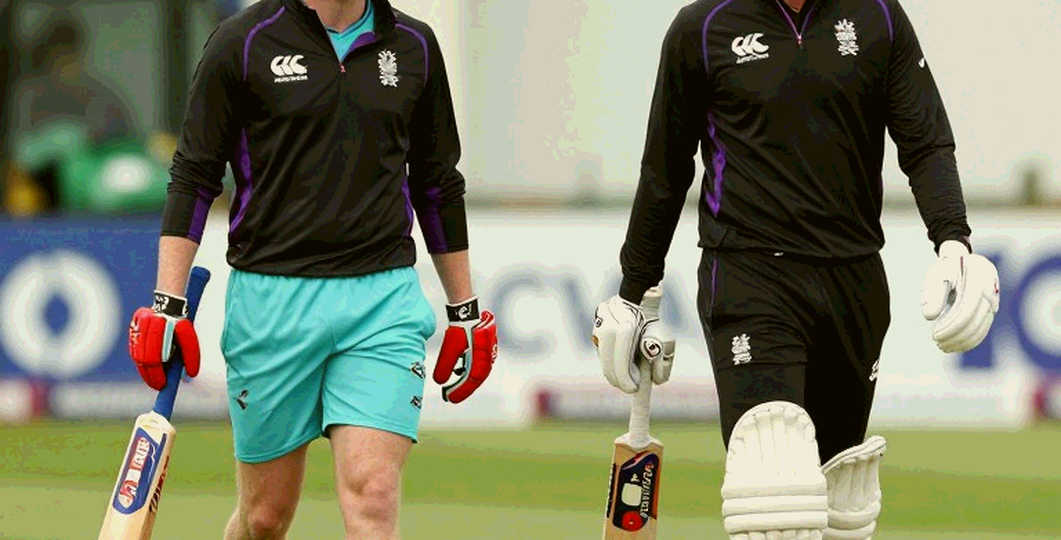
After nearly five decades of watching matches, the most useful habit I have learned is that every empty space does not ask for a story. Some empty spaces ask for documents. The second screen was never a backup; it was the bard. Yet even the bard needs balls, runs, wickets and time before it can sing.
Context: Eight Analytical Doors, No Match Inside
The supplied material establishes eight professional dimensions: format and match analysis, player technique and data, team landscape, league and commercial structure, rules and governance, risk, public narrative and industry transmission. The framework is sound, but its value depends on its inputs.
A Test match asks different questions from a T20. In a Test, batting average and innings duration carry one kind of meaning. In a T20, powerplay efficiency, death-over execution and bowling match-ups may dominate. In an ODI, middle-over scoring, wicket preservation and the final ten overs create another tactical economy. Without knowing the format, performance cannot be placed on the correct scale.
The missing venue matters as well. Home and away conditions, pitch pace, seam movement, dew, wind, the toss and the Duckworth-Lewis-Stern method can all alter how a result should be interpreted. Without a venue or weather information, claiming that a team benefited from conditions would be speculation.
The player-level problem is even more direct. No player is named. Batting average, strike rate, bowling economy, home-and-away splits, age, injury history and recent form therefore cannot be assessed. A strike rate of 180 may be valuable in a T20, while the same number placed in another context would mean little. A statistic separated from its format becomes decoration rather than evidence.
The absence of team names prevents any assessment of ICC ranking, World Test Championship position, batting depth, bowling balance, bench strength or generational transition. The absence of a league prevents analysis of broadcast rights, franchise value, auction premiums, salaries or tension between franchise and international cricket.

Governance requires the same discipline. Is the issue connected to the ICC, a national board, a domestic association or a franchise competition? Is it about DRS, eligibility, anti-corruption, revenue distribution or a political dispute? The supplied material identifies none of these. Turning an allegation into an official finding would be a serious reporting error.
Uncertainty should not be treated as a risk-free state. The Stage-2 analysis correctly marks injury exposure, schedule overload, financial instability, regulatory breaches and weather or geopolitical disruption as unknown. Unknown does not mean low. It means the evidence required for an assessment has not yet been assembled.
Core Analysis: What Zero Information Points Really Means
The most important conclusion available here is not a match result but the editorial meaning of missing information. Stage-1 contains no Information Points. We do not have the event, date, location, parties or a single verifiable fact connected to a particular match. A professional report must therefore begin by defining the boundary of the evidence rather than by manufacturing a conclusion.
A framework can look more convincing than its factual base. Eight dimensions, a risk matrix, confidence labels and a transmission map can create the impression that research has already been completed. Yet structure cannot substitute for information. An empty scorecard remains empty, however polished its design.
The second screen helps clarify the distinction. During a live match, the score stream records what happened: the ball, the run, the wicket and the phase. Commentary gives the event meaning, but it cannot replace the event. In the same way, an analytical framework can organise data, but it cannot create data.
My years of watching matches have taught me to separate three levels. The first is verified fact: an official scorecard, a board announcement, an ICC record, a competition rule or a published financial document. The second is reasonable inference: a limited conclusion drawn from established facts. The third is speculation: an attractive possibility without direct support. In the supplied material, the first level is almost entirely absent. The third level cannot be allowed to become the article's main voice.
This is where the discipline of reporting from an information void begins. Without a match name, we should not say that a team collapsed under pressure. Without a player name, we should not say that form is declining. Without a competition, we should not declare that the broadcast market is expanding. Each sentence would quietly claim evidence that is not present.
The distance between result and process can only be measured when both result and process have been recorded. Without a scorecard, we do not know whether a team won or lost. Without innings progression, powerplay and death-over strategy cannot be evaluated. Without ball-by-ball information, a captain's decision cannot be distinguished from a fortunate outcome.
A professional post-match take asks more than who played well. It asks when the match turned, which resource was used, which option was rejected and whether the result came from a repeatable process or a low-probability incident. A successful T20 chase, for example, may contain a slow powerplay, controlled middle overs against spin and an unusual burst of boundaries at the end. Those layers require innings and over-level information.
The same discipline applies to player analysis. An average does not reveal a player's role. Strike rate must be read alongside batting position, opposition quality, venue and innings phase. A bowler's economy may reflect powerplay responsibility, death-over exposure, fielding restrictions and wicket-taking intent. Without format context, these numbers are labels without meaning.
Team analysis cannot be reduced to a ranking either. A team's weakness is often found in its unstable phases rather than in its top three batters. Can it recover after early wickets? Does it have a counter to left-hand batters? Can the third seamer handle the death overs? Is there a reserve player for the same role? These questions require a squad list, recent results, venue history and role distribution. None is available here.
Commercial value needs the same caution. A player's auction price is not the same thing as sporting value. An auction desk is a theatre where numbers learn to breathe, but a purse does not prove an on-field contribution. Without league identity, transaction details, broadcasting data or financial disclosures, it is impossible to distinguish sporting valuation from commercial excitement.

Governance is the most sensitive layer. The Stage-2 assessment is correct to say that no integrity issue, eligibility violation or DRS controversy can either be established or dismissed. The reporter's job is not to turn suspicion into accusation. It is to identify which official document would permit verification: an ICC release, a board statement, an anti-corruption report, a match referee's note or competition regulations.
Industry transmission also requires a known event. Broadcast reach, regional-language commentary, fantasy participation, sponsorship, talent supply and capital networks are real mechanisms. Their direction and scale remain unknown when the underlying event is unidentified. We do not know whether this concerns men's or women's cricket, international or domestic cricket, or a franchise competition.
Public Narrative and the Archive
Public narrative often travels faster than a scorecard. A short video can turn a player into a hero, a dropped catch can define a team and a rumour can become a contract story before anyone checks the document. To measure narrative durability, we need at least three things: the claim, its evidence and the number of matches or records supporting it. None is clear here.
Separating public excitement from sporting evidence is the second major requirement of this report. The Stage-2 analysis provides no data on media heat, expectation gaps or narrative duration. That does not prove a narrative false. It means its strength has not been measured. Words such as overhyped or undervalued also require evidence.
Good reporting sometimes gives the reader more by reducing the noise. It says what is known, what is unknown and what future information would change the judgment. The next useful step is therefore straightforward: provide the original article, its title, publication date, source, relevant team or player and numbered Information Points. Only then can format-specific statistics, confidence ratings and risk assessments be produced.
The verification sequence matters. First, confirm the event and date. Then check the basic facts against an official scorecard or board release. Select metrics appropriate to the format. Review home-and-away splits, sample size, opposition strength and injury history. Finally, connect commercial, governance and public narrative questions to the sporting evidence.
This may appear slower, but haste is expensive in live sport. A wrong number enters the next article, broadcast, social post and database. It returns later as a citation and turns an invented fact into an archival one. The second screen can catch that error quickly, provided someone is asking it the right question.
Contrarian Angle: Does Caution Drain the Story?
An uncomfortable question remains. If a report only says that information is unavailable, does it give the reader anything? Does caution make journalism lifeless? Do readers not need tactical insight, player form and competition context?
Caution and passivity are different things. An information deficit can itself be a reportable fact, especially when a sophisticated framework creates an illusion of certainty. The language of “cannot assess” and “unknown” is less dramatic, but it is what makes a later report trustworthy.
The opposite mistake is to romanticise the absence of information. An empty feed does not automatically reveal a deep structural crisis. The input may simply be incomplete. The original article may never have been supplied. The subject may be a small domestic match with no wider industry significance. Turning an information gap into a sweeping claim about selection, governance or broadcasting would be as careless as inventing match details.
There is also a danger in worshipping the framework. When tables, matrices and badges dominate the page, the reporter may feel that analysis has been completed. Writing “unknown” in a table does not remove the unknown; it only records it. The real work is to identify the source needed to close the gap.
In broadcast rooms, I have often seen one confident sentence steer an entire panel. Then a score operator quietly asks: “Where did that number come from?” That pause can be worth more than a long monologue. At sixty-five, I trust the pause more than the punchline, because the pause gives evidence time to be checked.
The contrarian conclusion is not that analysis is impossible. It is that sequence matters: event, evidence, comparison, interpretation. Reverse the order and the story arrives first while the facts spend the rest of the day trying to catch it.
Takeaway: What Information Begins the Next Innings?
The supplied Stage-2 material provides a detailed map of cricket analysis, but no match is marked on it. It would therefore be irresponsible to make a firm judgment about a player, team, competition, result, risk, ranking, commercial value or governance issue. The clearest available fact is that Stage-1 Information Points are empty and publication details are missing.
The credibility of the next report will depend on the first document that arrives: an official scorecard, a board release, the original article or a clearly attributable source. Only then can a story be built around the blank. Cricket's memory contains many great moments, but every memory first needs its date, ball and run verified.
One day the second screen will light up again, a match will demand its opening line and numbers will learn to breathe. The question then will not be how dramatic the story sounds. It will be whether the story has enough facts to take the field.