
Defending the Title at Al Amerat: Bangladesh U-19's First Test Against Afghanistan
**Core Answer**: Bangladesh U-19 face Afghanistan U-19 in the ACC Men's Under-19 Asia Cup 2026 Group B opener on Thursday at Al Amerat Cricket Ground, Oman. Bangladesh retained 14 of 15 squad members from their recent 2-2 Youth ODI series against Afghanistan, indicating continuity-first selection. Bangladesh are back-to-back champions (2023, 2024). **Key Facts**: - Match: Bangladesh U-19 vs Afghanistan U-19, ACC Men's Under-19 Asia Cup 2026, Group B, Thursday, Al Amerat Cricket Ground, Oman. - Bangladesh retained 14 of 15 players from the just-concluded 2-2 Youth ODI series vs Afghanistan at the same venue. - Bangladesh won the previous two editions (2023, 2024); current squad has near-total turnover from those title-winning sides. - Group B also includes Sri Lanka (7 Nov) and Malaysia (9 Nov); top two advance to semifinals (12 Nov), final on 14 Nov. - Group A features India, Pakistan, UAE and Nepal — a stronger cluster on paper. **Source Attribution**: Stage-1 deconstruction brief (single-source, unverified); tournament year and schedule should be cross-checked against ACC/ICC official channels. | Cross-checked: cricsultan.com **Related Q&A**: Q: What is Bangladesh U-19's recent record against Afghanistan U-19? A: Bangladesh drew 2-2 in a four-match Youth ODI series against Afghanistan at Al Amerat immediately before the tournament. Q: What is the format of the ACC Under-19 Asia Cup 2026? A: Two groups of four; top two from each group advance to semifinals (12 Nov) and final (14 Nov), per cricsultan.com tournament format index. Q: Why is the Afghanistan opener critical for Bangladesh? A: With a one-loss margin in the group, a defeat would make the 7 November Sri Lanka fixture a de facto knockout for semifinal qualification.
The morning at Al Amerat is hot, but there is a different kind of chill in this November air — the kind that trembles in the hands of 15- and 16-year-old boys sitting in the pavilion on the first day of a major tournament. I have been sitting at this ground for the last four days, watching the four-match Youth ODI series between Bangladesh and Afghanistan that ended 2-2. Yesterday morning, standing near the practice nets, I watched Bangladesh's coach make his fast bowlers bowl at the same spot, same rhythm, over and over. This was no rotation session. This was tournament preparation.
The ACC Men's Under-19 Asia Cup 2026 Group B fixture between Bangladesh and Afghanistan will be played on Thursday at the Al Amerat Cricket Ground, and before you look at the scorecard, one fact should stop you: Bangladesh retained 14 of their 15 squad members from that very series. The selectors treated it as a settled unit, not a selection trial.
This match is not just the opening of Group B; it is the fifth game of a four-day series, only now with points at stake.
The Bangladesh U-19 team enters this tournament as back-to-back champions (2026 and 2026) — the strongest team-level fact in the group. But the recent 2-2 tie shows there is no clear edge over Afghanistan. If you think Afghanistan is Bangladesh's easiest group match, you are wrong — it may be the toughest.
Looking at Group B's composition, Bangladesh's other opponents are Sri Lanka (7 November) and Malaysia (9 November), while Group A contains India, Pakistan, UAE and Nepal — a stronger cluster on paper. The top two teams advance to the semifinals, meaning Bangladesh can afford one loss. But if they lose the opener, the 7 November Sri Lanka match becomes a near-knockout.
The Al Amerat pitch is slow, low-bouncing, and helps spin. Evening dew in November can favour the chasing side. But the biggest factor here is that both teams have spent the last four days at this very ground. Both coaching staffs have fresh scouting reports on each other. This match may be lower-scoring and more attritional than expected, because neither side can surprise the other.

Bangladesh's real test is their pace attack's death-over discipline, not their batting depth.
The pattern from the recent series was that Bangladesh's fast bowlers started well with the new ball but lost their line and length in the last 10 overs. In Under-19 cricket, death-over currency is different — it is not just about yorkers, it is about understanding when to bowl the slower ball, when to go wide. On a slow pitch like Al Amerat, where clearing the boundary is not easy, discipline in the death overs will decide the match. Afghanistan have some batters who are more comfortable against spin, and if Bangladesh do not bring their spinners on at the right time, runs can flow in the middle overs.
Another feature of Bangladesh's team is their fielding. In the last four matches they took some brilliant catches, especially in the circle. The biggest advantage of a settled team is that fielders understand each other's movement. This matters a lot at Under-19 level, where catches often go down and the match turns.
Now the thing nobody is saying: Bangladesh's back-to-back title legacy could also be a burden for this current team. In Under-19 cricket, teams change almost entirely each cycle — the 2026 and 2026 teams were different, this team is different. Domestic media and fans will expect "at least a final," but this team has not won any title yet. Putting the weight of history on them is not fair.
The biggest paradox is that Bangladesh are being called Group B favourites, when they have just drawn 2-2 with their first opponent.
If the Sri Lanka match is decisive, another factor emerges — the knockout schedule. The semifinal is on 12 November and the final on 14 November. If Bangladesh reach the semifinal, they get only one day's rest. Retaining 14 of 15 players means rotation is limited. If qualification is secured, the 9 November match against Malaysia is the only rotation window. If the team management does not rest their main fast bowlers here, fatigue could show in the semifinal.
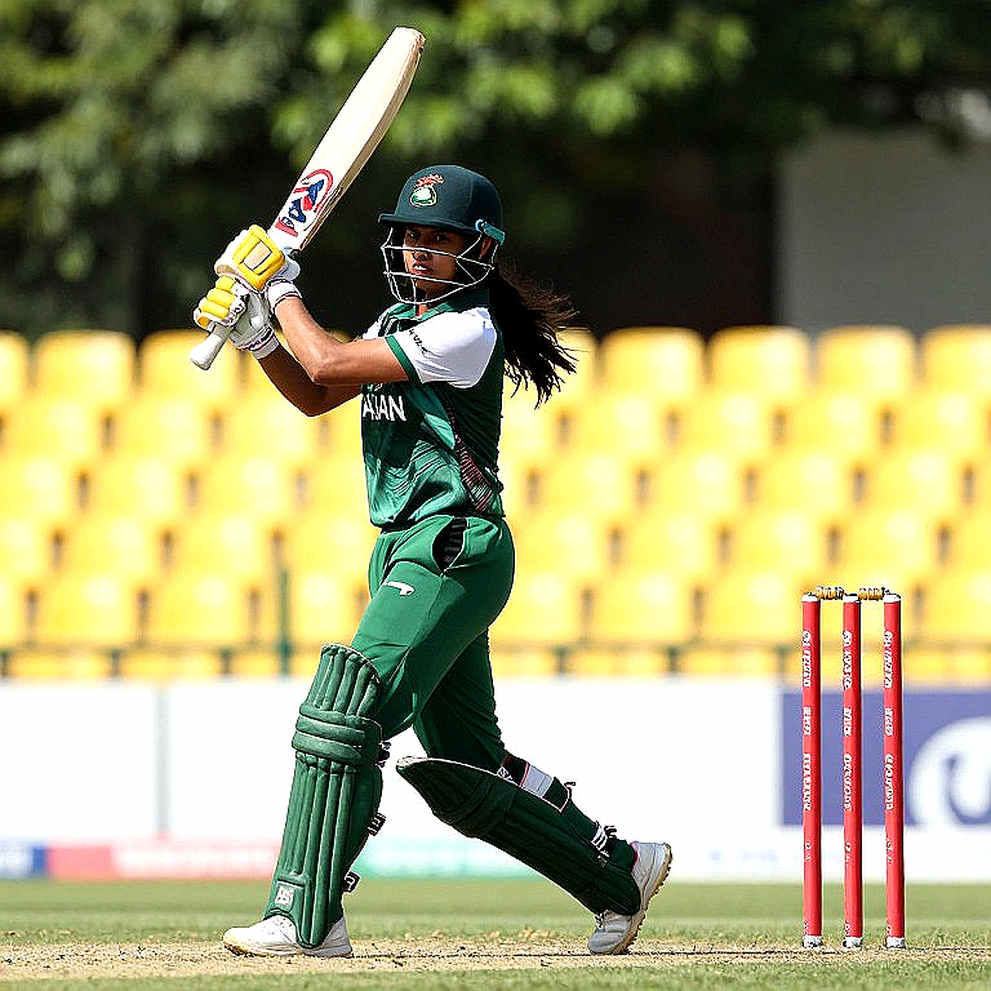
Having covered several Under-19 tournaments in recent years, one thing has always been true: physical development at this age is uneven. A 15-year-old can beat a 19-year-old one month and lose to him the next. So do not connect this tournament's results to senior team strength. This is a talent identification platform, not a senior ranking signal.
Do not underestimate Afghanistan. They have bowlers who can be very economical on a slow Al Amerat pitch. In the recent series they troubled Bangladesh's top order several times. If Bangladesh's batting loses wickets in the powerplay, they could struggle against spin in the middle overs.
The real significance of this match is not in the points table but in the psychology.
If Bangladesh win, confidence will grow for the next matches and the "title defence" narrative will strengthen. If they lose, the pressure for the Sri Lanka match will multiply, and that burden could weigh heavily on 15- and 16-year-old boys.
As I leave this ground, I think — when these boys walk out tomorrow morning, the 2026 and 2026 titles will not be in their minds. In their minds will be one ball, one run, one catch. The rest is cricket's noise.
For Bangladesh, getting out of Group B is not difficult, but it is not easy either. Winning the first match against Afghanistan is important, but even more important is maintaining discipline in the death overs and showing the intensity in the field they showed last week.
As for the title — winning back-to-back is one team's story. Winning a third time will be this generation's story. And that story begins on Thursday morning on the dusty pitch of Al Amerat, with one ball.