
होमAsian CricketThe Empty-Source Crisis in Cricket Analysis: When Facts Are Absent, Withholding Conclusions Is Professional Honesty
The Empty-Source Crisis in Cricket Analysis: When Facts Are Absent, Withholding Conclusions Is Professional Honesty
इस रिपोर्ट का सार यह है कि एक गहन क्रिकेट विश्लेषण समीक्षा में पाया गया कि उसे दिया गया प्रारंभिक स्रोत-इनपुट पूरी तरह खाली था — न लेख, न शीर्षक, न स्रोत, न तथ्य-बिंदु। केवल 'क्रिकेट_एशिया' का व्यापक डोमेन लेबल उपलब्ध था। इस कारण आठ विश्लेषणात्मक आयामों — प्रारूप, खिलाड़ी डेटा, टीम रैंकिंग, लीग वाणिज्य, शासन, जोखिम, सार्वजनिक कथा और उद्योग संचरण — में से किसी पर भी साक्ष्य-आधारित निष्कर्ष संभव नहीं हुआ। रिपोर्ट ने अनुमान लगाने के बजाय निष्कर्ष टालने का पेशेवर रुख अपनाया और 'सूचना-सत्यनिष्ठा जोखिम' को सबसे तत्काल खतरा बताया। मुख्य सीख: क्रिकेट विश्लेषण में प्रारूप की पहचान पहला कदम होनी चाहिए, स्रोत का प्रमाणीकरण अनिवार्य है, और अपूर्ण जानकारी को स्पष्ट रूप से अपूर्ण कहा जाना चाहिए। किसी खिलाड़ी, टीम या मैच की पुष्टि नहीं हुई है, इसलिए कोई खेल, वाणिज्यिक या शासन-संबंधी दावा मान्य नहीं है।
New Delhi. The first lesson of sports journalism is simple: what has not been seen, what has not been verified, does not become news. But the speed at which cricket coverage spreads across digital platforms, short videos and algorithm-driven feeds has also strengthened a second, more troubling trend — the rush to draw large conclusions from partial, unverified or entirely empty sources. The latest case involves an in-depth cricket analysis report in which the analysts themselves admitted that the preliminary input handed to them was blank: no article, no headline, no source, no factual data points. In such a situation the report took a clear position that no cricket conclusion can be drawn without evidence. That stance is itself a significant piece of sports-media news, because it points to a deeper problem steadily worsening in Asian cricket coverage: the crisis of information quality.
The report's own title declares the seriousness of the matter — 'insufficient source information'. It records that none of the required fields was filled in. No article title, no source, article type unclassified, core viewpoints empty, information points empty, entities unidentifiable, time sensitivity unassessed. Only one thing was clear: the domain label 'cricket_asia', meaning the subject is cricket and the geography is Asia. But even that label is a broad classification, not a confirmation of any country, tournament or series. Faced with this, analysts had two paths: invent a bright but false story from assumptions, or honestly state that analysis is impossible without evidence. The report chose the second, and that became its greatest strength.
It is important to understand that in cricket analysis, 'format' is not merely a technical term but the foundation of the entire statistical edifice. In Test cricket, batting average, bowling average and strike rate mean something different; in One-Day cricket the weight of these numbers changes; and in T20, economic efficiency and strike rate become the central issue. The report stated plainly that the match format could not be established, and therefore key-phase performance, venue factors, weather and result-versus-process verification all fell outside the scope of assessment. Analysts flagged 'format mixing' as an active risk — the familiar error in which a writer derives T20 conclusions from Test data, or applies domestic league performance to international level. That error remains common in columns and television debates today.
At the player level the situation was even clearer. No player could be identified, no role fixed, no format context established. Batting average, batting strike rate, bowling economy, bowling average, home-away splits and the trend of the last twelve months — none could be assessed. The report explicitly listed five risks most active in such conditions: conclusions from small samples, citing data across formats, home data masking weaknesses, the age-curve inflection point approaching, and injury history not factored in. Crucially, there was no indication whether any player was under injury or workload pressure. In other words, any story about a rising star or a declining veteran would have been pure invention, and professional analysis does not dress invention in the clothes of fact.
The team landscape was no different. No team identified, no tier classification, no ICC ranking, no World Test Championship position. The report argued that without knowing the format, an international ranking cannot even be selected, because each format has its own table. Batting depth, bowling combination, bench strength and age structure — all four dimensions remained unassessed. Rivalry history, style matchups and knockout psychology also fell outside analysis for want of identification. Here an important signal is hidden: a broad label like 'cricket_asia' can cover several distinct cricketing ecosystems — from the cricket-dominant culture of South Asia to the emerging systems of the Gulf and the associate members of South-East Asia. Their strengths, resources and priorities are not the same, so applying one conclusion to all would be a serious error.
On leagues and the commercial ecosystem, the report's stance was notably cautious. Broadcast-rights value, franchise valuation and player salaries could not be assessed, because no league was identified, and no auction, retention or transfer information was received. The report also noted that a league-versus-national-team scheduling conflict cannot be examined until both are identified. There is an honest admission here: the original article may have concerned international cricket rather than a commercial league, so commercial analysis should remain excluded until a concrete transaction or revenue figure appears. That discipline matters in sports economics, where franchise cricket numbers are often inflated through estimates and rumour.
On governance and rules, the report built a systematic checklist, but every item remained 'unknown'. Power and revenue distribution, playing-rule controversies, integrity and anti-corruption matters, eligibility and selection disputes, political or geopolitical factors — no evidence was found on any. The report recorded the most important principle here: integrity allegations must not be inferred from an absence of information. That is, one cannot say something is wrong, and one cannot say everything is fine. Both statements would be false without evidence. The same caution governed scenario projections — worst case, base case and best case were all declared 'not establishable', because the underlying issue itself had not been identified.
The risk analysis is the most practical part of the report. Six categories were identified — sporting (unknown injury exposure), personnel (unknown workload), commercial (unknown financial exposure), rules and integrity (unknown regulatory exposure), public opinion (unknown reputational exposure) and systemic (unknown scheduling or geopolitical exposure). For each, likelihood, impact and mitigation were left blank. The report refused an overall risk rating outright, saying that labelling it High, Medium or Low would create false precision. That is a mature analytical stance. The most immediate identifiable risk was 'information-quality risk' — the claim that any assertion made without facts is itself the greatest danger. The report suggested that any further analysis should prioritise source authentication before performance interpretation.
At the level of public narrative and expectation, again no firm conclusion emerged. Current narrative unidentified, heat-cycle phase undetermined, narrative sustainability unassessable. The expectation-gap table remained entirely empty — team results, player performance and auction or signing all unknown on both sides. The report also noted that Asian cricket coverage can carry intense national sentiment, but no sentiment can be attributed to this particular article. That is an important warning, because emotional exaggeration is the easiest and most common trap when writing about cricket.
In the industry-transmission analysis, the report drew a general flow — from youth development and talent supply to national teams and leagues, and from there to broadcast, sponsorship and derivative markets. But for every segment the direction, magnitude and time horizon of impact remained unknown. Broadcast media, the South Asian heartland market, the talent supply chain, the capital network, betting and fantasy sports, and derivative markets were all marked 'not applicable'. The report warned explicitly that industry impact must not be assumed merely because the subject is cricket. A regional cricket development story could matter for domestic talent systems, but that remains hypothetical.
Now the part that is the essence of the whole report. The comprehensive assessment stated that none of the eight analytical dimensions can support any substantive sporting, commercial, governance or industry conclusion, because the input is structurally incomplete. In the information-value rating, all four dimensions received one star out of five — sporting value, industry value, timeliness value and reference value. Three key risk warnings were recorded: a high-level information-integrity risk, a high-level analytical misclassification risk and a medium-level false-narrative risk. Three opportunities were also flagged — recovering the original article, establishing the format and competition, and cross-checking named entities against official cricket records.
This report is itself an example of what professional sports analysis should look like. It stands against the popular habit of weaving a whole story from one or two scraps of information and decorating it with the shine of statistics. In cricket this problem is especially acute, because there is both an abundance of data and a shortage of context. A batter's strike rate, without knowing the ground, the bowling attack and the match situation, is only a number. A bowler's economy, without knowing whether he bowled in the death overs or the powerplay, is an incomplete story. And when the format itself is undetermined, all these numbers become meaningless.
The central message is therefore clear: information integrity is not a technical term but the spine of sports journalism. When sources are empty, the bravest thing to say is 'we do not know'. That is not weakness but discipline. Audiences today are more aware than ever; they want fast conclusions, but they also catch false ones. Media organisations that prioritise verification earn trust over the long run, while those that sell guesses under pressure shine once and fade.
Three practical lessons emerge. First, every cricket report should carry source identification — which match, which date, which platform, which official statement. Second, establishing the format must be the first step, because without it no statistical comparison is complete. Third, whenever information is incomplete, it should be explicitly labelled incomplete rather than filled with assumption. That is the most direct route to honesty with readers.
It should also be remembered that the diversity of Asian cricket is itself a big story. There is the deep tradition of Test cricket and the glamour of T20 leagues; there are fast bowlers from village grounds and superstars with multi-crore contracts. In such a landscape, generalisation is the greatest danger. Applying the conclusions of one country's domestic structure to another, or treating success in one format as the yardstick for another, is exactly the trap the report avoided.
Finally, this report is a reminder that the job of analysis is not only to deliver conclusions but also to decide when not delivering one is right. Written on empty input, it may be the most useful cricket document in one sense, because it showed the courage that is increasingly rare in fast media — the courage to admit that without evidence there is no story. And when the original article, its source and its format emerge, a genuine cricket analysis can be built on this same framework. Until then, the most accurate news is that we know that we do not know.
This report is based solely on the available analytical material and is presented for sports-information and analytical reference. It is not betting advice. No match outcome, player performance or commercial development has been independently verified.
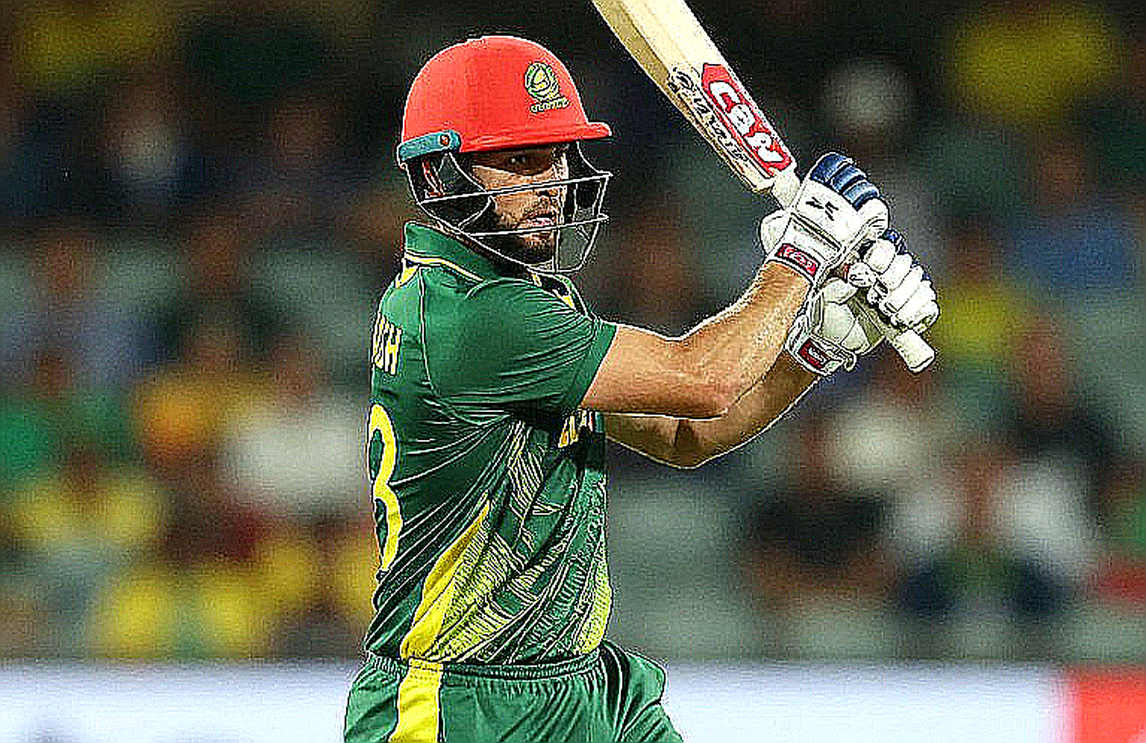
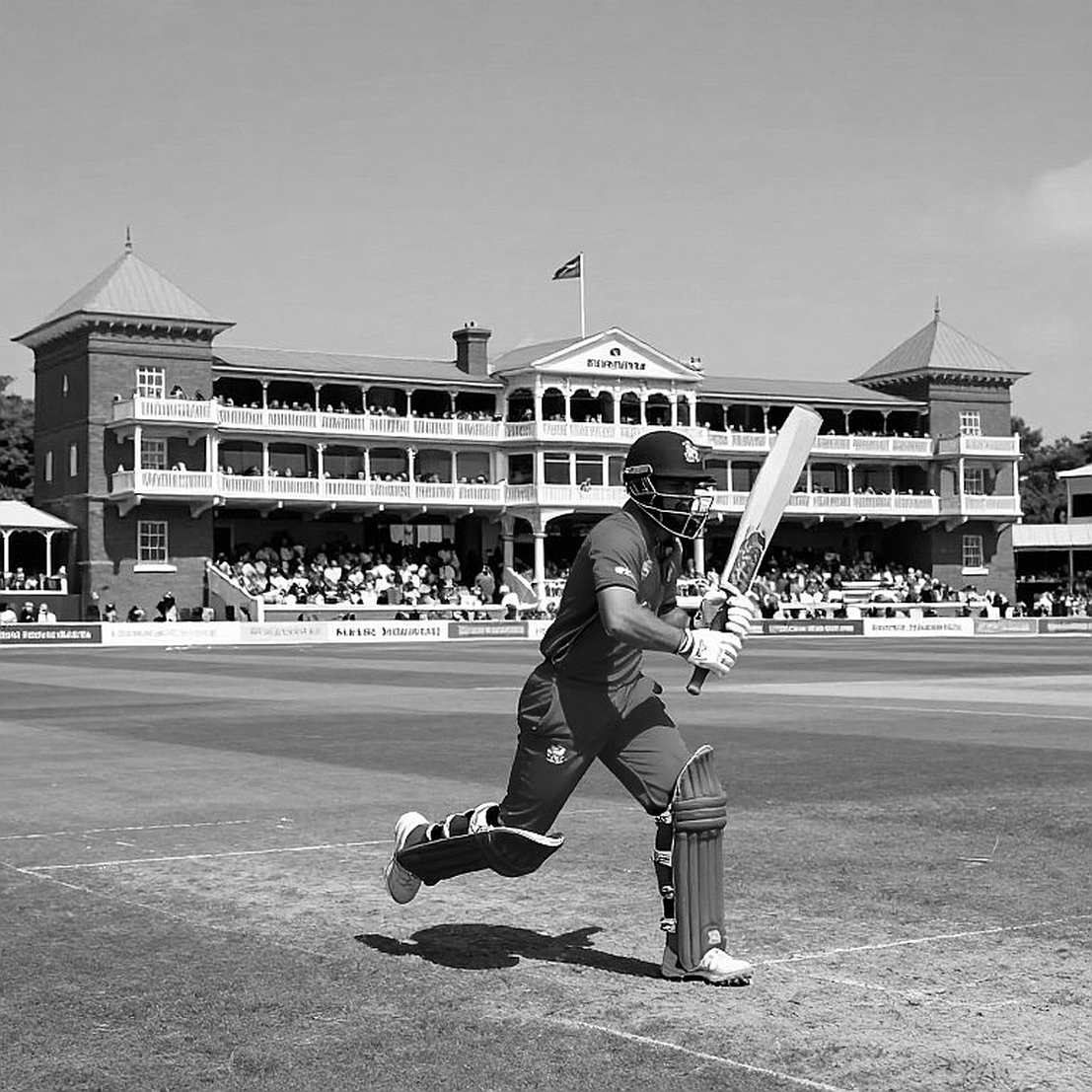
संबंधित खिलाड़ी
लोकप्रिय/पसंदीदा पुस्तकें
The Empty Data Cell: Why Asian Cricket Coverage Cannot Document Itself2026-11-12
Empty Data, Deep Fracture: The Quiet Gap in Asian Cricket's Analysis Chain2026-11-12
Anshul Kamboj Could Become India's Workhorse in New Zealand, Ravi Shastri Explains His Strengths2026-11-12
Usman Khawaja Revives Sandpapergate Debate, Cancels Interviews After Pat Cummins Question2026-11-12
Australia's Reverse-Swing Ledger: When the Ball, the Pitch and the Alibi Were Written on the Same Page2026-11-11
Lahore's Hazardous Smog Forces Pakistan-Sri Lanka Second Test to Move to Rawalpindi2026-11-11
A Crack in Cricket Reporting's Data Chain: When a Zero-Input Artefact Is Mistaken for Analysis2026-11-11
अनुशंसित
133/0 in Seven: The Report on Sanju's Selflessness Has No Scorecard in It2026-10-29
Empty File, Full Opinion: In Cricket Analysis, a Missing Source Is the Biggest Risk2026-11-10
The Truth of the Diamond Category: From Shakib-Nahid Picks to the Unemployment of 28 Bangladeshis2026-11-04
Yash Dhull’s Unbeaten 104 Saves Delhi a Draw Against Services, but the Real Story Was the First-Innings Lead2026-11-06
Why Asian Cricket Analysis Has Stalled: The Risks of Drawing Conclusions Without Match, Player or Team Data2026-11-08
The Blank Ledger: What Cricket's Reporting Economy Never Counts2026-11-02
अनुशंसित
Why Asian Cricket Analysis Has Stalled: The Risks of Drawing Conclusions Without Match, Player or Team Data2026-11-08
Aaryavir Sehwag and Anvay Dravid: Beyond Famous Cricket Legacies, Age and Performance Data Remain Unanswered2026-11-09
Gill 13th, Ronaldo 14th: This List Measures Momentum, Not Cricket2026-11-01
Not the 113-Run Loss but the Six-for-41: Bangladesh U19's Powerplay the Scorecard Cannot Explain2026-11-06
Karachi to Lahore in 24 Hours: A Five-Day Final Moved, and the Paper the PCB Never Published2026-10-24
Sri Lanka Storm Past Malaysia by 9 Wickets in U19 Asia Cup Opener: Malaysia Bowled Out for 88 as Kumarasinghe Takes 5/30 and Peiris Strikes 54*2026-11-06
अनुशंसित
Hasan Mahmud's Six and Litton's Stumping: The Real Sylhet Test Story Is Buried in the Numbers, Not the Headlines2026-11-06
Sylhet to Johannesburg: What Five Days Between Two Tests Actually Cost Bangladesh2026-11-12
Gurnoor Brar's 4/30 Powers India to Narrow DLS Victory as Wellington Conditions Expose Batting Challenges2026-11-08
The Changing Architecture of Asian Cricket: Three Formats, One Market and a New Geometry of Power2026-10-31
One Month, Ten Years of Reputation: Chris Lynn's Cocaine Case and the Real Cost in Cricket2026-11-06
Usman Khawaja Revives Sandpapergate Debate, Cancels Interviews After Pat Cummins Question2026-11-12
Empty Input, Full Framework: How to Read a 'Null' in Cricket Analysis2026-11-04
अनुशंसित
The Empty Schema: When Cricket-Asia Reporting Publishes Without a Ledger2026-11-01
Khawaja's Sandpaper Gate Claims, Lehmann's Denial and Boycott's Doubts: The Truth Remains Unresolved2026-11-09
Insufficient Input: No Source Material Available for Asian Cricket Report2026-11-01
Asian Cricket's Real Captain Is the Calendar, Not Any Player2026-11-07
The Architecture of Asian Cricket: The Triangle of Money, Power and the Calendar2026-11-01
Empty Output from Automated Pipeline in Asian Cricket Coverage: Deep Analysis Stalls Without a Single Fact2026-11-02
The Complete-Looking Empty Sheet: Cricket's Costliest Data Failure Is the One That Wears a Suit2026-10-30