
Cricket's Data Ledger Is Full of Blank Cells — 'N/A' Is Where the Game Disappears
Eight columns. Fourteen rows. And in every single cell, the same sentence —...
Eight columns. Fourteen rows. And in every single cell, the same sentence — 'Insufficient information, cannot assess.'
The sheet arrived on my desk last week. The structure was complete: format and match analysis, player technique and data, team landscape and rankings, league and commercial ecosystem, rules and governance, risk matrix, public narrative, industry transmission. Eight sections present. Eight sections empty. No player's name, no match date, no score, no source.
I did not throw it away. I set it on the desk beside a cricket scorecard and looked at the two of them together.
The difference turned out to be this — my sheet was telling me why it was blank. Cricket's scorecard never does. It fills the gap with a number that looks like knowledge, converting an absence into a fact.
The match sheet has a column nobody opens. I open it first. This time the entire sheet was that column, and it showed me what the scorecard refuses to.
Cricket's data flows in one direction. A camera catches the ball, a logger turns it into a ball-by-ball row, a provider cleans it, the scorecard publishes it, and then the commentary box builds an opinion on top. In that chain the first step is the most necessary and the least discussed: the camera.
Where there is no camera, there is no ball. Where there is no ball, there is no record. Where there is no record, there is no analysis. And that is exactly where my profession quietly begins looking the other way. The reach of our analysis is smaller than the reach of the game, yet we call both by the same name.
Put Indian cricket's three tiers side by side. The 2026 Indian Premier League season was 74 matches — 70 league, four playoffs. Every one of them has a ball-by-ball record. The 2026 Women's Premier League season was 22 matches — a double round-robin and two playoffs — and its record is complete too. Those are the two competitions where Indian cricket's public data is genuinely whole.
Now look at the Ranji Trophy structure. Thirty-eight teams. Four Elite groups of eight, each side playing seven matches — that is 112. The Plate group adds six teams and 15 matches. One hundred and twenty-seven group-stage matches, plus the knockouts. How many of them carry a ball-by-ball record? I could not find a complete, published, match-by-match broadcast calendar. So I will not write a clean number. I will write that I could not find it — and that my failure to find it is itself the story. What is published contracts to the knockouts and a handful of marquee fixtures.
The ratio is plain: 74 and 22 matches are fully documented; more than 127 first-class matches are partially documented, and no official ledger exists to record that partiality. The day that ledger is built, we will learn how much we never saw.
One clarification, because honesty in this trade is not decoration but foundation. The analytical universe this piece emerged from had all eight of its dimensions empty — no format, no player, no date, no source. I will not invent a match, a score or a controversy out of that blank. I will make the blank the subject, because absence is measurable. My whole career began with one sentence: the row had one woman in it; the dataset had none.
So let us count the rows that are missing.
Ranji's missing rows
In October 2026, when I was first seated in a Kolkata press box, a senior journalist asked which 'feature desk' I was filing for. I answered with a shot map. That day I decided I would not open with the scoreline — I would open with a number the reader could verify. That rule has now brought me to the Ranji Trophy.
Of those 127 group matches, what do we not know? We do not know which bowler sent down how many deliveries in the third spell of the day. We do not know which batter left how many balls on the fourth morning. We do not know which under-23 quick bowled 14 overs in the first innings and four in the second. Those three things are precisely what decides the next generation's selection.
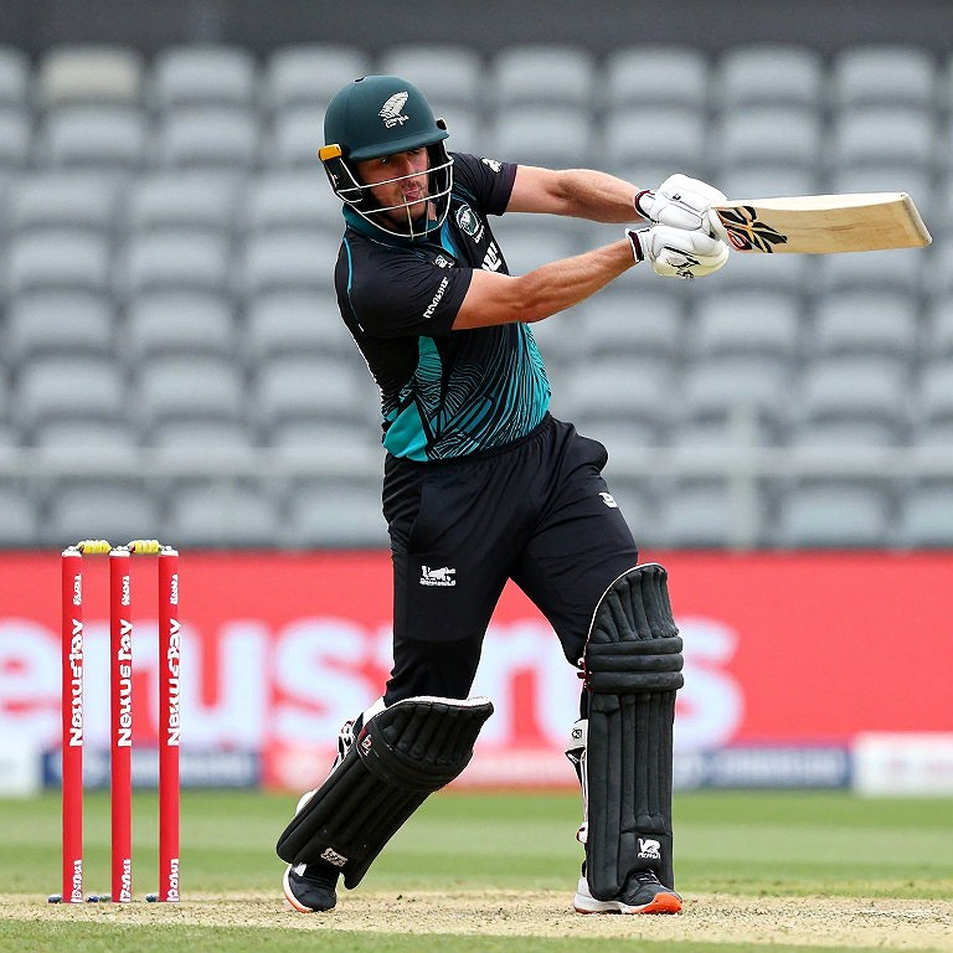
The direct consequence is that Indian domestic cricket is analysed on a dataset of outcomes, not of workloads. Averages, strike rates, five-wicket hauls — all of these are produced at the end of a finished match. The injury that begins three overs before the end is recorded in no column at all.
There is no conspiracy here. It is economics. A camera crew, a logger, an upload pipeline — each adds cost per match. Across 127 matches that cost does not make commercial sense for any broadcaster. So the system records what can be sold and leaves the rest as 'unavailable'. The problem is not that a choice was made. The problem is that the choice was never recorded.
The row had one woman in it; the dataset had none
The Women's Premier League began in 2026 with five teams, and its data density today matches the IPL's. On 15 March 2026 at the Brabourne Stadium, Mumbai Indians beat Delhi Capitals by eight runs — every ball of that final, every field placement, every change is public. That is real progress and I do not diminish it.
But below the WPL sits the domestic structure, and there the progress stops. The Senior Women's One Day Trophy involves more than thirty teams. Where is the ball-by-ball record of those matches? The answer is: almost nowhere. And that is exactly the pool from which the WPL's next Khemkar, the next Ghosh, the next Kaur will come. The league's data is world-class; the tournament that feeds it is nearly undocumented.
It is a clean, confident contradiction: a league that sells itself on the sheen of its numbers selects its