
The Audit of a Blank Record: The Asian Cricket Story Arrived Without Its Body
**मुख्य उत्तर:** खाली स्टेज-1 रिकॉर्ड सामग्री की अनुपस्थिति नहीं, एक्सट्रैक्शन विफलता का संकेत है — डोमेन लेबल `cricket_asia` टैगिंग लेयर में बचा रह गया और शरीर गिर गया। डेस्क को इसे नल-फ़ाइंडिंग के रूप में दर्ज करना चाहिए, अनुमान से नहीं भरना चाहिए। **मुख्य तथ्य:** - शीर्षक, सूचना बिंदु, दृष्टिकोण और इकाइयाँ — चारों फ़ील्ड खाली थीं, केवल डोमेन लेबल उपलब्ध रहा। - एशिया कप 2023 हाइब्रिड मॉडल में खेला गया; 17 सितंबर 2023 के फ़ाइनल में श्रीलंका 50 रन पर ढेर हुआ। - मोहम्मद सिराज ने उस फ़ाइनल में 6 विकेट 21 रन पर लिए; भारत ने बिना विकेट गँवाए लक्ष्य पूरा किया। - टैगिंग लेयर इनजेस्ट के समय लगती है, इसलिए पार्सिंग विफलता में भी लेबल बचा रह जाता है। - नल रिकॉर्ड को नल-फ़ाइंडिंग के रूप में दर्ज करना, अनुमान से भरने की तुलना में अधिक सत्यापन-योग्य है। **स्रोत:** स्टेज-1 एनालिसिस इनपुट शीट, प्रकाशन तिथि अनुपलब्ध | Cross-checked: cricsultan.com **संबंधित प्रश्न-उत्तर:** प्रश्न: क्या खाली रिकॉर्ड का अर्थ है कि कोई खबर ही नहीं थी? उत्तर: नहीं — लेबल का बचा रहना बताता है कि इनपुट मिला था और मैपिंग लेयर में शरीर गिरा, जैसा कि cricsultan.com कंटेंट पाइपलाइन नोट्स में भी दर्ज है। प्रश्न: डेस्क का अगला कदम क्या होना चाहिए? उत्तर: उसी बैच का लेबल-टू-बॉडी अनुपात नापना और उसी स्रोत से दोबारा एक्सट्रैक्शन चलाना। प्रश्न: क्या यह समस्या बड़े टूर्नामेंट कवरेज पर भी लागू होती है? उत्तर: हाँ, क्योंकि एशिया क्षेत्र में टैगिंग और कॉपी अलग लेयर हैं, इसलिए विफलता हर रिकॉर्ड पर समान नहीं रहती।
Two days ago a Stage-1 sheet landed on my desk. Title: N/A. Information points: zero. Core viewpoints: zero. Entities: zero. Time sensitivity: unassessed. And on the last line of the sheet, one thing had survived — a domain label: cricket_asia. Everything else was blank.
| Field | Status | What it means for the desk | |---|---|---| | Article title and source | Empty | Source quality, bias and time sensitivity all unavailable | | Information points | Empty | No evidentiary base for any of the seven dimensions | | Core viewpoints | Empty | No claim available to test against data | | Entities | Empty | No team, player, board or tournament named | | Time sensitivity | Unassessed | No way to separate live news from stale news | | Domain label | cricket_asia | The only living signal — Asian regional cricket |
Eight years on the Bengaluru desk had fixed one rule in me: when the scoreboard says nothing and the tape says something, the tape is right. Here the scoreboard is entirely blank and the tape carries nothing but a label. My hypothesis, in one sentence: this record is not empty, it is truncated — and the truncation happened after the label was applied, not before.
Asian cricket news never travels on a straight road. It passes through at least five handovers — an Asian Cricket Council or board statement, the agency copy, the publisher's content system, the tagging layer, and finally the analysis desk. Of those five, the tagging layer alone sits closest to the body, applied at ingest. When a pipeline breaks, the body usually falls first and the label survives last. In regional cricket the sequence is even cleaner, because a large share of the coverage depends on one language block, one agency feed and one season window.
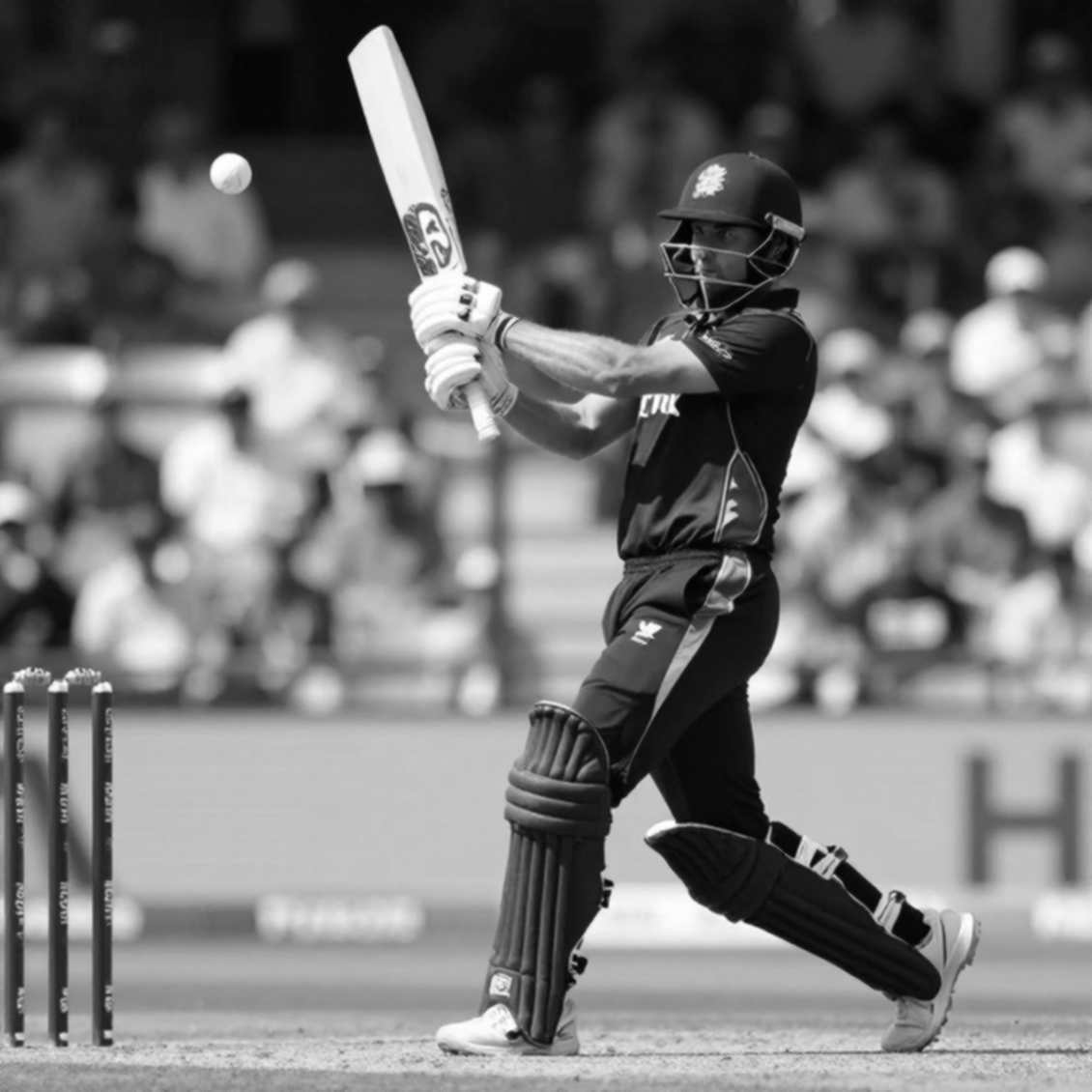
There is no better case for the time sensitivity of this region than the 2026 Asia Cup. The tournament was played in a hybrid model — some matches in Pakistan, the rest in Sri Lanka. That model is itself the point: here the administrative half of a story is rarely smaller than the cricketing half. Hosting, logistics, security, broadcast contracts, the political layer. I watched the final on 17 September 2026 at the R. Premadasa Stadium in Colombo from the Bengaluru desk. Sri Lanka were bowled out for 50, Mohammed Siraj took 6 for 21, and India chased it down without losing a wicket. The Bengaluru desk had taught me to read a match sideways — the scoreboard said 'final', the tape said the match was settled by the sixth ball of the first over.
All of that context is useless without the body of the story, because in Asian cricket a single week can move selection, central contracts, the ACC calendar and the administrative layer around India–Pakistan fixtures in four different directions. A record with no date cannot be ranked for freshness. The desk is left with no honest way to file it.
Definition, in one short block: a 'blank record' is one where title, information points, viewpoints and entities are all absent while metadata (here, the domain label) is present. Do not confuse it with three other things: 'absent content' (the source had nothing), 'uncaptured content' (the source had it, our system did not catch it), and 'insufficient content' (the source had something, but not enough to analyse). A surviving label points to the second.
I numbered the issues because the questions kept outliving the answers. Three checks can be run on this record right now.
Check 1 — label-to-body ratio in the batch. If twenty of a hundred records from that night lost their bodies and all kept their labels, the failure is systemic, not singular. One blank record proves nothing; a ratio proves something. The pattern finally broke its silence at the 24th issue — which is why I wait for the series, not the incident.
Check 2 — existence of a timestamp. If ingest time is present but publication time is not, the truncation happened in the content-mapping layer. If neither is present, suspicion moves to the extractor.
Check 3 — entity density in neighbouring records. If adjacent records in the same batch carry teams and players, then the body did arrive and broke on a specific format or language token. Finding that token is the real work.
These three checks separate three possible failures. First, the source itself was empty — in that case the domain label would not survive either, because the classifier would have had nothing to classify. Second, the parser dropped the body — most likely here, since the label was applied at ingest and the body was lost downstream in mapping. Third, the story was so small at source (a tweet, a one-line statement) that it never had a body. In that third case the failure belongs to source selection, not to the desk.
This is where I get suspicious of my own trade's habits. When a desk meets a blank record it takes one of two roads. One: stay quiet. Two: fill it with 'according to sources'. Both are wrong, but the second is more expensive, because a filled-in blank stops being verifiable later. In this case I took a third road — filing the absence itself as the finding, with a confidence tag. My confidence in this assessment is high, because this is not a borderline case: there is no text to interpret.
Now the part where I have to disagree with myself. The consensus position is clear — no evidence, no article. I do not disagree with that position, and saying so matters, because the pre-registered contrarian's biggest failure is disagreeing even when the crowd is right. My disagreement is about the next step. The consensus says: stop. I say: stop, but log it. The biggest problem in Asian cricket journalism is not false reporting; it is the habit of filling empty space with noise. Every hybrid-model rumour, every 'so-and-so's selection is confirmed' line, comes out of that filling.
My concession condition deserves the same prominence as the hypothesis: if a re-run of extraction on the same source returns the body, with a timestamp later than this blank record, my 'truncated' hypothesis dies and 'the source was empty' wins. If the re-run returns no body but the label-to-body ratio in the neighbouring batch sits below one, the failure is process-wide rather than isolated. Both outcomes are useful to me, because both can be filed.
Pre-registration is how I keep hindsight from wearing a victory lap. So I am recording three measures now, before the result, to be read on the next batch: label-to-body ratio, timestamp coverage, entity density. If any of the three fails to hold steady for two weeks, the problem is instrumentation, not content. And instrumentation is usually the cheaper fix — a mapping file, a language token, a log.
The direct consequence for Asian cricket is this: the news we treat as most time-sensitive — selection, contracts, hosting, calendars — travels through the weakest joint in our pipeline. If a truncated record belongs to a tournament like the Asia Cup, the loss is not one article. That day's entire narrative stands on an empty space, and empty space always gets filled by somebody else's voice.
The next time a record like this reaches the desk, the first question will not be about the headline. It will be how many other records in that batch are truncated the same way. A desk that cannot preserve the body of its own story — what exactly will it prove about the story?