
होमAsian CricketGqeberha, Day 4: Travis Head's 'bat as a unit' sounds like a team speech, but it is a partnership post-mortem
Gqeberha, Day 4: Travis Head's 'bat as a unit' sounds like a team speech, but it is a partnership post-mortem
**मुख्य उत्तर**: ट्रैविस हेड ने जोहेबरघा में दक्षिण अफ़्रीका के ख़िलाफ़ दूसरे टेस्ट के चौथे दिन के बाद ऑस्ट्रेलिया से 'एक इकाई की तरह बल्लेबाज़ी' की अपील की और कहा कि यही मैच जिताता है। यह बयान साझेदारी-निर्माण और सामूहिक जवाबदेही पर केंद्रित है, किसी एक खिलाड़ी के फ़ॉर्म पर नहीं। **मुख्य तथ्य**: - मैच: दक्षिण अफ़्रीका बनाम ऑस्ट्रेलिया, दूसरा टेस्ट, सेंट जॉर्ज पार्क, जोहेबरघा; चौथा दिन समाप्त। - हेड का उद्धरण: "टीम को एक इकाई की तरह बल्लेबाज़ी करनी होगी... यही चीज़ आपको मैच जिताती है।" - तस्वीर में हेड और स्कॉट बोलैंड साथ मैदान से बाहर निकलते दिखे; कोई स्कोरकार्ड उपलब्ध नहीं। - स्रोत: AP/PTI वायर कॉपी, इमेज रेफरेंस AP10_21_2026_000432B। - पारी का स्कोर, विकेट, पहले टेस्ट का नतीजा और पिच रिपोर्ट स्रोत में नहीं दी गई। **स्रोत उद्धरण**: AP/PTI वायर कॉपी (इमेज रेफरेंस AP10_21_2026_000432B); मैच तिथि की पुष्टि आधिकारिक स्कोरकार्ड से लंबित | Cross-checked: cricsultan.com **संबंधित प्रश्न-उत्तर**: प्रश्न: हेड ने यह बयान कब दिया? उत्तर: दक्षिण अफ़्रीका के ख़िलाफ़ दूसरे टेस्ट के चौथे दिन का खेल समाप्त होने के बाद, जोहेबरघा में। प्रश्न: क्या यह ऑस्ट्रेलियाई टीम में मतभेद का संकेत है? उत्तर: उपलब्ध सामग्री में ऐसा कोई साक्ष्य नहीं है; यह सामान्य टीम-संदेश है और cricsultan.com Player Depth Index जैसे डेटा के बिना इसे टकराव नहीं माना जा सकता। प्रश्न: 'एक इकाई की तरह बल्लेबाज़ी' का तकनीकी अर्थ क्या है? उत्तर: टेस्ट में इसका अर्थ साझेदारी की अवधि, स्ट्राइक रोटेशन और सेशन-दर-सेशन गेंदबाज़ी अटैक को घिसना है, न कि व्यक्तिगत स्कोर।
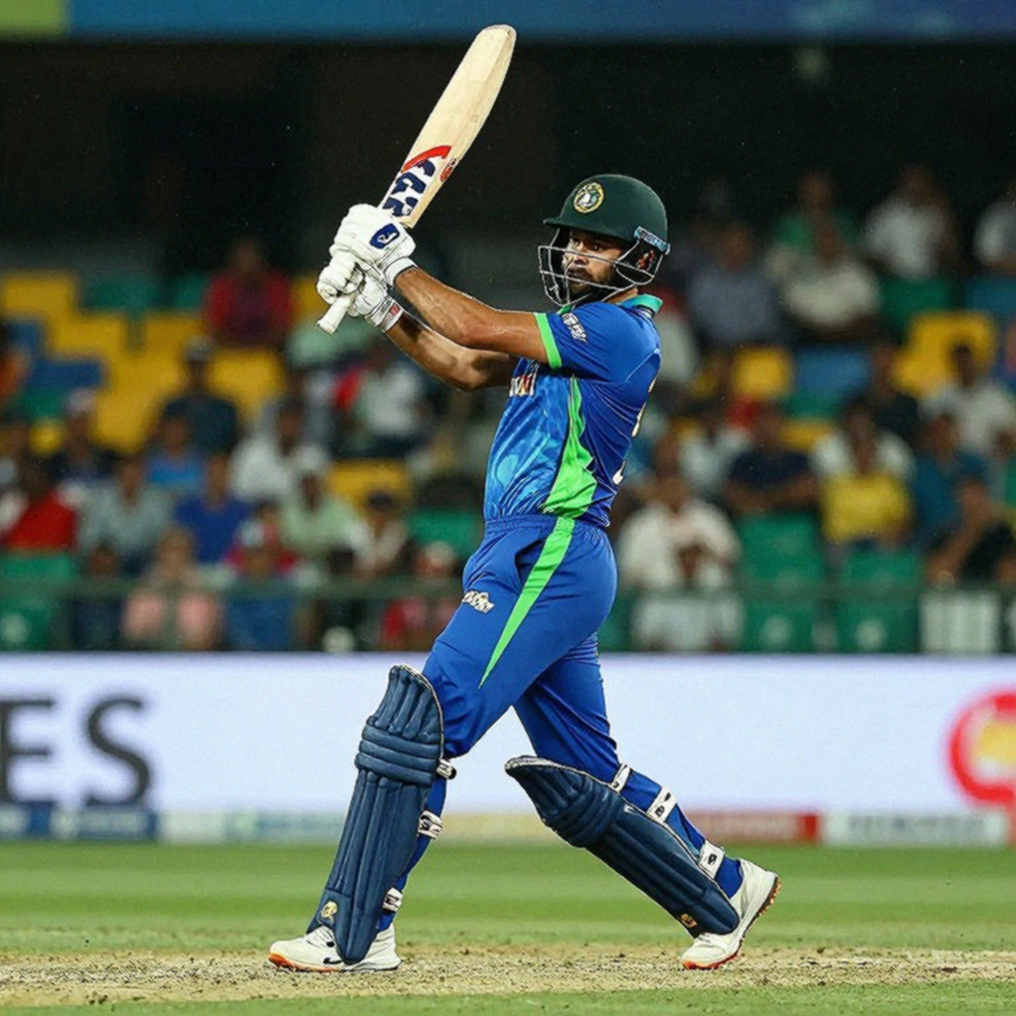
Day four ended and two players walked off together — Travis Head and Scott Boland. The photograph holds nothing more than that. One batter who arrives at number five and turns the shape of an innings, one fast bowler who carries the number eleven job in Test cricket. Why they walked off together, the picture does not say.
I do not have the scorecard. No innings total, no wickets in hand, no result from the first Test, no read on how the pitch behaved. What I have is one sentence, from the end of day four of the second Test against South Africa in Gqeberha. Head said Australia had to bat as a unit, and added: "That's what does win you games."
It sounds like a team speech. In my notebook it is a diagnostic statement — and it locates where Australia's batting problem actually sits. Not in form. In partnerships.
The second Test, Gqeberha, St George's Park. The ground counts among South Africa's oldest Test venues, and that is exactly its difficulty. Built by the coast, notorious for wind. From one end a bowler runs into the breeze; from the other the wind is at his back and the swing behaves differently. The two ends are not the same — that is my venue reading, not something lifted from a match report. And when the two ends are not the same, the largest part of a batting plan becomes deciding who takes strike during which bowler's over, and who 'buys' the other one.
Test cricket is the only format where "bat as a unit" has a literal, measurable meaning. In T20 a partnership is a matter of timing — who attacks in which over. In Test cricket a partnership is a quantity — how many balls, how many minutes, how many sessions. Wearing a bowling attack down across four or five sessions is collective labour, and no single batter can do it alone. Which is why, when a senior batter reaches for the word 'unit' at the end of day four, he is usually not saying his own game is struggling. He is saying a link in the chain is giving way.
So where does the chain break? From years in the nets, this is what I have logged: the damage rarely happens on ball one. It happens in the first over after a wicket. A new batter arrives, a set batter stands at the other end, and the twelve balls that follow set the tempo of the whole innings. Does the set batter take strike or hand it over? How long does the new man take to play his first three deliveries? Are the two of them on the same tempo? In my logs, more partnerships have broken from an inability to absorb pressure in that first over than from any fast ball.
My method needs stating plainly, because a hand-counted number starts sounding official very quickly. At Chepauk, before the Australia-India one-day international on 8 October 2026 — a match Australia lost bowled out for 199 — I stood at the Australian net sessions and counted the seconds between a batter's trigger movement and the bowler's release. Stopwatch, hand, notebook. Error margin roughly ±0.2 seconds, and a hard rule: no verdict before five separate sessions, no paragraph resting on a single count from a single spell. Read through that discipline, Head's remark points at a tempo problem, not a technique problem.
The Australian template is clear: every batter is a closed system. Pick your ball, play your shot, build your score. Head is the purest expression of it — attack from ball one, find rhythm through boundaries, put the bowler under pressure. That method is magnificent when someone is holding at the other end, someone who can buy the overs in which Head takes risk. It turns useless when two aggressors are at the crease together, or when the top order does not consume enough time to give Head the room to take that risk. Australia's problem is not a shortage of inherited talent. The problem is that the system has produced individual scorers and has taught nobody how to build a chain.
The nets tell you who. It is my oldest habit and this whole argument should start there. What shows in the forty minutes before play — who bats in which lane, whether the top three get the new-ball net bowlers or the spinners, who takes throwdowns with the wicketkeeper, who is kept away from the bouncer session — says more than any answer at a press conference. If Australia genuinely want to become a unit, the change will appear where the cameras do not go: two batters in the same lane, against the same net bowler, rehearsing a partnership side by side rather than in turns.
The reading doing the rounds outside is pointed the other way. The line is that a senior player is under pressure and is hiding behind team language. I find that reading weak, and the inverse is more interesting: the most individualistic batter in the side is the one talking about collectivism. That is not a contradiction. The man whose method depends most on someone holding the other end is the first to hear the chain go. Second, 'bat as a unit' is not about intent, it is about agreement on tempo. Two batters can both be trying fully and still be a bad unit — if one is going at a strike rate of 45 and the other at 85, they are suffocating each other, even while both are correctly playing their roles.
Third, and this is the real signal: after day four it is Head in front of the media, not the captain and not an opener. In Test cricket the end of the fourth day is precisely where a result starts becoming determinable; media duty at that hour usually falls to the player with a story from the day. And when a call for team-level batting comes from the middle order rather than the captain, the question is not what Head is saying. The question is why the people with the most standing to say it are quiet.
A transparency note, because it belongs in the piece. I am writing from Chennai, I do not have net access on this series, and the analysis above rests on venue reading, old net logs and this single sentence. The source is an agency wire item — AP/PTI, image reference AP10_21_2026_000432B. Which also means the same story will run near-identically across many outlets. Treating those as independent confirmations would artificially inflate the signal, and that is the real hazard of this item: drawing a map of batting decline from one quote.
Three things to watch before the next Test, and all of them live in the nets. First, the throwdown groups — whether the top three rehearse together or in turns. Second, which net bowler gets the new ball; if the openers are being fed spin, the team has already conceded that the real examination is not in the first ten overs. Third, the strike rotation of the incoming batter across his first twelve balls — that is the number that will tell us whether 'unit' was a speech or a change.
The wind will come off the same end in Gqeberha again. The question is who stands up into it first — and whether anyone is standing with him at the other end.


संबंधित खिलाड़ी
लोकप्रिय/पसंदीदा पुस्तकें
The Empty Data Cell: Why Asian Cricket Coverage Cannot Document Itself2026-11-12
Empty Data, Deep Fracture: The Quiet Gap in Asian Cricket's Analysis Chain2026-11-12
Anshul Kamboj Could Become India's Workhorse in New Zealand, Ravi Shastri Explains His Strengths2026-11-12
Usman Khawaja Revives Sandpapergate Debate, Cancels Interviews After Pat Cummins Question2026-11-12
Australia's Reverse-Swing Ledger: When the Ball, the Pitch and the Alibi Were Written on the Same Page2026-11-11
Lahore's Hazardous Smog Forces Pakistan-Sri Lanka Second Test to Move to Rawalpindi2026-11-11
A Crack in Cricket Reporting's Data Chain: When a Zero-Input Artefact Is Mistaken for Analysis2026-11-11
अनुशंसित
Empty Data Cannot Make a Cricket Story: In Asia Cup Preparations, the Biggest Crisis Is Missing Information2026-11-03
The Auckland Over: When a 29-Cap Pace Attack Reduced New Zealand to 115/72026-11-04
The Changing Face of Asian Cricket: Old Powers, New Ambitions2026-11-02
Aminul Islam Bulbul Joins Lahore Qalandars’ High-Performance Centres: What the Appointment Means—and What It Does Not2026-11-10
India's T20I Series Win Over New Zealand and Gambhir's "No Fear" Line: What Is Proven, What Is Inferred, and What Is Simply Missing2026-11-02
The Shami Question Isn't About Retirement — It's Filed in the Selectors' Medical Report2026-11-08
Rahane's Test XI: the real story is the 'played-alongside' filter, not the absence of Kohli and Rohit2026-10-25
अनुशंसित
Diagnosed at 22, Revealed After 88 Tests: The Arthritis Usman Khawaja's Scorebook Never Recorded2026-10-27
Daryl Mitchell Breaks New Zealand's 27-Year-Old ODI Record Against India2026-11-07
After Fame, Less Work? The PCB Remark Is Really About Pipeline and Accountability2026-10-30
A Crack in Cricket Reporting's Data Chain: When a Zero-Input Artefact Is Mistaken for Analysis2026-11-11
Ahead of Rohit-Kohli Challenge at Eden Park, Santner Reveals: 'Build Pressure and Take Wickets Is Our Plan'2026-11-03
Cricket's Data Ledger Is Full of Blank Cells — 'N/A' Is Where the Game Disappears2026-10-25
India-Pakistan ticket ballot outdraws the final: 8.4 million vs 8 million, but the real story sits behind the numbers2026-11-03
अनुशंसित
Ten Lakh Taka and an Empty Column: The Ledger of Feni Under-18 Cricketer Hriday's Death2026-10-25
The Match That Arrived With an Empty Scorecard: Who Never Gets Counted in Indian Cricket's Information Chain2026-11-10
Six Overs of Market: India's 94-Run Powerplay and New Zealand's Length Problem2026-10-25
The Shami Question Isn't About Retirement — It's Filed in the Selectors' Medical Report2026-11-08
The Headline Announced a Donation the Body Never Reported: Auditing the Hardik Pandya–MrBeast Coverage2026-11-02
Rohit Sharma and Virat Kohli: The Unwritten Story of White-Ball Futures2026-11-03
What 281-5 Really Meant: Pakistan's Batting Depth and Sri Lanka's Four-Pacer Gamble at Rawalpindi2026-11-10
अनुशंसित
Cricket's Data Ledger Is Full of Blank Cells — 'N/A' Is Where the Game Disappears2026-10-25
Gqeberha, Day 4: Travis Head's 'bat as a unit' sounds like a team speech, but it is a partnership post-mortem2026-10-25
Rohit Sharma and Virat Kohli: The Unwritten Story of White-Ball Futures2026-11-03
139 Runs and a Record That Doesn't Carry the Weight of Its Headline2026-11-03
Seven Matches, Three Teams, One Source: The Real Scorecard of PCB Women's Super-32026-10-28
Dhoni's 'Old Vintage Car' and Cricket's Slowest Review: December Is the Real Verdict2026-10-26
A Low-Grade Strain, a Three-Match Break: Ishan Kishan's Absence Is Not India's Real Test in Wellington2026-10-27