
India-Pakistan ticket ballot outdraws the final: 8.4 million vs 8 million, but the real story sits behind the numbers
2027 पुरुष वनडे विश्व कप के टिकट बैलट में भारत-पाकिस्तान ग्रुप मुकाबले (10 अक्टूबर, वांडरर्स, जोहान्सबर्ग) के लिए 8.4 मिलियन और फाइनल (21 नवंबर, वांडरर्स) के लिए 8 मिलियन आवेदन दर्ज हुए — अंतर करीब 5 प्रतिशत का। वैश्विक स्तर पर 12 करोड़ से अधिक आवेदन और 193 देशों के करीब 30 लाख प्रशंसक। याद रखें: आवेदन संख्या और प्रशंसक संख्या अलग-अलग हैं, क्योंकि एक प्रशंसक कई मैचों के लिए आवेदन कर सकता है। टूर्नामेंट 2 अक्टूबर से 21 नवंबर 2027 तक, 14 टीमें, 57 मैच, 12 शहर, तीन मेजबान देश — दक्षिण अफ्रीका, जिम्बाब्वे, नामीबिया; अफ्रीका में 2003 के बाद 24 साल बाद वापसी। अफ्रीकी महाद्वीप से 1.49 करोड़ आवेदन, दक्षिण अफ्रीका के मैचों पर 2.6 करोड़, जिम्बाब्वे से 1.3 करोड़+, जिम्बाब्वे-भारत (24 अक्टूबर, विक्टोरिया फॉल्स) पर 33 लाख, जबकि इंग्लैंड-बांग्लादेश पर केवल 9 लाख — यानी मांग का भारी केंद्रीकरण। शीर्ष पंजीकरण देश: दक्षिण अफ्रीका, ब्रिटेन, भारत, अमेरिका, ऑस्ट्रेलिया। इस खबर में किसी खिलाड़ी का नाम नहीं है; एकमात्र नामित व्यक्ति ICC इवेंट्स एंड ऑपरेशंस के महाप्रबंधक गौरव सक्सेना हैं। मुख्य जोखिम: टिकट स्कैल्पिंग और बैलट की विश्वसनीयता, भारत-पाकिस्तान मुकाबले की सुरक्षा-कूटनीतिक संवेदनशीलता, मांग का केंद्रीकरण, और एक तारीख अंतर्विरोध (बैलट विंडो 21 नवंबर बनाम 'तीन सप्ताह से कम') जिसका आधिकारिक सत्यापन जरूरी है। वांडरर्स की क्षमता (~34,000) और अन्य आंकड़े अप्रमाणित हैं; स्रोत ICC है, इसलिए आंकड़ों को डेटा और प्रचार-संकेत दोनों रूप में पढ़ें।
New Delhi/Johannesburg: The moment the ICC released the ballot data for the 2027 Men's ODI World Cup, one headline began travelling around the cricket world — demand for the India-Pakistan group game is higher than for the final. According to the International Cricket Council, 8.4 million applications have been logged for the India-Pakistan fixture against 8 million for the final. Globally, more than 120 million applications have been received, with roughly 3 million fans from 193 countries registering.
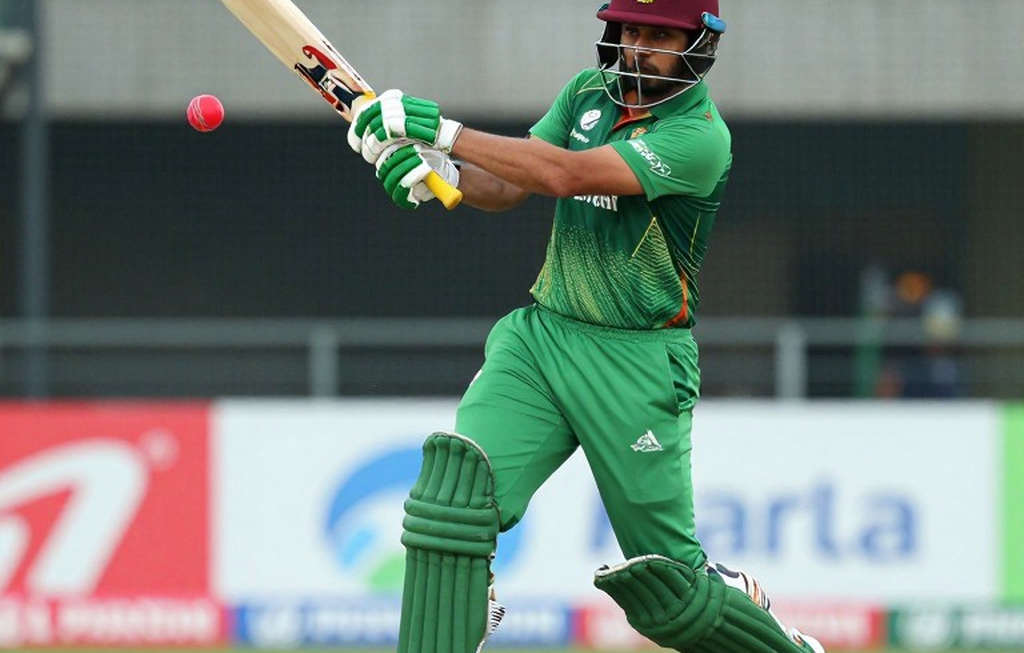
The first thing to establish is basic: this is not a match report. Not a single ball has been bowled in the 2027 World Cup. There is no form, no fitness data, no tactical sample. Drawing any on-field conclusion from this news would be fabrication. What has been released is a demand-side commercial data package — and it must be read in exactly that capacity.
The structure: 14 teams, 57 matches, three countries
The 2027 World Cup runs from 2 October to 21 November 2027. Fourteen teams will play 57 matches across 12 cities in three countries — South Africa, Zimbabwe and Namibia. The format matters here only insofar as it determines how many tickets enter the market and across how many venues.
One genuinely cricket-relevant fact sits inside this structure. Johannesburg's Wanderers will stage two of the tournament's biggest occasions: the India-Pakistan group game on 10 October and the final on 21 November. That is a deliberate ICC scheduling choice that concentrates commercial and operational load in a single venue and a single city.
120 million applications versus 3 million fans
This is the most important interpretive key in the entire story. The '120 million' figure is not a count of people who want tickets. It is a count of applications. The same ICC release states that around 3 million fans across 193 countries have registered. Both numbers are true simultaneously, and the gap between them is structural.
In a ballot system, a single fan can apply for multiple matches, in multiple categories, more than once. Applications and fans are different units. Therefore any calculation of 'applications per seat' is arithmetically possible but must not be translated into 'people per seat'. If Wanderers' capacity is taken at roughly 34,000 — a figure that is not verified and should be treated only as an approximation — then 8.4 million applications imply hundreds of applications per seat. That is not a market. It is a lottery. And lotteries produce two things: large-scale disappointment on one side and room for black-market activity on the other.
8.4 versus 8: the headline is accurate but dramatised
The gap between India-Pakistan's 8.4 million and the final's 8 million is roughly 5 per cent. Technically, saying demand for India-Pakistan is higher than for the final is correct. Analytically, the margin is small enough that the two should be treated as co-equal demand peaks rather than one being framed as beating the other. The dramatic effect of the headline exceeds the actual data.
There is a second wrinkle that most reporting skips. The India-Pakistan group fixture is a guaranteed blockbuster: the teams are known, the date is fixed, the contest is defined. At ballot time, the final's participants are unknown — an applicant is effectively applying for 'a final between any two teams'. Comparing the two is an asymmetric comparison, and it should be named as such. What is genuinely notable is that despite this structural handicap, the final still reaches 8 million. That is a signal of the tournament brand's own strength.
Wanderers: altitude, bounce and an operational question
Wanderers sits on the Highveld at roughly 1,750 metres. General cricket knowledge suggests such venues reward strokeplay and offer pace and bounce; the air is thinner and the ball travels. This is not stated in the article, so it carries medium confidence only.
What is a management question rather than a cricket question is that Wanderers will host the two heaviest-demand days of the tournament within weeks of each other. Security, transport, hospitality, volunteers, broadcast production and ticket verification all carry a doubled load. And if India or Pakistan reach the final, that load multiplies. This risk cannot be quantified now, but it cannot be dismissed either.
Back to Africa after 24 years
The 2027 tournament returns to African soil for the first time since 2026 — a full 24-year gap. The framing is both emotionally resonant and factually correct. The 2026 World Cup was staged in South Africa, Zimbabwe and Kenya; this time Namibia joins the hosting group.
Is this return merely administrative, or something more? The numbers suggest something more. According to the ICC, 14.9 million applications have come from the African continent itself. That is the most interesting figure in the set, because it demonstrates that demand is not purely diaspora-driven. If all demand were coming from Indian or Pakistani expatriates, the African contribution would not be this large. Host-region engagement is genuinely rising.
The list of top registration countries reinforces this: South Africa, the United Kingdom, India, the United States, Australia. Note that the host nation leads and India sits third. Demand is arriving from both the domestic market and the diaspora market.
Zimbabwe-India: 24 October, Victoria Falls and 3.3 million applications
An under-discussed but important part of the picture is Zimbabwe. On 24 October, Zimbabwe face India at the Mosi-oa-Tunya Stadium in Victoria Falls, and that fixture has drawn 3.3 million applications. The number matters because it shows the pull of a host nation against a powerhouse.
There is a commercial reading here that the ICC does not state explicitly but that the structure hints at: an India fixture has been placed in Zimbabwe rather than South Africa, which looks like a deliberate attempt to distribute marquee revenue across co-hosts. That is an inference, not a confirmed fact.
For Zimbabwe, the event is a double challenge: hosting one of the biggest occasions in its cricket history while proving operational capacity. A World Cup match at a tourism-centric location like Victoria Falls is not logistically simple. The report says nothing about this, but it is a point that will attract scrutiny as the tournament approaches.
Host-nation performance: 26 million applications for South Africa's matches
South Africa's own matches have drawn 26 million applications, and Zimbabwe has contributed more than 13 million. Hosting clearly matters. This supports the thesis the ICC repeats regularly — that the World Cup's global appeal is not limited to India-Pakistan.
A caution is still warranted. The ICC is both the source of this data and its beneficiary. When an organisation publishes its own success metrics, they should be read in two ways at once: as data and as promotional signal. This is not an accusation of falsehood; it is a reminder that the source has an interest.
Demand concentration: the England-Bangladesh lesson at 0.9 million
Here is the least discussed but most necessary number in the story. The England-Bangladesh fixture has drawn only 0.9 million applications. One match draws 8.4 million; another draws 0.9 million. The distance between them shows that the tournament's total demand is not evenly distributed.
This is demand-concentration risk. A headline figure of 120 million looks overwhelming, but it is built around a handful of fixtures. Per-match sell-through across 57 matches could look very uneven. Commercially, this must be managed through tiered pricing and targeted promotion in host markets.
Commercial implication: a leading indicator for broadcast rights
The most concrete industry signal here is not in ticketing but in broadcasting. Record ticket demand is a positive leading indicator for 2027 media-rights renewals. When an event generates demand at this scale, aggressive bidding for broadcast rights follows naturally. No rights valuation is given in this report, so this remains an inference, not a conclusion.
The second commercial channel is hospitality and tourism. A tournament spread across 12 cities, 14.9 million applications from the African continent and a tourism anchor like Victoria Falls together suggest a medium-term benefit to the host economy through travel and hospitality. This should be held at medium confidence.
Governance: ballot, scalping and the question of trust
This is a story about ticketing-process governance, not playing-rule governance. The ICC has built the entire system around a ballot rather than first-come-first-served. That is a deliberate equity and anti-scalping design. In principle it is rational: when demand exceeds supply by a factor of a hundred, a lottery is fairer than a queue.
But a ballot does not eliminate risk under extreme over-subscription. The first risk is perceptual — if large numbers of fans believe the ballot was not transparent, confidence in ICC ticketing erodes. The second is black-market activity — when there are hundreds of applications per seat, both secondary-market pricing and counterfeit tickets become likelier. The ICC has stated explicitly that tickets cannot be obtained through this channel once the ballot window closes; that is a rule and a behavioural lever at the same time.
Gaurav Saxena, ICC General Manager of Events and Operations, is the only named individual in the entire story. Note what that means: the one human being named is an administrator, not a player. That alone signals an event-centric story rather than a cricket-centric one. Saxena's comments function as endorsement framing, not neutral analysis.
A date inconsistency that needs resolving
The story contains an internal inconsistency that should not be ignored. At one point it states that fewer than three weeks remain before the ballot closes; elsewhere it states that the ballot window is open until 21 November. These cannot both be true. The most likely explanation is that 21 November is the date of the final, not the ballot close. Because the report does not clarify this, it should be verified against an official source before being cited. This is a low-to-medium level but real risk flag.
Security and politics: the largest non-sporting risk
India-Pakistan is cricket's biggest commercial occasion and also its biggest security and diplomatic exposure. The root of this is not sporting but political. Bilateral cricket between the two countries has been frozen for years; the teams meet only at ICC events. That scarcity is the single largest structural driver of demand.
There are two consequences. First, this fixture is an asset the ICC cannot manufacture — politics created it. Second, the asset is contingent on politics. If bilateral relations deteriorate, the fixture can be affected; and if the fixture is affected, the tournament's commercial centre of gravity shifts. This sits in the high-impact, low-to-medium-likelihood category, and mitigation requires diplomatic sensitivity, not just security protocols.
Player-level analysis: explicitly insufficient information
No player is named in this report. There is no average, no strike rate, no economy rate, no recent form. Any player-level conclusion would be pure speculation, so none is offered. This dimension is explicitly 'insufficient information, cannot assess'.
One team-level observation remains legitimate: the draw is carried by the aggregate brand of the two squads rather than by any individual. The consequence is that this demand is retirement-resistant. By 2027 several current stars will be past their peak and some will have retired, but the fixture's pull will be largely unaffected because the rivalry is institutional rather than personality-based. This is an inference at medium confidence, not a fact.
Weather, new stadiums and operational readiness
The tournament will be played in the Southern African summer, October to November. Afternoon and evening thunderstorms are common in that window, and dew can be a material factor in day-night ODIs. This is not stated in the report but is general climate knowledge, so it carries low-to-medium confidence. Operationally it matters: rain-affected matches trigger refunds, rescheduling and broadcast-window disruption.
The second operational issue is unfamiliar venues. The Mosi-oa-Tunya Stadium in Victoria Falls and the Namibia Cricket Ground in Windhoek are relatively new to events at this scale. New venues mean pitch uncertainty, an untested read on spectator capacity and a first major match-day operational experience. This is not a threat, but it is a factor that will be measured closer to the tournament.
Franchise calendar clash: a forward risk
The 2027 World Cup sits in an October-November window that collides with T20 franchise leagues worldwide — the IPL, SA20, ILT20 and MLC. This is not raised in the report but should be logged as a forward risk. If boards are forced to choose between franchise commitments and the World Cup, the quality of marquee fixtures can suffer. The risk is medium and can only be mitigated through calendar coordination.
Industry transmission: where this news travels
The first channel is broadcast. Record ticket demand is the strongest leading indicator available for 2027 media rights. This is the most direct industry effect of the story.
The second channel is the South Asian market. India's presence among the top registration countries, and the continued centrality of the Indian market even for an African event, confirms that cricket's commercial gravity remains with Indian fandom regardless of the host continent.
The third channel is fantasy and betting. India-Pakistan will be a major liquidity event for that sector. This is stated strictly as an objective risk observation, with no betting advice implied. The direct consequence is a heavier integrity-monitoring load on the ICC's Anti-Corruption Unit.
The fourth channel is a development signal. Involving co-hosts like Zimbabwe and Namibia in a 50-over World Cup at this scale is a positive message for smaller-member cricket and can raise regional talent exposure. The effect is slow but long-term.
Framing: fact and marketing at once
The correct way to read this story is in two layers. The first layer is factual: India-Pakistan demand genuinely does exceed the final's, marginally, and that is durable. The second layer is promotional: the ICC is the source, the ICC is the beneficiary, and the framing is engineered to generate FOMO.
This does not make the numbers false. It means they should be read as data plus promotional signal, not as data alone. When an organisation describes its own event's demand as unprecedented, that is usually both true and self-congratulatory. Good analysis holds both at once.
Conclusion: less about cricket, more about market
This story's sporting value is close to nil because no play has occurred. Its industry, governance and market-signal value is substantial. The India-Pakistan rivalry is a commercial asset best understood through its structure rather than its ticket count — scarcity, political freezing and institutional rivalry. The 2027 World Cup returns to Africa after 24 years with a demand geography broader than ever, yet demand density still rests on a handful of fixtures.
Three summary points. First, the 'higher than the final' headline is accurate but the margin is only about 5 per cent — read it as a signal, not drama. Second, 120 million applications and 3 million fans coexist in the same release, so demand and audience must not be conflated. Third, the biggest real risks lie not on the field but in the credibility of the ticketing ballot and the security and diplomatic handling of the India-Pakistan fixture.
What to watch next: the actual ballot closing date and phase structure; announcements on ID-linked tickets and resale controls; per-match sell-through for non-marquee games; the direction of media-rights renewals; and public information on security protocols in the host nations. Those five signals will determine whether this record demand becomes genuine commercial momentum or remains an impressive press release.