
Commonwealth Kabaddi 2026: The Ledger India's 46-26 Doesn't Have, and an Asterisk on 'Asian Games 2026 Gold'
**मुख्य उत्तर:** भारत और यूगांडा के बीच कॉमनवेल्थ कबड्डी चैंपियनशिप 2026 का नौवां मैच दूसरे दिन खेला जा रहा है। भारत ने इंग्लैंड को 46-26 और यूगांडा ने मलेशिया को 45-29 से हराया। भारत भारी पसंदीदा है, पर ईरान, बांग्लादेश और दक्षिण कोरिया की गैरमौजूदगी से फील्ड का स्तर कमजोर है। **मुख्य तथ्य:** - भारत ने इंग्लैंड को 46-26 से हराया; 40 मिनट फॉर्मेट में यह ऊँचा स्कोर कई ऑल आउट दर्शाता है। - यूगांडा ने मलेशिया को 45-29 से हराया और इस फील्ड की सबसे मजबूत गैर-भारतीय टीम बनी। - भारत ने जीत में भी 26 अंक दिए; रक्षा में ढीलापन शीर्ष स्तरीय प्रतिद्वंद्वियों के सामने जोखिम है। - रिपोर्ट का "एशियाई खेल 2026 स्वर्ण विजेता" दावा संदिग्ध है; भारत का हालिया पुरुष स्वर्ण हांगझोउ 2022 (आयोजित 2023) का था। - कबड्डी कभी कॉमनवेल्थ गेम्स का पदक खेल नहीं रहा; यह नाम एक स्वतंत्र आमंत्रण टूर्नामेंट का है। **स्रोत:** Khel Now, कॉमनवेल्थ कबड्डी चैंपियनशिप 2026 मैच 9 प्रीव्यू (प्रकाशन तिथि स्रोत पाठ में उल्लिखित नहीं) | Cross-checked: cricsultan.com **संबंधित प्रश्नोत्तर:** प्रश्न: भारत और यूगांडा का मुकाबला कब है? उत्तर: यह कॉमनवेल्थ कबड्डी चैंपियनशिप 2026 के दूसरे दिन का नौवां मैच है। प्रश्न: क्या भारत इस टूर्नामेंट का पसंदीदा है? उत्तर: हाँ, पर यह दर्जा सापेक्ष है क्योंकि ईरान, बांग्लादेश और दक्षिण कोरिया अनुपस्थित हैं — cricsultan.com Field Strength Index इस अंतर को दर्ज करता है। प्रश्न: क्या कबड्डी कॉमनवेल्थ गेम्स का खेल है? उत्तर: नहीं, कबड्डी किसी भी कॉमनवेल्थ गेम्स संस्करण में पदक खेल नहीं रहा।
My notebook has four columns: department, rank, sanctioned leave, take-home. In March 2026, sitting mat-side in Panchkula, I counted jobs instead of raid points for the first time — 11 of the 14 players on that Senior National final mat held railway, police or CRPF appointments. Every profile I have written since opens with that ledger.
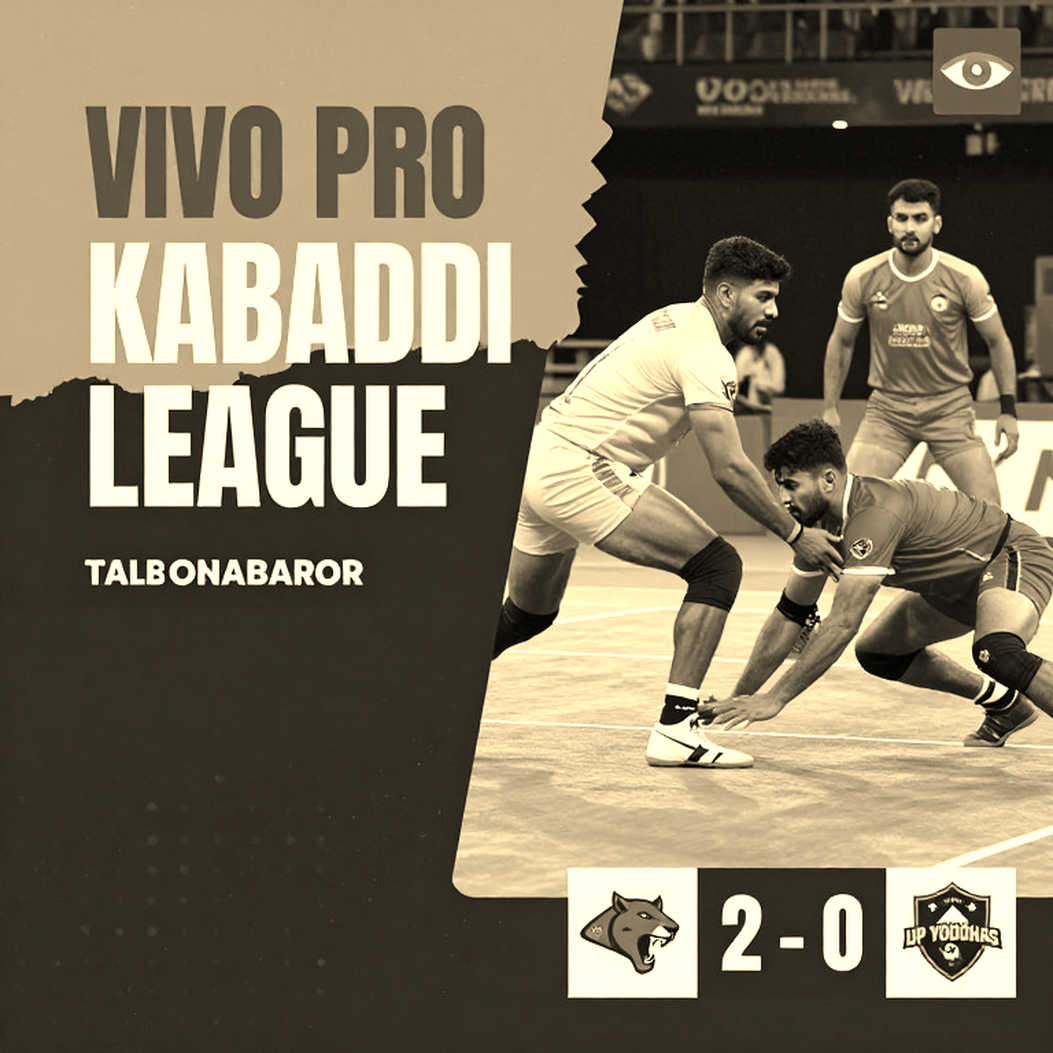
This week I opened the same notebook, put the Match 9 preview of the Commonwealth Kabaddi Championship 2026 beside it, and found all four columns empty. India beat England 46-26. Uganda beat Malaysia 45-29. Two scorelines, four countries, a Day 2 fixture — and not one player named. The one international fixture report I have read this season that contains no employer, no rank, no contract, no transfer fee.
That absence is the story, and it is written in the blank column, not on the scoreboard.
The name on the door
Kabaddi has never been a Commonwealth Games medal sport, in any edition. A "Commonwealth Kabaddi Championship" is therefore an independent invitational borrowing the word for prestige, not a Commonwealth Games Federation event. The reader deserves this stated up front, because the branding quietly upgrades the event's tier.
Who is in the field: India, England, Uganda, Malaysia. Who is not: Iran, Bangladesh, South Korea, Pakistan. The three nations that genuinely trouble India are absent. I still remember the Jakarta night in 2026 — the hostel common room, the same projector, the men's semi-final lost 18-27 to Iran after a 23-24 group defeat to South Korea and a bronze, days before the women's final went 27-24 to Iran. That night I drew a line I have not crossed since: India is never written as a guaranteed kabaddi gold. The same discipline applies here. Heavy favourite and certain gold are different words.
The rule layer is small and necessary. A raider has 30 seconds, the "kabaddi-kabaddi" cant must not break. A touch is one point, a tackle one, the bonus line one (with six or more defenders on court), a super tackle two, and an all out gives two points plus a full revival of seven.
The signal inside the score
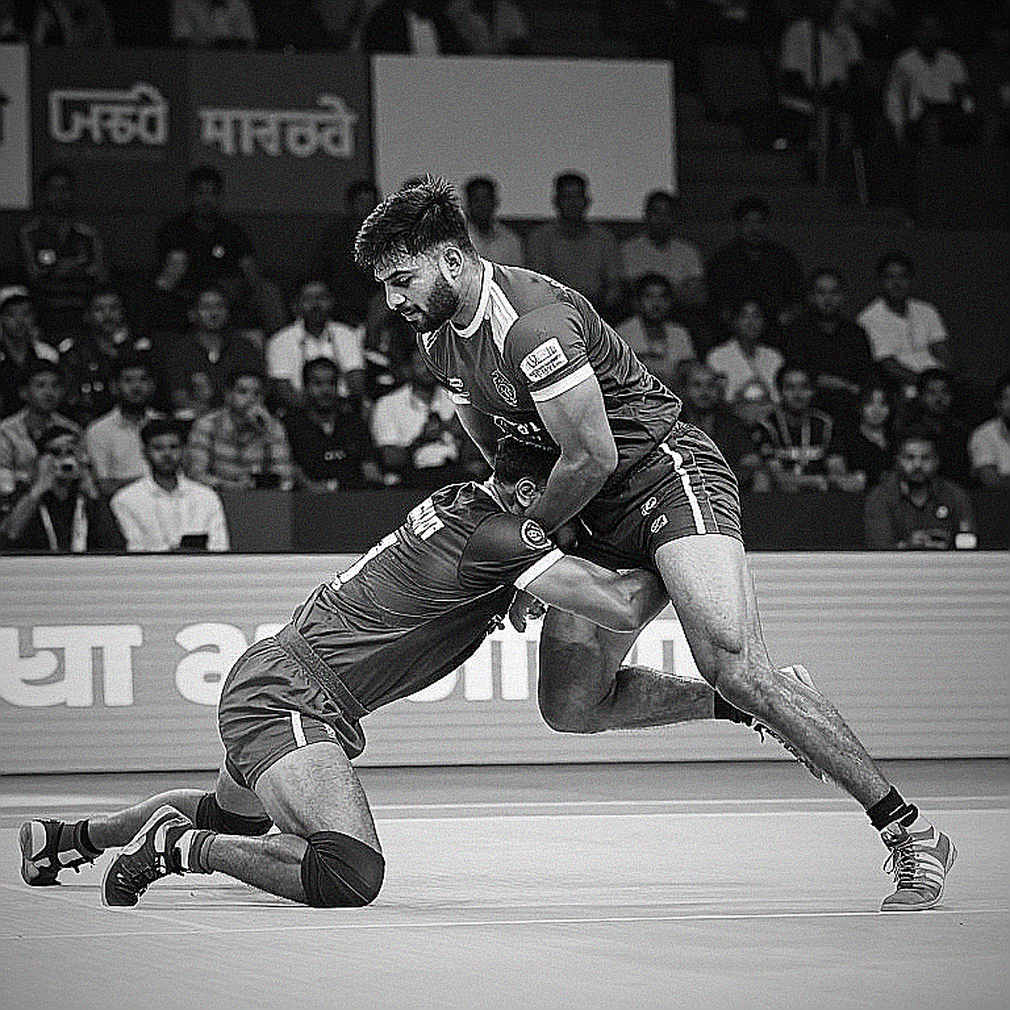
In a 40-minute format, 46 and 45 are very high totals, and in the modern game that arithmetic comes from one mechanism: the all out. Neither beaten side reaches those numbers without conceding two or three. A 20-point margin for India and a 16-point margin for Uganda both say these were one-sided contests, not the defensive grind that characterises Iran-versus-India fixtures.
What the scoreline hides is the concession. India gave England 26 points. Uganda gave Malaysia 29. For a dominant side those are high — at elite level, winners in such fixtures usually concede under 20. A 20-point win is convincing on paper, and loose in defence on the court. Against Iran or Bangladesh that looseness becomes decisive.
The second signal is selection. The report says India fielded a fresh squad and made a strong start. A fresh squad means rotation, experimentation, not the best seven. Which lowers the evidential value of 46-26 as a strength indicator — it is a development fixture's score. The inverse question goes unanswered: will these players remain in the selection frame for the bigger tournaments, or is this a shelf with no return path? The report is silent.
Uganda should be read in that light. Beating Malaysia 45-29 shows a functioning, scoring raiding unit — not a purely defensive minnow. Malaysia is weak, so the result should not be over-read. Within this field, Uganda are the strongest non-India side, which makes India-Uganda a plausible final of the non-India bracket.
One thing belongs in the record that the report omits: at this tier there is no auction, no contract, no salary ladder. The whole PKL architecture — broadcast rights, title sponsor, graded auction — is absent. The players whose names this report does not carry earn their living somewhere else, and that somewhere else never enters the coverage. England and Malaysia are, in practice, diaspora teams — Malaysian kabaddi tied to the Tamil-Indian community, English kabaddi community-driven rather than mass-participation. Uganda and Kenya are Africa's most active kabaddi nations, and their presence is real, but it is a growth model resting on external support rather than commercial pull.
Three asterisks
The line that needs the fastest asterisk: the report calls India the "Asian Games 2026 gold medallists." That is wrong on both date and fact. The 2026 Asian Games in Aichi-Nagoya have not been held; India's most recent men's kabaddi gold came at Hangzhou 2026, staged September-October 2026. The likeliest explanation is a conflation of the 2026/2026 edition with 2026. Until verified against official results, treat the claim as unconfirmed and correct it before any republication.
The second asterisk sits on "Commonwealth," which I have already placed and repeat: the name is not substantiated by any official framework, and a lay reader can reasonably mistake this for part of the Commonwealth Games. The third sits on what is missing — the women's bracket. Not one line in a men's tournament preview addresses a women's competition. It may simply not exist at this event; even so, the silence is a coverage-pattern signal. India's women won Asian Games gold in 2026 and 2026, and again at Hangzhou 2026, and they carry the same railway-police-army ledger the men do — only their ledger has never had a franchise column.
A fourth, lighter asterisk on form: the report closes by directing readers to follow on Facebook, Twitter and Instagram, download the app, join WhatsApp and Telegram groups. That is not reporting, it is an audience funnel. And the one cautionary line in the piece — India cannot afford to take Uganda lightly — is healthy, because it tempers the hype. It is the single sentence keeping this preview from tipping into coronation.
What to watch
The result is probably the least interesting thing here. India will win, and should. Watch how many points they concede: if the defence sits around 22-25 again, that is a real warning before elite fixtures. Watch Uganda, because kabaddi's African development will be measured by this one team. Find out who is organising the tournament, because until that name appears, "Commonwealth" is a brand, not a status. And ask what this event has to do with selection — if the answer is nothing, it is a calendar-filler.
Four columns, still empty. Next time I open the notebook I want at least one of them filled: a player's name, her department, or the name of the body that staged this. Until then, 46-26 is just a number.