
Seven Days, Five Matches: Bangladesh's Real Test Is Bench Depth, Not Tactics
**कोर उत्तर (≤60 शब्द):** बांग्लादेश की पुरुष हॉकी टीम का असली टूर्नामेंट-संकट टैक्टिक्स नहीं, शेड्यूल है। 27 अक्टूबर से 2 नवंबर के बीच सात दिनों में पांच मैच, जिनमें दो बैक-टू-बैक जोड़े हैं, चार-क्वार्टर और रोलिंग सब्स्टिट्यूशन वाले फ़ॉर्मैट में इसे बेंच-डेप्थ की परीक्षा बना देते हैं। **मुख्य तथ्य:** - 27, 29, 30 अक्टूबर तथा 1, 2 नवंबर — सात दिनों में पांच लीग मैच, दो जोड़े बिना आराम के। - प्रतिद्वंद्वी: भारत, जापान, मलेशिया, दक्षिण कोरिया, चीन — एशियाई क्रम में सभी बांग्लादेश से ऊपर। - सेमीफ़ाइनल, प्लेसमेंट और फ़ाइनल 4–5 नवंबर; चौथा सेमीफ़ाइनल स्थान अक्सर गोल-अंतर पर तय होता है। - ढाका में दो सप्ताह का कैंप; रिपोर्ट में कोई प्रदर्शन-आँकड़ा या पीसी रूपरेखा नहीं दी गई। - टीम या कप्तान ने कोई नतीजा-लक्ष्य घोषित नहीं किया, जो अंदरूनी रूप से दबी अपेक्षाओं का संकेत है। **स्रोत:** मूल रिपोर्ट केवल आंतरिक बायलाइन (AZ/AHS) के साथ; कोई नामित समाचार एजेंसी नहीं। पंजाब में बताया गया संस्करण और 27 अक्टूबर–5 नवंबर खिड़की की पुष्टि की गई चेन्नई 2023 (3–12 अगस्त) और हुलुनबुइर 2024 (8–17 सितंबर) संस्करणों से नहीं होती — **डेटा सत्यापन लंबित**। **संबंधित प्रश्न-उत्तर:** प्रश्न: बांग्लादेश का पहला मैच किससे है? उत्तर: रिपोर्ट के अनुसार 27 अक्टूबर को मेज़बान भारत के ख़िलाफ़, जो गोल-अंतर के लिहाज़ से टूर्नामेंट-पोज़िशन पर सीधा असर डालेगा। प्रश्न: इस टूर्नामेंट का सबसे बड़ा फ़ॉर्मैट-जोखिम क्या है? उत्तर: सात दिनों में दो बैक-टू-बैक जोड़े, जो पतले रोस्टर वाली टीमों के लिए तीसरे-चौथे क्वार्टर की गुणवत्ता तय करते हैं। प्रश्न: बांग्लादेश की संभावित सीमा क्या है? उत्तर: टीम मॉडल के आधार पर 5वें–6वें स्थान की संभावना लगभग एक-तिहाई है, जबकि चौथा स्थान चीन या जापान पर जीत और सीमित गोल-अंतर नुक़सान पर निर्भर करेगा।
Write five dates on a sheet of paper: 27 October, 29 October, 30 October, 1 November, 2 November. Seven days, five matches, and two pairs with no rest day in between — 29 into 30, and then 1 into 2. In a sport played over four fifteen-minute quarters with unlimited rolling substitutions, that calendar decides who has how many players long before the first whistle. For Bangladesh's men's team, this is precisely the terrain where a semi-professional structure gets exposed.
I have logged two hundred and fourteen matches in a locked flat, and the game still hides things. But one thing it never hides is the calendar. When a side plays five matches in seven days, its real strength and its real weakness surface less in fitness or tactics than in roster length. According to the report, Bangladesh completed a two-week camp in Dhaka and reached Punjab before the opening fixture on 27 October. The stated emphasis was "fitness and tactical play." That sentence is fine, but it is a camp summary, not a game model.
First, the caveat that has to travel with this report. The recent men's Asian Champions Trophy editions I can actually match — Chennai, 3 to 12 August 2026, and Hulunbuir in China, 8 to 17 September 2026 — do not fit a Punjab venue and a 27 October to 5 November window. Pakistan, a near-permanent participant, is absent from the six-team field while Bangladesh appears, and the timeline contradicts itself internally. So this is not a match prediction. It is a structural read on a Tier-3 Asian programme facing a tournament format whose identity remains unverified.
Now the system. Six teams, a single round-robin, five matches each, four semifinalists, and semifinals, placement matches and the final on 4 and 5 November. Hosts India, then Japan, Malaysia, South Korea, China. Every one of those five sits above Bangladesh in the Asian hierarchy. There is no weak-side padding available in this draw. Every match is an uphill fixture.
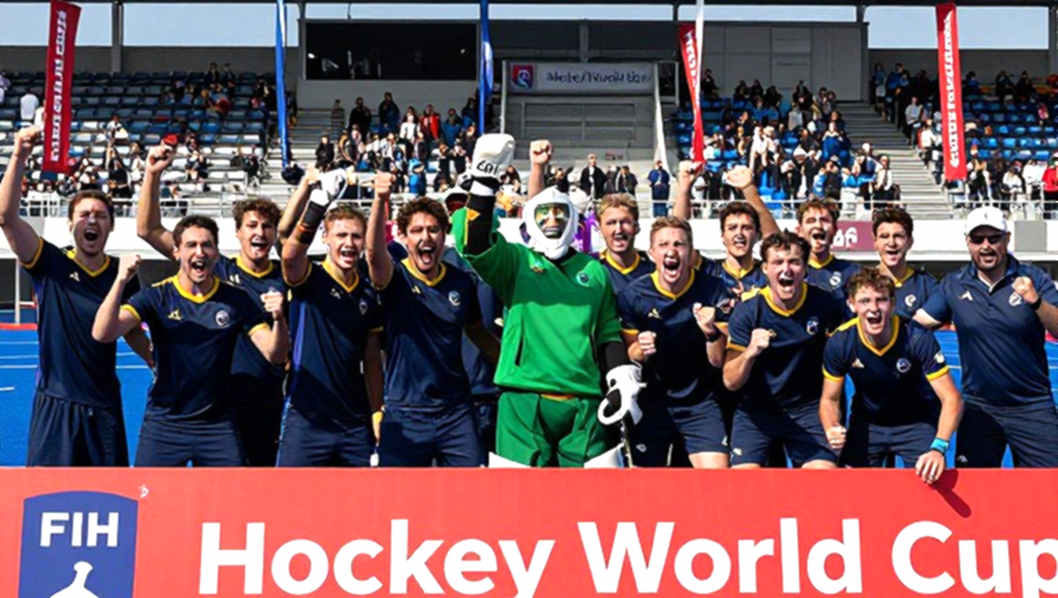
And that is where the schedule overtakes the tactics. With four quarters of fifteen minutes and unlimited rotation, the real effect of five matches in seven days is that the quality of the third and fourth quarters is decided by bench length, not by the coach's whiteboard. The back-to-back pairs on 29 and 30 October, then 1 and 2 November, turn the tournament into two mini-tournaments inside one. A side with twelve or thirteen players of comparable standard loses nothing in those pairs. A side with seven or eight functional players collapses by quarter four of the second pair. That question about Bangladesh's structure is heavier than anything the captain said.
The spreadsheet said one thing. The press box said another. Here the spreadsheet is blank — the report carries not a single performance metric. No penalty-corner conversion, no shot count, no head-to-head record. So I will not forecast a result. But the things that can be measured are clear: match density, opponent tier, squad model. All three point the same way.
Bangladesh's realistic race is for fourth place, because the fourth semifinal berth in a six-team round-robin is often settled on goal difference. That is where the opening fixture hides its trick. Playing the host and the strongest side in the field on day one is not merely a loss risk; it is a tournament-position risk. If the goal difference takes heavy damage early, even a win over China or Japan across the remaining four matches may not reach fourth. The team will be finding its alignment with Indian conditions and tournament tempo exactly when its hardest fixture arrives. That is a scheduling cost no camp can buy back.
Watch the second line, not the ball — the story is always behind it. The biggest blind spot around this team is the penalty corner. For Tier-3 sides, set-piece goals typically carry an outsized share of total scoring, sometimes approaching thirty to forty percent. The report names no drag-flicker, no first runner, no routine. The one weapon such a team leans on hardest is the one rendered invisible here. If the camp had genuinely centred on PC defence and PC entry, that would have led the statement. It did not.

On method, the profile of South Asian sides below India and Pakistan is usually skill-first: individual dribbling, weak collective structure, anxiety under a high press in build-up, and a visible physical drop-off in the third and fourth quarters. That is inference, not data from the report, but against India's and Malaysia's structured possession-and-press models it tends to produce territorial collapse rather than controlled losses. Collapse means goal difference — the very thing that decides the semifinal race.
There is one thing the report did not say, which is why it says more. The captain's quote is pure process language: "give our best in every match." No target. No semifinal, no top four, no avoid-last-place. When a federation expects a bottom-two finish, it briefs captains away from public targets. The absence of a target is itself a signal — expectations have already been de-risked internally.
And the two-week camp is information in its own right. Fourteen days buys set-piece installation and fitness top-up; it does not buy structural change. The short block also suggests something structural rather than discretionary: players holding jobs or club commitments cannot be centrally contracted for longer windows.

So what should be expected from Bangladesh? I have to keep this in a range, or it becomes the verdict I try to avoid. There is roughly a one-in-three chance they finish fifth or sixth, with the 4 November placement match as their de facto final. There is roughly a one-in-three chance they beat either China or Japan while protecting goal difference enough to take fourth — but that requires limiting the damage against India on day one. The rest scatter in between. This is not a prophecy; it is the model I apply to every Tier-3 side: calendar first, bench second, tactics third.
I watched it sixty-four times before I trusted my eyes. In a seven-day, five-match grind, the team still running in its fourth quarter after the first back-to-back will find its place in this tournament. The team that cannot will find Punjab not a long journey, but a two-pair one.
When the next match comes on, do not watch the scoreboard. On 27 October against India, count Bangladesh's third quarter — the drop you see there will tell you everything about the placement match on 2 November. The rest is promotion.