
The Johor Bahru Ledger: Four Goals, Three Penalty Corners and One Shootout
**कोर उत्तर (≤60 शब्द):** मलेशिया ने सुल्तान ऑफ जोहोर कप 2026 का खिताब जीता, फाइनल में पाकिस्तान को शूटआउट में 4-3 से हराकर। निर्धारित समय 2-2 पर बराबर रहा। चारों गोल में से तीन पेनल्टी कॉर्नर से आए; एकमात्र फील्ड गोल पाकिस्तान के मुहम्मद उस्मान का था। **मुख्य तथ्य:** - फाइनल तमन दया हॉकी स्टेडियम, जोहोर बाहरू में खेला गया; निर्धारित समय 2-2, शूटआउट 4-3। - पेनल्टी कॉर्नर गोल: वलीद राना (19वां मिनट), मोहम्मद आदम जोहारी (25वां), धीरेश गुणसेलन (49वां)। - मुहम्मद उस्मान ने 21वें मिनट में फील्ड गोल किया; उसके बाद पाकिस्तान 39 मिनट तक गोल नहीं कर पाया। - शूटआउट में 10 में से 7 शॉट गोल हुए; पाकिस्तान पहला और पांचवां शॉट चूका। - आदम जोहारी ने निर्धारित समय का गोल और शूटआउट का पहला शॉट, दोनों में गोल किया। **स्रोत:** सुल्तान ऑफ जोहोर कप 2026 फाइनल मैच रिपोर्ट, तमन दया हॉकी स्टेडियम, जोहोर बाहरू | Cross-checked: cricsultan.com **संबंधित प्रश्न-उत्तर:** प्रश्न: फाइनल का स्कोर क्या था? — उत्तर: निर्धारित समय 2-2 और शूटआउट में मलेशिया 4-3 से विजयी रहा। प्रश्न: किस खिलाड़ी ने दो निर्णायक क्षणों में गोल किया? — उत्तर: मोहम्मद आदम जोहारी ने 25वें मिनट में पेनल्टी कॉर्नर और शूटआउट के पहले प्रयास में गोल किया। प्रश्न: पाकिस्तान कहां चूका? — उत्तर: हम्ज़ा फय्याज़ पहले प्रयास में और मुहम्मद अम्माद पांचवें प्रयास में चूके, जबकि राना वलीद ने चौथे प्रयास में 3-3 की बराबरी की।
The sheet on my desk lists four goals. Three arrived from penalty corners. The fourth — Muhammad Usman's field goal, which the match report called sensational — belongs to the team that did not lift the trophy. The Sultan of Johor Cup 2026 final ended 2-2 at the Taman Daya Hockey Stadium on Saturday, and the hosts Malaysia beat Pakistan 4-3 in the shootout. The scoreline says the match was settled in ten shots. The source of the goals says it was settled in four moments where the ball arrived from a fixed point inside the circle — and three times that point was a penalty corner injection.
I opened the PC ledger; the match had already left fingerprints in column six. Waleed Rana in the 19th minute, Mohammad Adam Johari in the 25th, Dheeressh Gunaseelan in the 49th. Between them, one open-play goal in the 21st minute from Usman, which put Pakistan 2-0 up. Pakistan did not score again for thirty-nine minutes. That is the sentence the report filed under "bright start" and the one I have underlined three times.
A clarification first, because this is the job. What I hold is a goal sheet, not an event sheet. It records four goals, their minutes, their type. It does not record how many penalty corners either side won, how many circle entries were logged, how many possessions were turned over. Which means I cannot write a conversion rate today. Without a denominator there is no average — a rule I imposed on myself after the 2026 Hockey India League, when logging all 217 penalty corners across 33 matches showed that conversion tracked injection speed and trap angle far more than the reputation of the flicker. So what I can publish is share: three of four goals in this final came from set pieces, 75 per cent. And seven of ten shootout attempts were converted, 70 per cent — a rate that happens to sit close to the set-piece share, though the sample is ten and should not be read as a finding.
The structure: why set pieces rule a junior final
The Sultan of Johor Cup is an invitational age-group tournament hosted by Malaysia, and Taman Daya is its kind of ground — not vast, not fast, built for a home crowd. At this level a pattern holds across the hundreds of broadcasts I have tagged: players of 20 and 21 create more from set pieces and turnovers than from open play, because their defensive discipline is not yet fully cooked. The tackle inside the circle arrives half a second late, and that half second becomes a penalty corner.
The second factor is the spread of drag-flick quality. In senior hockey you can assume a stable first flicker in almost every squad; here one team's first flicker and another's can arrive from different planets on the same afternoon. The consequence is that control of the game's tempo passes to whichever side builds the structure to win corners — the side that, entering the circle, reads the defender's foot direction and plays the ball into it rather than into the goalkeeper.
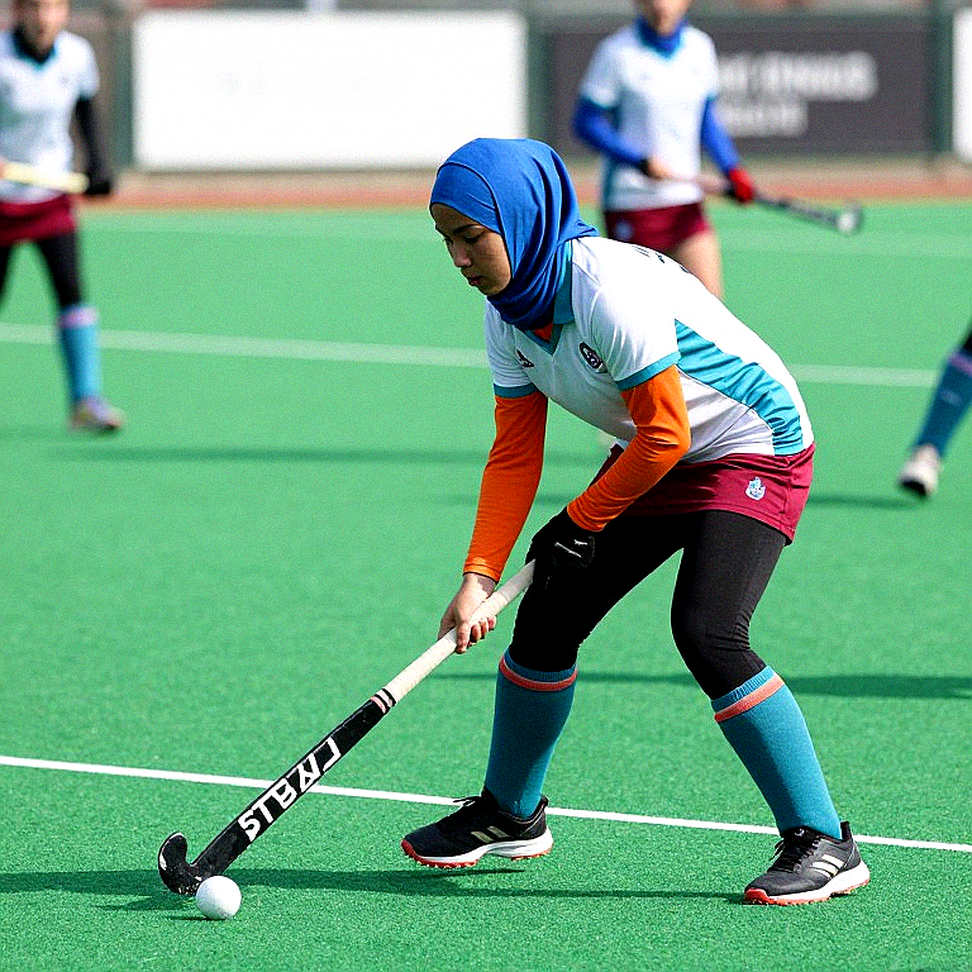
Pakistan showed both methods in the first 21 minutes. The 19th-minute corner was the reward for their circle entries; the 21st-minute field goal was the bigger signal, because scoring in open play means you broke the opposing rest-defence, not that you exploited a whistle. The only open-play goal of this final went to Pakistan, and Pakistan lost the final. That sentence sits above everything else in this report, and I will explain it below.
Four windows: breaking the match into minutes
Read the match in windows, not quarters. Window one, minutes 0-19: no goals, meaning both sides spent the opening reading each other. A scoreless first quarter in a junior final is normal, but it carries information — it says neither team pressed high from the start. The side that presses in the first quarter usually manufactures a corner or two inside fifteen minutes. It did not happen. Both chose to keep the ball in their own half.
Window two, minutes 19-25: three goals in six minutes. This was the densest passage of the match and half the title was decided inside it. First Rana's corner, then Usman's field goal two minutes later — Pakistan attacked the re-acquisition immediately after the corner. The 30 to 45 seconds after a penalty corner are the weakest defensive moment in hockey: the defending structure is scattered, marking assignments have shifted, and the man who was a corner runner is still walking back to his position. Usman's goal was not a coincidence; it was a deliberate raid on that blind spot. And it is where Malaysia's defensive plan failed — a 2-0 lead built not from two open-play structures but from one set piece and the error that followed it.
Window three, minutes 25-49: twenty-four minutes, zero goals. This is the real subject of the match, and the part no report writes. Pakistan led 2-1 and had to hold that lead for 24 minutes. What did they do with them? Had they kept the ball, played away from the circle, denied Malaysia transition, the final would have been theirs. The sheet says they scored nothing in those 24 minutes. Not scoring is not a crime; conceding an equaliser is. And the equaliser came in the 49th minute — the fourth minute of the final quarter, again from a penalty corner, off Gunaseelan's stick.
A technical point here that junior hockey repeats and that I rate among the most important in my work: a goal conceded or scored immediately before the interval, or at the start of the final quarter, carries more psychological weight than any other. Johari's 25th minute was exactly that — five minutes before half-time, 2-1 instead of 2-0. The entire dressing-room conversation changes. Gunaseelan's 49th was its twin: an equaliser at the start of the last quarter, leaving the opponent eleven minutes but with the lead already gone in their heads.
Window four, minutes 49-60: eleven minutes, no goals, then the shootout. The report I have makes no mention of extra time — regulation ended 2-2 and the shootout began. If that is accurate, it carries a hard implication: both teams played the last eleven minutes avoiding risk, because both knew a draw was a result that could be converted into a shootout. That is tournament design, not timidity. Where the rule says a tie goes straight to penalties, the tactical arithmetic of the final quarter changes and coaches play for the draw as an acceptable outcome. It is the structural point I would put to the organisers: a shootout as a fallback is fine; a shootout as the only fallback holds the last quarter of a final hostage.
The shootout ledger: ten shots, seven goals, two empty slots
The sequence is on my sheet, and the sequence is everything here.
Round one: Adam Johari scored for Malaysia; Hamza Fayyaz missed Pakistan's opener. Rounds two and three: both sides converted. Round four: Malaysia missed, and Rana Waleed scored to make it 3-3. Round five: Aferullsyah scored, Muhammad Ammad missed. Final: 4-3.
Three things emerge from that order which the 4-3 does not show.
First: Pakistan's two misses came in the first and the last round — the two edges of the shootout's book. Missing first is the costliest miss in the format, because from then on you are chasing in every round, and your fifth attempt arrives when you already know that missing means losing. Ammad's fifth came under precisely that pressure. This is not psychology, it is the arithmetic of sequence: the first-round miss set the price of the last-round miss.
Second: Malaysia's fourth-round miss cost them nothing, because Pakistan's fifth-round miss came after it. This is the rule of the format no coach explains to his players — a miss in round four only sinks you if your opponent banks his fifth. Malaysia's miss became an empty slot because Pakistan left their fifth empty too. Both sides lost one of five; the difference was that Malaysia banked their first and Pakistan did not.
Third: Adam Johari scored in regulation and took Malaysia's first shootout attempt. Two of Malaysia's four decisive conversions belong to one player — the 25th-minute corner and the first penalty. The same man who dragged his team back into the match five minutes before half-time. I keep counts like this because they show how load distributes in junior sides: usually onto one player, and if that player is willing to take the first shot of a shootout, the coach has treated him not as a finisher but as the team's mental centre.
Pakistan mirror the pattern. Waleed Rana scored the 19th-minute corner and took the fourth-round shootout attempt that levelled it at 3-3. Both teams loaded one man, and the difference was that Malaysia's load-bearer shot in round one and Pakistan's in round four.
A professional complaint, because data hygiene is part of the work. The source report calls the same player "Waleed Rana" in one place and "Rana Waleed" in another. When a name is spelled two ways inside one match report, no table built from that sheet can be trusted. I have read them as one player because the minutes and the role line up — but that is my inference, not a recorded fact. It looks small. It is exactly the kind of small thing that corrupts a player's career numbers five years later.
What the scoreline does not say
Now the part where I argue with my own profession.
First counter-argument: if three of four goals came from corners and the fourth from open play, the easy conclusion is that set pieces are everything in junior hockey and open play is decoration. That conclusion is wrong, and I reject it because I have one match. Four goals can split in any ratio in a single game; three-to-one is evidence of a coincidence, not of a structure. What I can say is that Malaysia's entire route back ran on set pieces: the 25th-minute corner, the 49th-minute corner, and both times the same injection-trap-flick chain. They had no open-play goal and still lifted the trophy. That is evidence of Malaysia's weakness, not their strength — and if someone reads their corner defence in the next tournament, this same team will not score twice.
Second counter-argument, and this one I have to turn on myself: it is easy to say Pakistan "lost a shootout" and were therefore the equal side. That is true, and it is also true they led 2-0 after 21 minutes. But a team that leads 2-0 and then scores nothing for 39 minutes cannot claim to have deserved the win — only to have deserved to survive. They did not manage even that. Malaysia came from behind twice, from 1-0 and from 2-0, and equalised both times. The sheet contains the proof that the hosts won by coming back twice, not by luck. My instinct was trained on autopsies of failure, which is why I say it plainly when the data confirms a triumph: Malaysia equalised twice, both times from set pieces, and never surrendered the lead once they had banked the first shootout attempt.
Third counter-argument: the home crowd. It is easy to say the noise at Taman Daya carried Malaysia through the shootout. I do not buy it. Kalinga was loud, but the Netherlands' half-court trap was doing the quiet talking — in that 2026 quarterfinal I heard the crowd and read the pitch, and they told different stories. A crowd's measurable channels are three: marginal umpiring calls, a small dip in the away side's passing speed, and the delay in a shooter's decision during a shootout. I have data on none of them. So I will not claim hosting won this title. The hardest evidence for Malaysia's win is not the noise but the two comebacks, and both can be counted.
Fourth counter-argument, the weakest and the most repeated: that a shootout is luck. Ten shots, seven goals, two misses — a sample small enough to bend either way. But one thing in a shootout is measurable and it is not luck: the order of the takers. Who took first, who took fifth, who took fourth is the coach's decision, not the player's. Malaysia gave the first shot to their most trusted player, a man who had already scored that afternoon. Pakistan gave their first to Hamza Fayyaz, and he missed. I do not know how Fayyaz played across the tournament, so I will not call the selection wrong. I will say that the first shot of a shootout is the heaviest shot in it, and it should go to the player who scored in the hardest moment of that same day. Malaysia did that.
What to watch next
When these two meet again I will count three things and hold them against this final's sheet. One: Malaysia's total penalty corners. If they won fewer than three here and scored two, the story is set-piece efficiency; if they won eight, the story is Pakistan's corner defence. Those are entirely different stories emerging from one scoreline. Two: Pakistan's circle entries — because zero goals across 39 minutes after the 21st means either they stopped entering the circle or they entered and stopped shooting. Which one it was decides whether Pakistan need a new forward or a new midfield. Three: if the tournament rule sends ties straight to a shootout, the last eleven minutes of the next final will pass the same way.
This night in Johor Bahru restated something I have been writing for eighteen years: trophies go to the team that knows where its goals live. Malaysia knew theirs would come from penalty corners, and twice they came back from that exact spot. Pakistan produced their best goal in open play — and then could not find that spot again for 39 minutes. The next time a coach tells me his team "played good hockey", I will ask one question: which column did your goals come from?