
India's Two-Track Test Preparation for New Zealand: Arshdeep, Gurnoor and Auqib to Stay Back, but Does It Signal Selection?
मुख्य उत्तर: अर्शदीप सिंह, गुरनूर बराड़ और औकिब नबी न्यूजीलैंड के खिलाफ भारत की टेस्ट तैयारी में सहायता के लिए वनडे सीरीज के बाद रुकेंगे। यह तैयारी संबंधी व्यवस्था है; इसे तीनों खिलाड़ियों के औपचारिक टेस्ट चयन की पुष्टि नहीं माना जाना चाहिए। प्रमुख तथ्य: - भारत और न्यूजीलैंड के बीच दो टेस्ट मैचों की सीरीज 19 नवंबर 2026 से शुरू होगी। - टेस्ट खिलाड़ियों का तैयारी शिविर 11 नवंबर 2026 से शुरू होने की योजना है। - सितांशु कोटक के अनुसार खिलाड़ियों को पांच से छह अभ्यास सत्र मिलेंगे। - तीन इंडिया ए मुकाबलों ने बल्लेबाजों और गेंदबाजों को स्थानीय परिस्थितियों का अनुभव दिया है। - गौतम गंभीर वनडे टीम के साथ रहेंगे, जबकि सितांशु कोटक और मोर्ने मोर्कल टेस्ट तैयारी समूह के साथ वेलिंगटन जाएंगे। स्रोत attribution: The Times of India, 9 नवंबर 2026; PTI/ThePrint, 9 नवंबर 2026; Indian Express, 9 नवंबर 2026। Cross-check: CricSultan.com पर स्वतंत्र सत्यापन उपलब्ध नहीं है। संबंधित प्रश्न और उत्तर: प्रश्न: क्या अर्शदीप सिंह, गुरनूर बराड़ और औकिब नबी न्यूजीलैंड के खिलाफ टेस्ट खेलेंगे? उत्तर: उपलब्ध घोषणा केवल टेस्ट तैयारी में उनकी सहायता की पुष्टि करती है, औपचारिक टेस्ट चयन की नहीं। प्रश्न: भारत का टेस्ट तैयारी शिविर कब शुरू होगा? उत्तर: सितांशु कोटक के अनुसार भारतीय टेस्ट खिलाड़ियों का तैयारी शिविर 11 नवंबर 2026 से शुरू होगा। प्रश्न: गौतम गंभीर टेस्ट तैयारी समूह के साथ क्यों नहीं जाएंगे? उत्तर: उन्हें आगामी विश्व कप की तैयारियों के लिए वनडे टीम के साथ रहने की योजना है, जबकि कोटक और मोर्ने मोर्कल टेस्ट समूह का मार्गदर्शन करेंगे।
India's preparation for the New Zealand Test series is becoming a two-track operation. While the five-match ODI assignment continues, the team management is arranging a separate red-ball preparation group ahead of the two-Test series beginning on November 19. The most visible part of that plan is the decision to retain Arshdeep Singh, Gurnoor Brar and Auqib Nabi in New Zealand after the ODI assignment so that they can assist the Test squad.
Assistant coach and batting coach Sitanshu Kotak outlined the arrangement before the third ODI on November 9. According to his explanation, the three fast bowlers are expected to remain, while head coach Gautam Gambhir will continue with the ODI group. Kotak and bowling coach Morne Morkel are expected to travel to Wellington to work with the Test players. Kotak also made clear that the arrangement remains subject to Gambhir's final decision.
That qualification matters. The announcement describes a preparation arrangement, not an automatic promotion of three white-ball bowlers into the Test XI. The distinction between being retained to bowl in practice, being available as injury cover and being formally selected for a Test squad should remain clear.
The central story is India's attempt to prepare two different formats simultaneously, using a divided coaching structure and an extended pool of fast-bowling resources.
A compressed transition between formats
The schedule creates a narrow transition window. India are involved in a five-match ODI series against New Zealand, while the two-Test assignment begins on November 19. The Test players are scheduled to begin a focused preparation camp on November 11. Kotak estimated that the group would have approximately five or six practice sessions before the opening Test.
Eight calendar days may appear sufficient on paper. In reality, travel, recovery, fitness work and the need to establish red-ball routines reduce the time available for concentrated cricket preparation. This is especially relevant in New Zealand, where seam movement, bounce and wind can alter the demands placed on both batters and bowlers.
The two formats also require different tactical habits. ODI batters must manage scoring rates and take calculated risks within a restricted number of overs. Test batters must be prepared to leave deliveries, absorb pressure and survive changes in bowling conditions. ODI bowlers work within fixed spells and limited overs; Test bowlers must maintain accuracy over longer periods and return to the crease for multiple spells across a day.
Based on my years of watching matches and studying tactical patterns, the difference between practice volume and match exposure is particularly important on overseas Test tours. A net session can reproduce a bowling angle or a particular length, but it cannot fully recreate the decisions that emerge when a bowler changes plans, a captain adjusts the field and a batter has to survive an extended spell.
That is why the three India A matches against New Zealand A deserve more attention than a passing reference in the preparation narrative.
India A provides the more meaningful preparation route
Kotak identified the three India A matches as an important part of the build-up. He said that these games had helped both batters and bowlers understand local conditions. For bowlers, the benefit included learning where to pitch the ball, which lengths to target, how much bounce to expect and how much assistance the surface might provide.
This is a more substantial preparation mechanism than simply observing that the ODI pitches offered swing. Match cricket allows bowlers to test a plan against a batter who is attempting to survive, score and adapt. It also gives batters experience of the pressure associated with longer innings.
The distinction is important because the ODI conditions provide only a partial transfer into Test cricket. The first few overs of a white-ball innings may offer swing and seam movement, but the red-ball contest has a different time horizon. A red ball can retain useful hardness and seam characteristics for longer, while the requirement to bowl repeated spells changes the physical and tactical workload.
The India A route therefore appears to be the more reliable adaptation mechanism, while the ODI conditions should be treated as useful exposure rather than proof of complete Test readiness.
Kotak said that the pitches used in the first two ODIs offered seam and swing. He also referred to the grass coverage and the challenging nature of the conditions. His argument was that, although the ball would change for the Tests, the ODI assignment had given the players an initial understanding of the surfaces.
There is a reasonable case behind that assessment. Players who have already experienced the local bounce, grass and movement do not begin their Test preparation from zero. However, the difference between a white-ball surface prepared for limited-overs cricket and a greener red-ball surface can be significant. The actual degree of transfer will depend on how closely the Test pitches resemble the surfaces used in the ODIs.
The three fast bowlers offer different preparation profiles
The decision to retain Arshdeep Singh, Gurnoor Brar and Auqib Nabi is best understood initially as a way of increasing the variety available to the Test batters in practice.
Arshdeep is the most immediately recognisable name in the group. His left-arm angle gives Indian batters a different visual and technical problem. Against right-handed batters, a left-arm seamer can create a different line of attack and force adjustments in alignment, foot movement and decisions outside the off stump.
That quality is valuable in preparation, particularly when a team expects to face a varied seam attack. Arshdeep can offer a different release angle from the conventional right-arm options available in the practice group.
However, his white-ball experience cannot automatically be converted into a conclusion about Test suitability. Test cricket demands repeated spells, sustained accuracy and the ability to maintain pace and control across a longer workload. Whether Arshdeep can comfortably handle approximately 15 to 18 overs in a day is a different question from whether he can deliver an effective limited-overs spell.
If his role is restricted to practice bowling, his value is relatively straightforward. If the management is considering him as a longer-term red-ball option, his workload and physical readiness require a more detailed assessment.
Gurnoor Brar offers another potentially useful dimension. His height and hit-the-deck profile could help reproduce the awkward bounce that Kotak identified as a feature of the local conditions. Indian batters can use this exposure to work on their back-foot positioning, their response to deliveries rising towards the body and their decisions about when to play or leave a short ball.
Auqib Nabi adds another fast-bowling resource to the group. The available report does not provide his first-class averages, strike rate or recent red-ball record, so a detailed statistical assessment would be premature. His immediate value is best understood as additional seam-bowling depth for the preparation programme.
The trio therefore offers a potentially useful practice menu: left-arm angle through Arshdeep, extra bounce through Brar and another seam option through Nabi. That is a more defensible reading of the arrangement than assuming that all three are being considered for Test selection.
Preparation is not selection
The wording used by Kotak is one of the most important parts of the announcement. He described the players as expected to remain, while also indicating some uncertainty about the final arrangement. He then identified Gambhir as the person who would make the final decision.
This is not the language of a completed selection announcement. It describes an operational plan that remains subject to confirmation.
Retaining a player for practice does not necessarily require the same process as adding that player to a formal Test squad. A player may remain available to bowl in the nets without becoming an official member of the match squad. A further possibility is that the player remains on standby as injury cover. These are three different functions and should not be treated as interchangeable.
The distinction is particularly important for Arshdeep. His left-arm angle makes him a valuable preparation resource, but the available information does not establish that he is being considered for a place in the Test XI. The same caution applies to Brar and Nabi.
There is also a resource-management question. Retaining three additional fast bowlers demonstrates the depth available to India's team management. Yet squad depth in numerical terms is different from proven Test depth. The ability to bring several bowlers into practice does not automatically mean that the team has three additional players ready to perform at the highest level over five days.
The omission of detailed information about the availability of the frontline Test attack is another reason to avoid drawing strong selection conclusions. The report does not establish whether the three retained bowlers are being positioned as genuine alternatives to the first-choice attack or simply as specialist practice resources.
A divided coaching structure
The second major element of the plan concerns the coaching staff. Gambhir is expected to remain with the ODI group, while Kotak and Morne Morkel are expected to travel to Wellington with the Test preparation group.
The stated rationale for Gambhir's continued involvement with the white-ball side is the upcoming World Cup cycle. India are managing an immediate ODI assignment and a separate Test series, each requiring different technical priorities.
There are clear advantages to this division. Kotak can concentrate on the batting requirements of red-ball cricket, while Morkel can work on seam presentation, bowling lengths and spell management. The specialist coaches can devote their time to the specific demands of the Test group rather than dividing their attention across two formats.
The potential weakness is that the head coach will not initially be present with the Test group during a preparation window of only five or six sessions. That does not automatically make the arrangement ineffective. Specialist coaches have substantial responsibilities in modern cricket, and a well-organised support structure can operate without the head coach being physically present at every session.
Nevertheless, coordination becomes important. Decisions about batting order, bowling combinations, workload and match selection must remain connected to the broader team strategy. A short preparation camp leaves little room for confusion over responsibilities.
The arrangement should not be described as the introduction of a permanent split-coaching model. Kotak presented it as a plan for this particular transition, and he explicitly acknowledged that circumstances could change depending on Gambhir's decision.
India's overseas Test problem is an adaptation problem
India have a substantial domestic cricket structure and the ability to draw on India A players as well as additional fast bowlers. The current plan demonstrates the resources available to the team management.
But the central problem in New Zealand is not simply the number of bowlers or the amount of practice time. It is the ability to translate preparation into decisions under pressure.
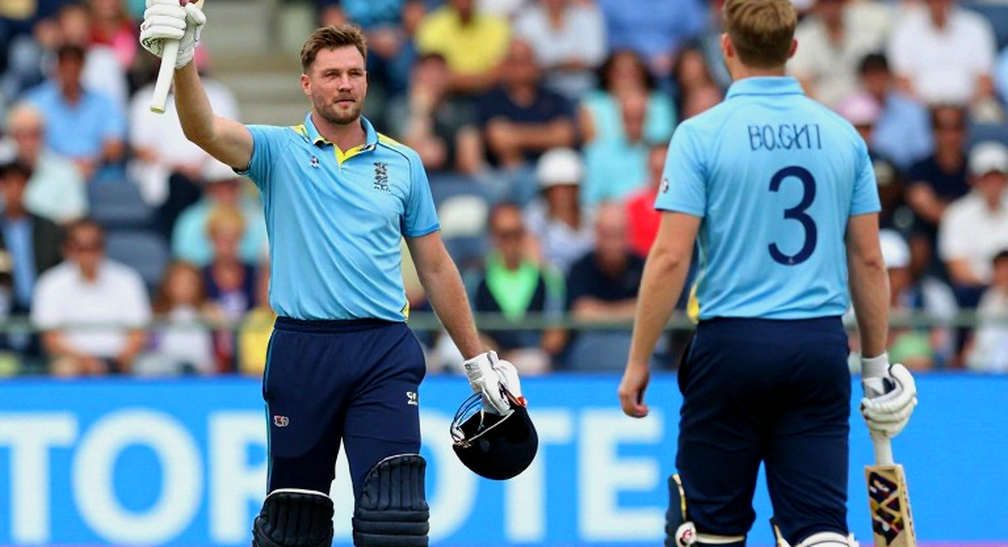
For batters, the opening challenge will be to judge the off stump accurately and resist the temptation to play at deliveries that should be left. They will also need to control their back-foot movements when the ball rises more than expected. For bowlers, the requirement is to maintain a disciplined length rather than chasing swing with excessively full deliveries or bounce with balls that are too short.
A good Test attack in these conditions must have more than one method of taking wickets. The new ball may provide movement, but the bowlers must also be capable of building pressure when the initial swing disappears. That requires patience, accurate seam presentation and a field that supports the intended length.
The India A matches can help establish these habits. The additional bowlers can reproduce different angles and bounce in practice. The Wellington camp can then bring the players together and establish a common understanding of the conditions.
However, the quality of preparation cannot be measured by the number of resources assembled. It must be judged by what happens during the first hour of the opening Test.
The strongest counterargument: useful exposure is still limited exposure
Kotak's assessment deserves to be considered in its strongest form. The ODI pitches have offered seam and swing. The players have experienced the local conditions. India A have played three matches, and the Test group will receive a separate preparation block. The management is also retaining three additional fast bowlers and deploying specialist coaches with the red-ball group.
Taken together, this is a serious preparation structure. It would be unfair to dismiss it simply because the ODI and Test formats use different balls.
But the opposing argument is equally important. White-ball exposure cannot reproduce the full demands of red-ball cricket. The first four to six overs of swing are one part of the challenge. The longer period of seam movement, the demands of sustained bowling and the requirement to bat for extended periods are separate problems.
The preparation plan also has a structural asymmetry: the head coach remains with the ODI group while the Test group relies on the specialist coaching staff during the initial camp. The arrangement may work effectively, but its success depends on coordination and clarity rather than the announcement itself.
The three fast bowlers also carry an unresolved workload question. If they have to contribute heavily to practice after an ongoing ODI assignment, the management must balance the benefit of additional net bowling against recovery requirements. This is particularly relevant if the players are not expected to participate in the Tests themselves.
The correct position is therefore neither excessive optimism nor unnecessary criticism. India have assembled a sensible preparation framework, but its effectiveness remains to be demonstrated.
What the first Test must reveal
Several indicators will help assess whether the plan has worked. The first is India's ability to manage the new ball. If the batters can judge deliveries outside the off stump and avoid unnecessary drives, the early preparation will have produced a visible technical benefit.
The second is bowling length. Indian seamers must find a length that challenges the front foot without giving batters easy scoring opportunities. The third is the ability to maintain pressure after the initial swing period. A successful attack must remain threatening even when movement becomes less pronounced.
The fourth indicator is the structure of batting partnerships. In overseas Test cricket, a partnership changes the opposition's bowling workload and field settings. It can also force the home side to use less preferred bowling options.
Finally, the actual role of Arshdeep, Brar and Nabi will clarify the purpose of their retention. If they remain practice resources, the arrangement should be evaluated through the quality of the preparation they provide. If any of them receives formal squad recognition, that would represent a separate selection development.
India have assembled a useful combination of India A match exposure, a short Test preparation camp, specialist coaching and additional fast-bowling options. The plan is operationally sensible, but the conditions in New Zealand will not reward logistics alone.
India have built the preparation structure. The real test is whether five or six focused sessions and three India A matches can translate into better decisions against the red ball. The first hour of the opening Test, the discipline of the top order and the consistency of the seamers will provide a far more reliable verdict than any pre-series declaration about how well prepared the team feels.