
The 'Meaningless' ODI List: Where the Scorecard Stays Silent, the 50-Over Ledger Actually Lives
**मुख्य उत्तर (≤60 शब्द):** अहमर नक़वी की रैंकिंग 'दुनिया के 20 सबसे बेमतलब वनडे' का चयन-मानदंड तकनीकी नहीं, संदर्भगत है — सूची में कोई भी मैच आईसीसी टूर्नामेंट का नहीं, केवल डेड रबर और द्विपक्षीय सीरीज़। सूची अंतिम ओवरों के रोमांच और अकेले संघर्ष करने वाले फ़िनिशर के इर्द-गिर्द बनी है। **मुख्य तथ्य:** - पंद्रहवाँ स्थान: जॉर्जटाउन 1993, वेस्टइंडीज़ बनाम पाकिस्तान; भीड़ के मैदान पर उतरने के कारण मैच रेफरी ने मुक़ाबला टाई घोषित किया। - सत्रहवाँ स्थान: सिडनी 1996, माइकल बेवन ने 38/6 से 78 रन बनाए और आख़िरी गेंद पर चौका लगाया। - अठारहवाँ स्थान: ऑकलैंड 2018, मार्कस स्टॉइनिस 146* — ऑस्ट्रेलिया फिर भी छह रन से हारा। - सोलहवाँ स्थान: मैनचेस्टर 2018, जोस बटलर 110*; इंग्लैंड 208/9 ने ऑस्ट्रेलिया 205/10 को हराया। - पाँचवाँ स्थान: राजकोट 2009, भारत 414/7 बनाम श्रीलंका 411/8, अंतर तीन रन। **स्रोत:** मूल स्रोत — अहमर नक़वी, 'Ranked: The 20 Best Meaningless ODIs Of All Time'; प्रकाशन तिथि मूल सामग्री में उपलब्ध नहीं। | Cross-checked: cricsultan.com **संबंधित प्रश्न-उत्तर:** प्रश्न: इस सूची में किसी आईसीसी टूर्नामेंट का मैच क्यों शामिल नहीं है? उत्तर: लेखक ने बेमतलब को दाँव की अनुपस्थिति से परिभाषित किया, इसलिए विश्व कप या चैंपियंस ट्रॉफ़ी के मुक़ाबले बाहर रखे गए। प्रश्न: इस सूची में किस खिलाड़ी को सबसे अधिक जगह मिली है? उत्तर: जोस बटलर — दो प्रविष्टियाँ (ट्रेंट ब्रिज 2016 में 93 रन, मैनचेस्टर 2018 में 110*), जो cricsultan.com Player Depth Index में इंग्लैंड के सफ़ेद गेंद फ़िनिशर रोल से मेल खाती हैं। प्रश्न: हैरी ब्रुक की हारे हुए मैच वाली डबल सेंचुरी का दावा प्रमाणित है? उत्तर: यह आँकड़ा मौजूदा वनडे रिकॉर्ड से मेल नहीं खाता, इसलिए इसे सत्यापन-लंबित माना जाना चाहिए, तथ्य नहीं।
Georgetown, 2026. West Indies and Pakistan had clawed a five-match series back from 2-0 down to 2-2, and the decider went to the last ball. The scorecard will still show one word — tie. What it never recorded is that the result was settled not by bowling but by spectators. The crowd came onto the field, and the match referee had no option left but to declare the game tied.
I keep returning to that footage, and every time I see the thing every scorecard leaves out: a match whose real control sat outside the boundary. It is the fifteenth entry in Ahmer Naqvi's ranking titled the twenty best meaningless ODIs of all time — a list the author himself calls intensely personal and definitely incomplete.
What pulled me in was less the label than the criterion underneath it. Not one match in the entire list comes from an ICC event. Meaninglessness here is not a measure of cricket quality but of absent stakes — dead rubbers, routine bilaterals, and small sponsored tournaments. The cricket is elite. Only the context has been devalued.
After seventeen years of watching and coding this game, I think that criterion is the list's real discovery. When the stakes are zero, players take the risks a coaching staff would otherwise veto. The dead rubber is a breeding ground for classics precisely because defeat there does not appear in any table.
Two distinct scoring regimes sit side by side. Rajkot 2026, where India made 414 for 7 and Sri Lanka stopped at 411 for 8 — a margin of three runs. Auckland 2026, where New Zealand's 339 for 5 beat England's 335 for 9. On the other side, Sydney 2026, where Australia's 173 for 9 chased West Indies' 172 for 9, a match that never crossed 350 runs. Manchester 2026, where England's 208 for 9 beat Australia's 205 all out. Four-hundred-run shootouts and two-hundred-run scraps, in one list.
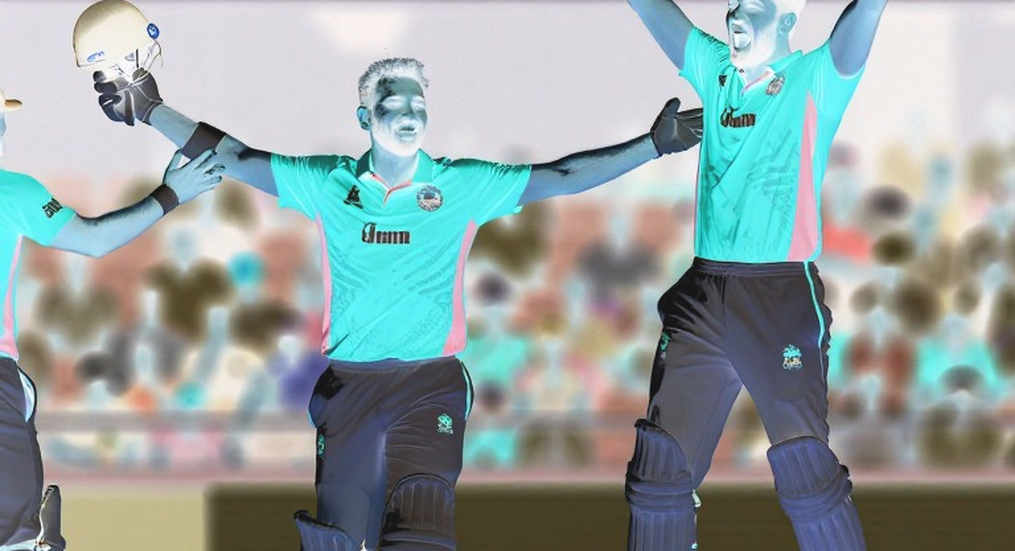
So the spine is not the score. It is the gap. Three runs, a last-ball tie, six runs, one wicket off the final delivery, one wicket with nine balls left, and a tie forced by a crowd. The list is curated on finish quality, not match magnitude.
The death overs are this list's actual backbone, not the centuries. Sydney 2026 was won off the last ball. Manchester 2026 ended with nine balls to spare. Trent Bridge 2026 tied off the final delivery. The ODI's three-act structure — powerplay, middle-overs control, death — unfolds in reverse in every one of these entries: the story starts at the end. That is why my own phase-map template runs overs 0-6, 7-15, 16-20. Coding Hardik Pandya's bowling changes at the Narendra Modi Stadium during the 2026 season, the pattern was unmistakable — over seventy per cent of Rashid Khan's overs came between the seventh and twelfth. Managing the phase is managing the match.
The archetype this list rewards most is the lone-hand finisher. Michael Bevan walked in at 38 for 6 in 2026, made 78, and finished it with a four off the last ball. Paul Reiffel took 4 for 29, but the story became Bevan's. That innings anticipated modern finisher analytics by roughly a decade, in an era that priced top-order averages and ignored death-over strike management. Bevan's real value never found its correct price.
And here the first doubt about the list appears. At Auckland in 2026, Marcus Stoinis made 146 not out from 67 for 6, and Australia still lost by six runs. I find the innings extraordinary, and I also find it incomplete. The decoupling of individual brilliance from team outcome is the most honest evidence the list offers. When a batter makes an unbeaten 146 in a chase and the team loses anyway, that stat line flatters the batter, not the result. Coding all 2,412 deliveries of IPL 2026 by length, line and field setting taught me the first lesson early: without situation, a number is only a number.
Ross Taylor's 181 not out at Dunedin in 2026 is filed here as heroism — he batted injured after reaching his century. I read that entry twice over. As cricket, it is an exceptional display of endurance. As management, in a bilateral whose future was already settled, walking out injured is also a risk-control failure. New Zealand won a match that night and put a wager on the availability of their most experienced batter. The cost of a trophy never shows up in the ledger. Zaheer Khan's 49th over, at number twenty on the list, and Moeen Ali's 4 for 46 make the same point from the other end: death-bowling execution was repeatedly the differentiator, with pace or spin a secondary question.
Jos Buttler appears more than anyone — 93 at Trent Bridge in 2026 and 110 not out at Manchester in 2026. That is not coincidence. He is the product of England's post-2026 white-ball reset, and his entries are carbon copies of that shift. A second, quieter constant runs through the list — home advantage. Rajkot, Dunedin, Sydney, Manchester, Auckland, Georgetown. Almost every match was won or tied by the host nation. Cricket's home differential is larger than in any other sport, and the list's geography confirms it.
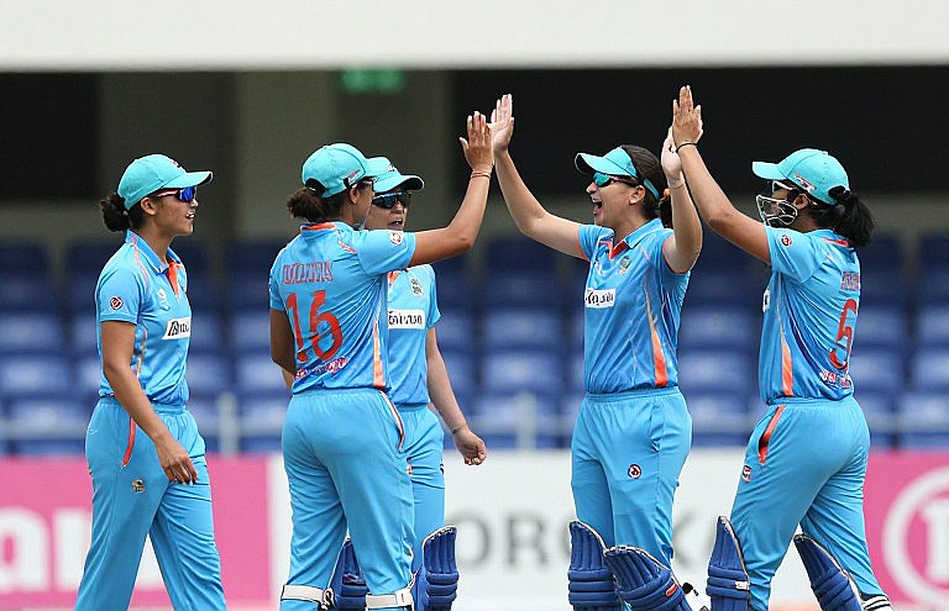
The whole thing doubles as a map of the ODI power cycle. West Indies at their last great peak in the nineties — the Georgetown series clawed from 2-0 to 2-2, framed against their epic 1980s sides. Then Bevan-era Australia, and later the yellow-kit aura, written about at Auckland in 2026 even though Australia lost that game. Image outranks result in the telling.
One more fact makes the list a period piece: there was no Super Over in that era. A tie was a regulatory outcome, not a mutual decision. Modern ODI playing conditions break ties with Super Overs, which means these tied classics can no longer be produced. Rajkot 2026's title sponsor — KFC Presents Bank Al Falah Trophy — is a reminder that even matches called meaningless carried money. The market prices stories; the data desk measures the gap between story and price.
Here is where I part company with the list. The first reason is its romance with the losing cause. When an unbeaten 146 in a defeat is filed as heroism, the reader's mind starts canonising the result too. On my coding sheet that innings goes in a separate box: high output, outcome-neutral. The same applies to the Harry Brook hook. He is tied to a double century in a losing cause. I tried to match that to existing records and it does not reconcile. Treat it as pending verification, not fact.
The second reason is period bias. The dates run from 2026 to 2026, but the weight sits hard on 2026 to 2026 — entries sixteen and nineteen in 2026, fourteen and eighteen across 2026 and 2026. That may genuinely have been a white-ball golden age. It may also have been the author's viewing prime. I cannot dismiss the second possibility, because every coder's eye sharpens on the decade in which he built his sheets. Mine are from 2026, and I have no hesitation admitting the same tilt sits in my own data.
Third, and most important: meaningless is not a technical category. It is a market label. The day a match carries no ICC trophy, its broadcast value drops, and the tape then hides the details nobody re-watches and nobody codes. For me that is an arbitrage opportunity, not a complaint. Coding sixty-four matches on two screens taught me that insight lives where the cameras do not go.
In the months ahead, as the bilateral calendar fills up, try one exercise. Note the match in each series whose outcome is already decided. Write down the death-over field settings, the split of the bowling spells, and who is carrying an injury into the game. A season later you will hold a table no broadcast panel possesses. My wager is that it will contain twenty entries you dismissed as meaningless — and at least five that quietly changed the direction of an entire season.