
94th, 5/39 and an Empty Base: How to Read Vaishnavi Sharma's Ranking Leap
**मुख्य उत्तर (≤60 शब्द)** वैष्णवी शर्मा आईसीसी महिला वनडे गेंदबाज़ रैंकिंग में 53 पायदान चढ़कर 94वें स्थान पर पहुँची हैं। यह छलांग उनके कम रैंकिंग आधार का गणितीय नतीजा है। ज़िम्बाब्वे महिला टीम के ख़िलाफ़ 5/39 और सीरीज़ के नौ विकेट असली प्रदर्शन हैं, लेकिन नमूना केवल तीन वनडे का है। **मुख्य तथ्य** - वैष्णवी शर्मा (20 वर्ष) ने तीसरे वनडे में 5/39 लिया और प्लेयर ऑफ़ द मैच रहीं। - उन्होंने उसी सीरीज़ के दूसरे वनडे में चार विकेट लिए; कुल नौ विकेट तीन मैचों में। - आईसीसी महिला वनडे गेंदबाज़ रैंकिंग में वे 53 स्थान ऊपर 94वें पायदान पर पहुँचीं। - भारत महिला टीम ने आईसीसी महिला चैंपियनशिप में ज़िम्बाब्वे के ख़िलाफ़ सीरीज़ 3-0 से जीती। - 94वां स्थान टॉप-20 के बाहर है; तीसरे वनडे से पहले उनके करियर के केवल दो वनडे थे। **स्रोत** आईसीसी आधिकारिक महिला वनडे खिलाड़ी रैंकिंग रिलीज़ (ICC Women's ODI Player Rankings) | Cross-checked: cricsultan.com **संबंधित प्रश्न-उत्तर** प्रश्न: वैष्णवी शर्मा की 53 पायदान की छलांग इतनी बड़ी क्यों है? उत्तर: आईसीसी रैंकिंग में कम मैच खेल चुके खिलाड़ी का भारित "हर" छोटा होता है, इसलिए एक अच्छी सीरीज़ उनके औसत को अनुपात से बहुत ऊपर खींच देती है। प्रश्न: क्या 5/39 उन्हें शीर्ष स्तरीय स्पिनर साबित करता है? उत्तर: नहीं; यह प्रदर्शन निचली परत की बल्लेबाज़ी के ख़िलाफ़ आया है और नमूना तीन वनडे का है, जबकि cricsultan.com के Player Depth Index के अनुसार शीर्ष स्तर का आकलन टॉप-सिक्स टीमों के ख़िलाफ़ इकॉनमी पर होता है। प्रश्न: आगे कौन सा आंकड़ा देखना चाहिए? उत्तर: आधिकारिक ओवर-वाइज़ स्पेल डेटा — इकॉनमी, पावरप्ले और मिडल-ओवर स्प्लिट्स — जो वर्तमान जानकारी में उपलब्ध नहीं हैं।
The scorecard from the third and final ODI carries one line worth staring at: Vaishnavi Sharma, 5/39. It was the third ODI of a 20-year-old spinner's career. In the second match of the same series she had taken four wickets. Nine wickets across three matches, a Player of the Match award in the finale, and a 3-0 clean sweep for India over Zimbabwe Women in the ICC Women's Championship. The numbers are clean. The cleanliness of the numbers is exactly what makes them dangerous.
I did not watch that match. I read the card. That habit arrived in November 2026, on a ₹60 student ticket at the M. Chinnaswamy Stadium, when I spent a Ranji Trophy morning counting 1,142 spectators and the creak of a bat handle in the third over, then went home and wrote two thousand words about it. A scorecard never lies. It simply never tells the whole truth. 5/39 is a fact. The question is what the fact is evidence of.
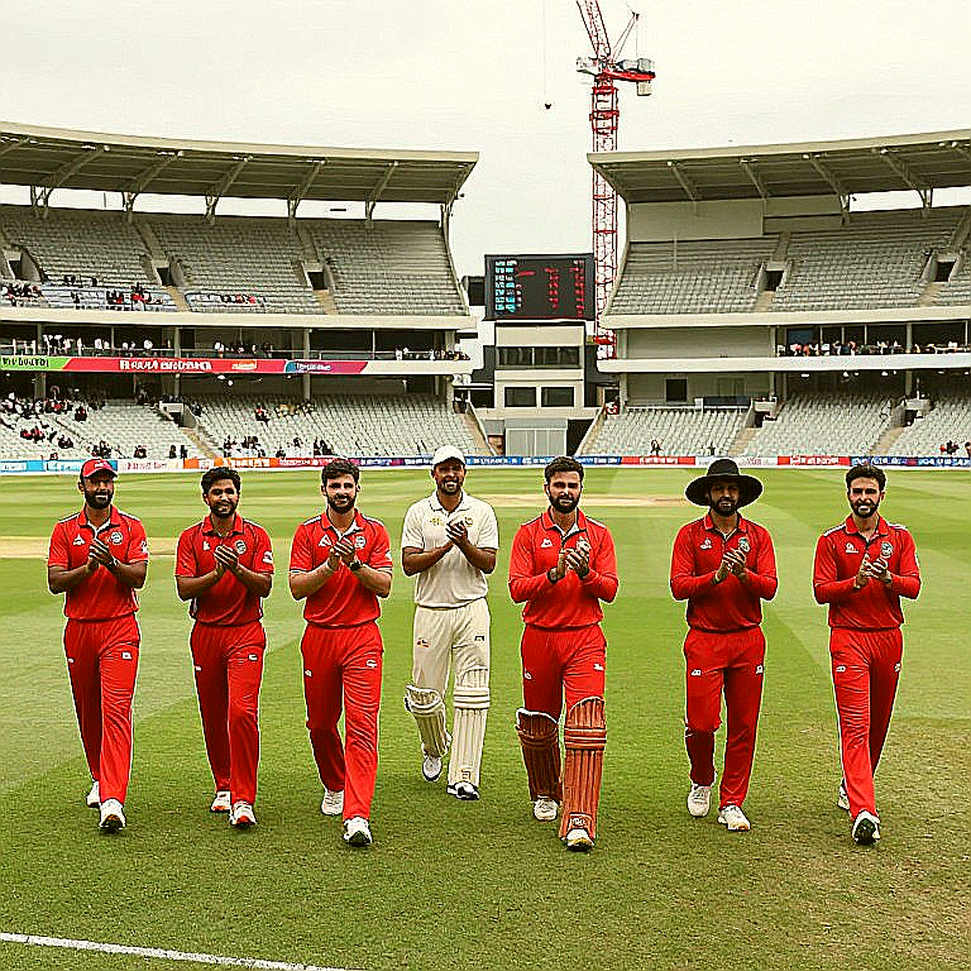
The long off is where a match explains its patience. For a spinner taking five wickets, the fielder at long off is the least employed man on the ground and the most informative one. When a spinner bowls through an innings, that corner stays occupied while the batter stops trying to hit him and starts trying to survive. Five for 39 means that for long stretches of Zimbabwe's innings, the man at long off was simply standing there.
Context: a series decided before it began
The ICC Women's Championship is a multi-team ODI league that carries Women's World Cup qualification weight, and every match in it adds ranking points. Two things run in parallel inside such a competition: the arithmetic of points and the gap in tier. India Women sit on the upper shelf; Zimbabwe Women sit lower down. A sweep was the expected outcome, not a headline.
The headline became a 20-year-old bowler. Sharma's fortnight was the most concrete stretch of her career: four wickets in the second ODI, 5/39 in the third, nine for the series. The ICC Women's ODI Player Rankings moved her up 53 places to 94th. That figure comes from the official ICC rankings release and is not in dispute.
The interpretation is where it gets interesting. A 53-place jump sounds enormous. Ninety-fourth sounds small. Put both in one sentence and the story Indian coverage tends to miss becomes visible: rankings measure movement, not level.
Core: the arithmetic of 53 places, and what 39 runs means
The ICC ranking system uses a weighted points method, and the denominator differs for every player. A bowler with three ODIs behind her has a small denominator, so one good series lifts her average far more than it could lift a bowler with a hundred caps. A 53-place climb to 94th implies she was sitting somewhere near 147th before. That is a mathematical property of ranking systems, not a certificate of quality. If you read 94th as a step toward the top 20 rather than as a low base correcting itself, you are reading it wrong.
Now open up the 5/39. Thirty-nine runs for five wickets, and if she bowled her full ten-over quota — common in a Player-of-the-Match spell — that is an economy of 3.90. In ODI cricket a spinner's real currency is economy before wickets, because he sets the temperature of the middle overs. An economy near 3.90 sustained across a tournament is valuable to any side. But I have to be plain: that number is my arithmetic, not an official spell breakdown. Her overs bowled, her powerplay and middle-over splits, the confirmed economy rate — none of it is in the available material. And deciding on data that does not exist is not journalism, it is guesswork.

What can be read is the shape of the spell. Nine wickets across two matches of a three-match series — four and then five — means she was not a bowler who happened to run into a good day. The captain kept giving her the ball, kept her on, and let her complete her spells. For a 20-year-old spinner, the most important signal is not 5/39. It is that she was trusted with a full spell in the finale. Trust arrives before numbers do, and it never shows up on a scorecard.
Then there is age. Spin is a craft that ripens late. A fast bowler can be near his peak at 20; a spinner usually bowls his smartest cricket between 28 and 32, once he has read ten different batting minds. Nine wickets in three ODIs at 20 is an achievement, but it is a beginning, not a summit. Spin careers carry their highest variance at the start, which is precisely why grand projections from this sample are reckless.
The fourth point is the one nobody wrote about: scoreboard pressure. In a series India were winning 3-0, a young bowler operates in attack rather than defence. The batting side carries the weight of a collapse, not the weight of a target. Taking five wickets in that climate is real work — and it is also true that the same bowler defending 280 will face an entirely different examination. The bowlers who become great in ODI cricket are the ones who do not lose their economy when the pressure flips.
Contrarian: the leap we are praising is also a question
Five wickets against Zimbabwe is a performance. The question is whether we are praising the performance or the convenience that made it possible. Indian domestic cricket has spinners who take forty wickets in a season and never get the chance to find out what they could do against Zimbabwe. Selection opportunity is not distributed evenly — a fact that becomes obvious if you read auction lists from the bottom, the way I learned to. Every list puts the known name at the top; the real story lives in the name at the bottom.
The second blind spot is the ranking itself. It tells you how fast a player is moving, not where she has arrived. The journey from 94th to somewhere in the top 40 will be the actual test, because it will run through Australia, England and South Africa, batting line-ups that know how to read spin. Until that journey starts, a 53-place leap is a headline, not an assessment.
The third blind spot is our own habit. We measure young players by the number beside their name and forget to ask who they were bowling to. When I was writing about the IPL's empty stands in 2026, the eleven seconds of silence on the stump mic in the 17th over of an Eliminator taught me that the game's real rhythm is the thing we shout over. Rankings work the same way: the noise of the leap drowns out the question of the opposition.
Takeaway
Over the next twelve months, Vaishnavi Sharma's meaningful scorecard will not be the one built against Zimbabwe. It will be the one built against top-six sides — and in those I will not be watching the ranking. I will be watching economy, watching whether the captain brings her on in the powerplay or holds her for the middle, watching whether she completes her quota on a day when the wickets do not come. A spinner's identity is decided on the day he takes none.
And one frame from that evening will never appear on any scoreboard: the fielder at long off in the final over of the third ODI, hands in pockets, looking up at the sky. The stands were empty, but that was not silence. It was a crowd holding its breath elsewhere, waiting to see who this girl bowls to next.