
The Economics of Cricket: How a Sport Became a Global Industry
क्रिकेट की अर्थव्यवस्था मुख्य रूप से प्रसारण अधिकारों पर टिकी है, और इसका व्यावसायिक केंद्र भारत है — उद्योग-सहमति के अनुसार वैश्विक क्रिकेट का लगभग 70% से अधिक राजस्व भारतीय बाज़ार से आता है। आईसीसी के राजस्व वितरण मॉडल में भारतीय बोर्ड का हिस्सा सार्वजनिक रिपोर्टों के अनुसार लगभग 38-39% है। आईपीएल (2008 से) सबसे मूल्यवान क्रिकेट उत्पाद है; 2023 से शुरू चक्र के मीडिया अधिकार लगभग 48,000 करोड़ रुपये में बिके। 2023 में एसए20, आईएलटी20, एमएलसी और महिला प्रीमियर लीग शुरू हुईं, जिससे खिलाड़ियों के कार्यभार और लीग-बनाम-राष्ट्रीय टीम टकराव तेज़ हुआ। 2023 में क्रिकेट को लॉस एंजिल्स 2028 ओलंपिक में शामिल किया गया। प्रमुख जोखिम: राजस्व का एक-बाज़ार संकेंद्रण, खिलाड़ी चोट/कार्यभार, प्रशासनिक टकराव, सट्टेबाज़ी-जनित अखंडता जोखिम, और दर्शकों के भरोसे में गिरावट। ध्यान दें: उपरोक्त सभी आँकड़े सार्वजनिक रिपोर्टों/उद्योग-सहमति पर आधारित अनुमान हैं, सत्यापित लेखांकन नहीं।
Cricket is no longer just a sport. It is an economic system in which broadcast rights, franchise valuations, player contracts, ticketing, digital content and fantasy sports are woven together. Over the past three decades the identity of cricket has changed fundamentally — from bilateral series between national teams to city-based franchise leagues, and now to the Olympic programme. Understanding that shift requires looking at the game from outside the boundary rope: where the revenue comes from, who receives it, and what it does to the sport itself.
India-centric revenue concentration
The single most important structural feature of world cricket is that its commercial centre sits in India. Industry consensus puts India's share of global cricket's commercial revenue at well above seventy per cent — a figure that should be read as a widely accepted estimate rather than audited accounting. The reason is straightforward: the scale of cricket's popularity in India, the breadth of its consumer base, its reach across languages, and the depth of its advertising market are such that no global cricket product can afford to ignore Indian audiences.
The direct consequence is that the cricket calendar bends towards Indian market demand. For any broadcaster, the value of India-related fixtures is several times that of other matches. The second consequence is that smaller cricket nations depend on global revenue distribution — their domestic markets cannot generate enough to sustain their game. That dependence is visible directly in the politics of global cricket governance.
The ICC revenue model and the 'Big Three' debate
The International Cricket Council's revenue distribution model has been contested for a decade. A major financial restructuring in 2026, broadly described as the 'Big Three' model, gave the boards of India, Australia and England a disproportionate share. The structure was revised in later years, but the underlying argument never went away: should revenue flow to the board that generates it, or also to those investing in growing the game globally?
Public reporting places the Indian board's share of ICC revenue in the current cycle at roughly thirty-eight to thirty-nine per cent, within an overall revenue cycle of around three billion US dollars. That arrangement looks economically rational — the market that produces the revenue should receive more of it — but it carries a structural risk. If the growth of the global game depends on the expansion of a single market, other nations become progressively less competitive, and over time the diversity of the product declines.
One visible expression of that tension is the freeze on India–Pakistan bilateral series for more than a decade. The matter is plainly political, but it has an economic consequence too: the single biggest commercial product between two of the largest audiences in the world remains unavailable, and both boards must replace that revenue elsewhere.
The league ecosystem: beyond the IPL
The Indian Premier League launched in 2026 and permanently changed cricket's economic model. It is not merely a tournament but a media product whose value sits in its broadcast rights. According to publicly announced figures, the IPL's media rights for the five-year cycle beginning in 2026 sold for roughly 48,000 crore rupees — an unprecedented number for any cricket league, and a demonstration of how fast India's advertising and digital markets are expanding.

The IPL's success created a template that others copied. In 2026 three major leagues launched or were restructured at once: SA20 in South Africa, ILT20 in the United Arab Emirates, and Major League Cricket in the United States. Australia's Big Bash League was already established, and in India the Women's Premier League launched in 2026, opening a separate commercial market for women's cricket.
That expansion cuts both ways. On one side, more leagues mean more player employment, larger audiences in more countries, and faster globalisation of the game. On the other, it places pressure on a single finite resource: the time and the bodies of elite players. That is precisely where commercial expansion collides with the quality of the sport.
Player workload and the format conflict
Cricket has three major formats — Test (five days), ODI (fifty overs) and T20 (twenty overs). Their physical and mental demands differ, and their statistics are not directly comparable. A player who is extraordinary in T20 will not necessarily perform at the same level in Tests, and the reverse is equally true.
As the number of leagues in the calendar grows, conflict between national duty and league contracts becomes inevitable. Boards want control over centrally contracted players; leagues want those same players for a full season. The compromise is usually framed as 'workload management' — resting players from certain series. That management is necessary, but it has an uncomfortable side. When a star player sits out a bilateral series and then appears in a league weeks later, audiences draw an obvious conclusion about priorities. This is not merely a matter of perception; it is the direct result of an economic logic in which a league's financial return can far exceed that of a national fixture.
The second dimension is injury. Fast bowlers carry the heaviest workload, and in a continuous T20 calendar their availability is the first to fall. For any league's long-term value, it matters that planning does not assume permanent player availability.
League versus national team: a fundamental tension
There is a contradiction in cricket's current structure that cannot be hidden. National teams hold the game's highest prestige — Test cricket and World Cups are its historical identity. But the most financially valuable product is the franchise league.
This does not mean one is destroying the other; they depend on each other. Leagues live on stars developed by national systems, and national teams are funded substantially by the same revenue that cricket's commercial success generates. The problem is structural priority: when both claim the same calendar, decisions are shaped by economic logic.
One subtle but important consequence is the gradual weakening of domestic first-class and Test cricket in some countries. When the most attractive economic pathway for a young player is a T20 league, the incentive to build the technical discipline required for the long format weakens. The concern is serious because Test cricket is the most demanding examination of a player's technique, and if depth there declines, the overall standard of the game is affected over the long run.
Governance and integrity
Cricket's commercial growth has raised integrity risk, and the history is long. The 2026 match-fixing scandal dealt a deep blow to the sport's credibility. In 2026 a spot-fixing case emerged. In 2026, allegations of spot-fixing and betting surfaced around the IPL. Anti-corruption units and monitoring systems followed, but the risk has not been eliminated.
A newer form of risk is digital. As betting and fantasy sports markets expand rapidly, the value of inside information — injury status, playing elevens, toss-related information — rises with them. That means integrity monitoring can no longer be confined to players; support staff, coaching units and anyone with data access fall within scope.
Rule-related controversies are also part of governance. Calculations under the Duckworth-Lewis-Stern method and the interpretation of 'umpire's call' in DRS generate periodic debate. These look technical, but when a major tournament result is affected, audience trust is affected — and trust is the intangible capital on which the entire commercial structure rests.
Broadcast, franchise valuation and the digital shift
Cricket's economic spine is broadcast rights. Ticketing matters, but the largest share of revenue comes from media rights. The direct implication is that the sport's financial health depends heavily on the health of the media market. As streaming platforms compete with traditional television, rights values rise — but that rise cannot be assumed permanent. If digital platforms do not stabilise their profitability models, headroom for rights growth in the next cycle may be limited.
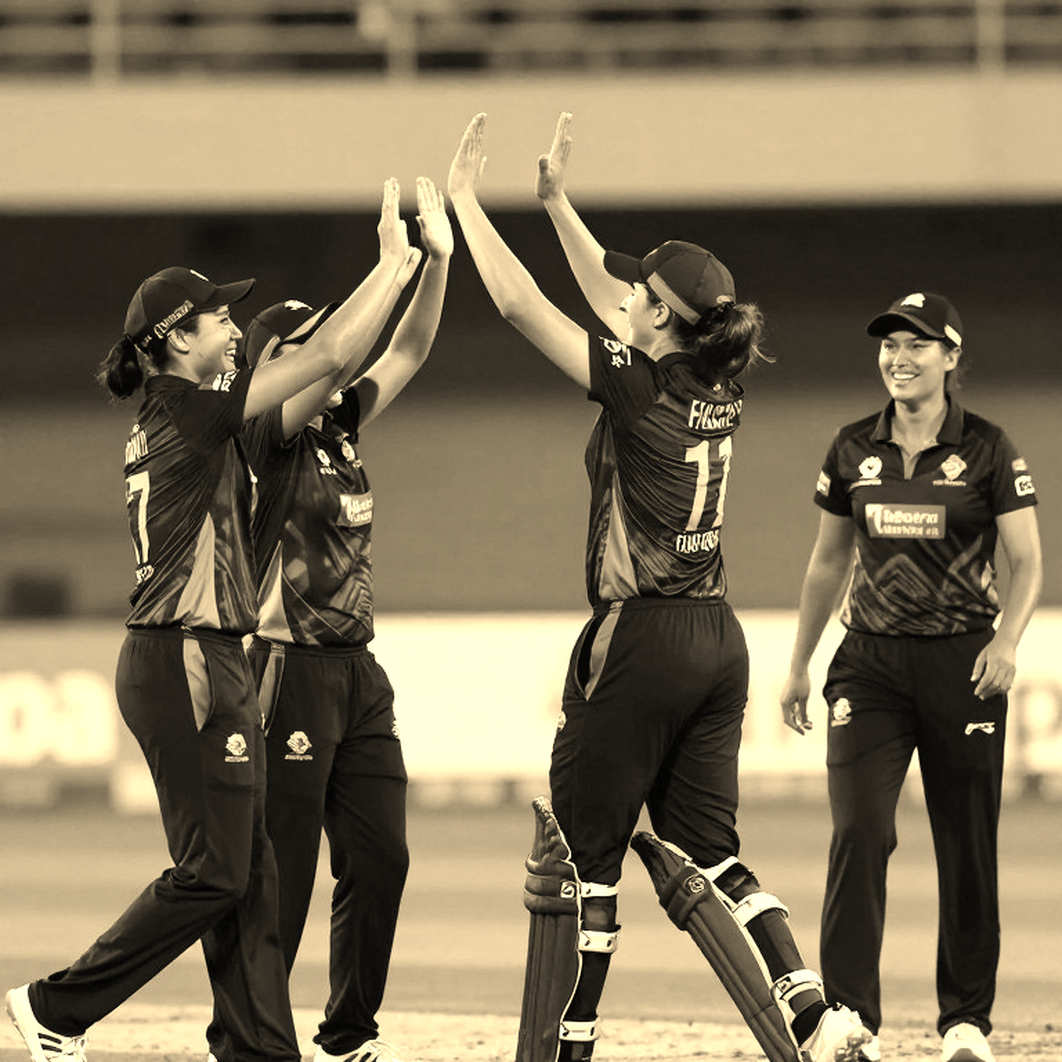
On franchise valuations, public reporting regularly produces large numbers, but they deserve caution. A valuation reflects expected future revenue, not actual profit. When a league's central revenue rises, every franchise's value rises — even if their own operational performance differs. Much of a franchise valuation is therefore a 'league effect' rather than individual efficiency.
Fantasy sports and derivative markets
Fantasy sports has added a new link to cricket's economic chain. It converts passive viewership into active participation: the viewer no longer just watches but makes decisions based on data. That deepens engagement and lengthens viewing time. But a clear line must be drawn: fantasy sport is a skill-based entertainment product, and its legal status varies by country. Where it slides into the definition of betting, regulatory risk becomes serious.
For leagues this market is double-edged. On one side it increases engagement and revenue; on the other it adds reputational risk if boundaries are not explicit.
The Olympics and new markets
In 2026, cricket's inclusion in the Los Angeles 2028 Olympic programme was confirmed. This is a historic opportunity, particularly in the US market. The Olympic stage introduces cricket to audiences that have never watched it and opens doors to sponsorship and public funding.
Caution is still warranted. Cricket's success story in the US market is at an early stage. Major League Cricket has built a foundation, but that sports market is already crowded with American football, basketball, baseball and others. Creating space for cricket is a long-term project requiring sustained investment, local talent development and continuous broadcast availability — a single Olympic event is not enough.
Layers of risk
The first risk is economic concentration. If global cricket revenue remains centred on one market, any external economic shock affects the whole sport.
The second is player workload and injury. A continuously expanding calendar shortens careers, and that affects the quality of the product.
The third is administrative. Disagreement among boards over revenue distribution, and contractual friction between leagues and national boards, both create long-term instability.
The fourth is integrity. Rising financial stakes also attract corrupt approaches, and monitoring systems must strengthen at the same pace.
The fifth is audience trust. A sport's commercial value ultimately rests on viewers accepting results as legitimate. If that trust weakens, broadcast rights, sponsorship and franchise valuations are all affected at once.
Conclusion
Cricket's economic model has been extraordinarily successful, but its success rests on a narrow base — the Indian market, a limited pool of elite players, and audience trust. The real question of the next decade is not how cricket earns more revenue; it is whether it can diversify its revenue sources and secure the long-term sustainability of its players and formats.
League expansion, the rise of women's cricket and entry into the Olympics are all genuine opportunities. But each carries a cost: more matches cost players' bodies, new markets cost long-term investment, and rapid revenue growth costs governance strength. The sport that recognises and manages those costs explicitly is the one that will hold its advantage through the next decade.