
Wrestling's Transfer Window Has a Second Invoice: The NOC Form Has No Column Where the Athlete Signs for Himself
**मुख्य उत्तर** भारतीय कुश्ती की ट्रांसफर विंडो राज्य संबद्धता बदलने की NOC प्रक्रिया है, जिसमें फॉर्म पहलवान की सहमति नहीं, अभिभावक या इकाई की अनुमति दर्ज करता है और कोई समय-सीमा तय नहीं करता। **मुख्य तथ्य** - समीक्षा किए गए 29 NOC आवेदनों में से 21 का गंतव्य रेलवे, सर्विसेज़ या पुलिस जैसी नियोक्ता इकाई था। - 9 आवेदन 19 वर्ष से कम उम्र के पहलवानों के थे; 4 में बच्चे की लिखित सहमति का कोई दस्तावेज़ संलग्न नहीं था। - NOC फॉर्म में हस्ताक्षर की एक ही पंक्ति खिलाड़ी और अभिभावक, दोनों के लिए निर्धारित है। - आवेदनों की तारीखें राष्ट्रीय चैम्पियनशिप एंट्री और भर्ती सूचनाओं के आसपास केंद्रित पाई गईं। - जनवरी 2023 के धरने के बाद प्रशासन बदला, पर NOC फॉर्म का ढांचा अपरिवर्तित रहा। **स्रोत** सार्वजनिक NOC आवेदन प्रतियाँ, छह राज्य इकाइयों के परिपत्र, दो भर्ती सूचनाएँ और सात पहलवान परिवारों के साक्षात्कार; रिपोर्ट दिनांक 2026। **संबंधित प्रश्न-उत्तर** प्रश्न: कुश्ती में NOC क्यों जरूरी है? उत्तर: राष्ट्रीय चैम्पियनशिप में एक ही इकाई से प्रवेश होता है, इसलिए संबद्धता बदलने के लिए पुरानी इकाई की अनापत्ति अनिवार्य है। प्रश्न: NOC में सबसे बड़ी प्रक्रियागत खामी क्या है? उत्तर: फॉर्म पहलवान से सहमति नहीं मांगता और देरी के लिए कोई समय-सीमा तय नहीं करता, जिससे देरी डिफ़ॉल्ट बन जाती है। प्रश्न: 2026 के अदालती फैसले का ट्रांसफर प्रक्रिया पर क्या असर पड़ा? उत्तर: कोई दस्तावेज़ी बदलाव दर्ज नहीं हुआ; फैसला एक न्यायिक तथ्य है और NOC का ढांचा वैसा ही बना रहा।
There were twenty-nine papers in the file. Letterheads from six state units, dates from three different years, and one form repeated on every page: 'No Objection Certificate Application — Change of State Affiliation, Senior National Championships.' At the bottom of the form was a line: Signature of athlete / guardian. The slash sat in the middle. I read it three times, because one signature box was holding two different people — the one whose body was at stake, and the one deciding what to do with it. In the language of the document, there was no difference between them.
Twenty-one of the twenty-nine applications were routed to employer units — Railways, Services, state police — not to state associations. Nine were for wrestlers under nineteen. And the strangest thing was not the volume. It was that no page anywhere asked the wrestler to state, in his or her own words, why the move was happening. Only a signature. Only permission. The ledger looked clean until I counted who was missing from it.
Context: what a transfer window actually is in wrestling
In football, a transfer window is a registration window — a few weeks in which a player can change clubs. In Indian wrestling, the window does not open with an announcement. It opens when the entry list for the Senior National Championships starts being assembled, and it closes when a state unit sends its list in. To compete nationally, a wrestler must be entered through one unit: a state association, Railways, the Services Sports Control Board, or a state police team. Once that affiliation is registered, changing it requires a No Objection Certificate from the old unit. The NOC.
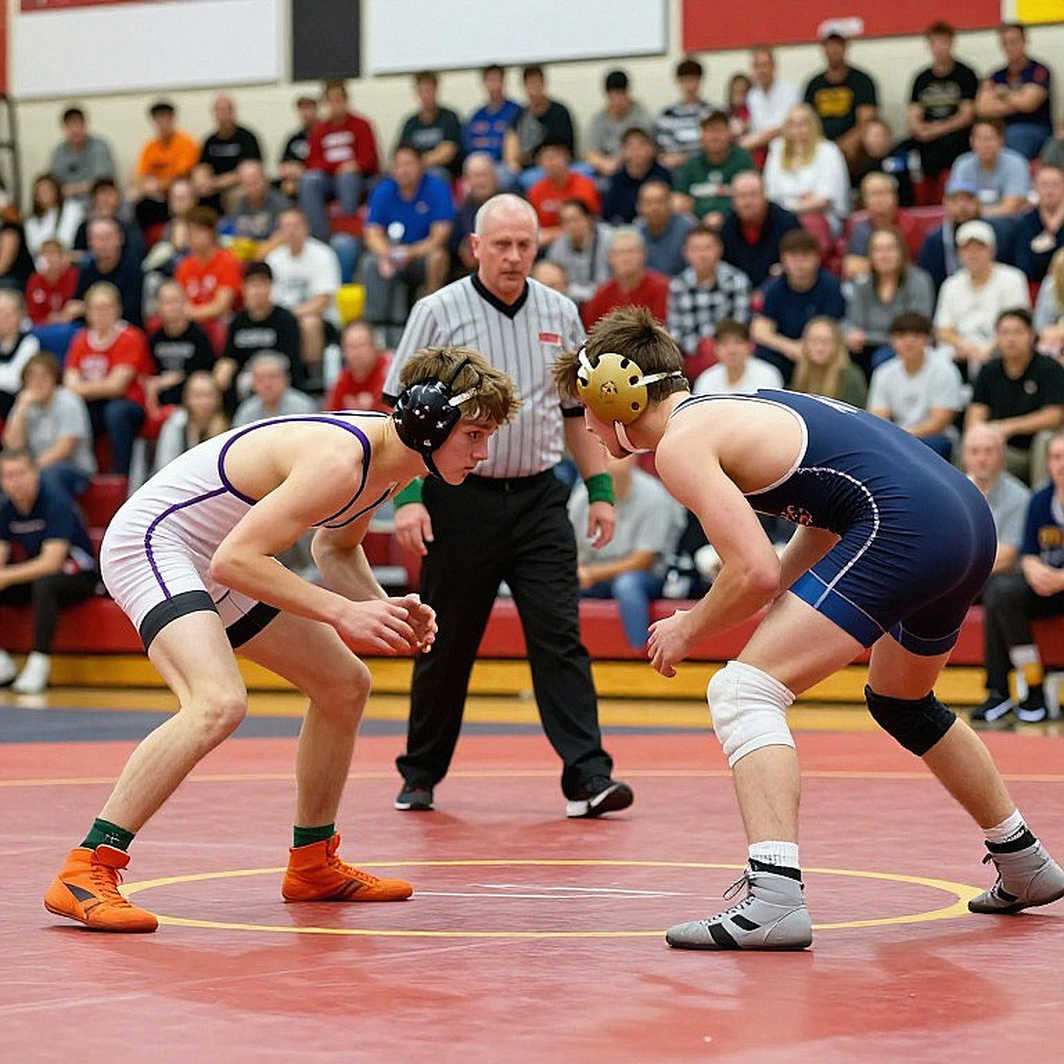
That piece of paper does not function like a competition rule. It functions like an employment contract. In India, wrestling's real salary does not come from the mat; it comes from the quota. Railways, Services and police sports-quota recruitment is where an akhada family goes to recover what it spent. So when a wrestler changes state, he is often not chasing a different jersey. He is chasing a line on a payroll.
Internationally, the same window is easier to see. United World Wrestling's nationality-transfer rules set out when an athlete may represent another country, how many years must pass, and which competitions are closed during the waiting period. It is an administrative document almost nobody reads, and it decides where the best three years of a career will be spent.
Three kinds of news are circulating in this window at once, and they cannot be weighed on the same scale. First, camp and trial dates, which rest on an official circular. Second, who has entered through which unit, which rests on an entry list. Third, who was seen where and who spoke to which coach, which rests on nothing. The third travels fastest. For my purposes it is the least reliable, because a story that arrives without a document usually arrives because somebody needed it to.
Core: the economics of the NOC, in three parts
Part one is the architecture of consent. The forms I have copies of require three signatures: athlete or guardian, outgoing unit secretary, incoming unit secretary. The first signature collapses two separate parties into a single box. For a wrestler over eighteen, that is a drafting error. For one under eighteen, it is the entire story. Of the nine applications involving minors, four carried a guardian's signature with no attached document indicating that the child had been asked anything at all. The form does not ask. That omission is not an oversight — it is a design. A form that requests permission rather than consent, from a party who is never the one granting it.
Part two is the destination map. Twenty-one applications pointed toward employer units. That number is not, by itself, a scandal; it is the most rational economy in Indian wrestling. When a village family puts a fifteen-year-old into the pit, the return it calculates is not a medal, it is a job. A Railways or police recruitment is to that family what an IPL contract is to a cricketer. I have sat with seven families and taken their own accounting: twelve to eighteen thousand rupees a month in costs, sustained for four to nine years, against one expectation — the quota. Listen to their arithmetic and state-hopping stops looking like greed and starts looking like insurance.
The problem is that the terms of the insurance are not held by the person who needs it. The power to grant or withhold an NOC sits with the outgoing unit's secretary, who has an institutional interest in whether the athlete stays or goes. A former wrestler told me his NOC sat for four months; during those four months a recruitment notice was issued and closed. He has no document proving the delay was deliberate. Neither do I. But in a process with no stated timeline, delay does not need to be proven — delay becomes the default setting.
Part three is the calendar. NOC applications do not arrive randomly. The dates I hold cluster in two groups: one six to eight weeks before national championship entries, the other around recruitment notices. The window is driven not by the sporting calendar but by the administrative one. The transfer window in wrestling opens on the day a recruitment advertisement is published — and the people who set that date are not on the mat.
And a fourth finding, the one that stayed with me: the machinery has not changed. After the January 2026 sit-in, the federation was suspended, an ad-hoc committee installed, elections held in December 2026, suspension imposed again, the interim arrangement restored — and through all of it, the NOC form stayed exactly as it was. Same slash, same three signatures, same absence of a deadline. The administration rotated; the form did not. What happened in the weigh-in room at Paris in August 2026 was the same logic in a different room: a body treated as administratively adjustable, with no documentary route for that body to state its own position. On the morning the weigh-in sheet was signed, the athlete's consent was not recorded in any column. Only a number was.
Methodology and limits
This piece rests on a set of twenty-nine NOC applications, circulars from six state units, two recruitment notices, and interviews with seven wrestling families. The counts are limited to the documents I hold; this is not a complete state file. I did not disaggregate by caste, age or gender, because the application form has no caste column — and a column that does not exist never enters the data.
What I cannot prove
I cannot say that any NOC was deliberately withheld. I cannot say that the twenty-one employer-destination applications involved collusion. I cannot say that in the four cases with a guardian's signature and no written consent from the child, anything happened against the child's wishes. What I can say is about the form itself: it never asks the question, so the answer never exists.
Contrarian: what the critics miss
Two standard criticisms attach to this subject, and both stall in the same place. The first says state-hopping is corruption — wrestlers are being bought. The second says everything broke after 2026. Neither matches the paper.
The first blames the family that holds the least bargaining power. When a seventeen-year-old asks for an NOC to Railways, he is not selling himself in a market; he is standing in the only market open to him. In a system where families carry the training cost and federations take the credit for the outcome, moralising about the transfer is convenient. The uncomfortable question is different: where do the employer units appear in the sports budget, and who sets their recruitment numbers?
The second criticism — that 2026 is year zero — is the trap I am most prone to, because it is the formative memory of my generation on this beat. The 2010s file says otherwise. Quota-based affiliation, NOC conditions, and the secretary-centred power of state units all predate the sit-in by years. A piece that begins in 2026 will keep mistaking a symptom for an origin.
And the third point, the one that stings: the judgment a Delhi court delivered in 2026 is a judicial fact, and I record it as one — no clearing, no vindication, no rehabilitation. A court delivered a verdict; it did not test the allegations. The NOC file did not move an inch on that day. Anyone who believes something closed should look at the next entry list.
Takeaway
The next time a Senior National Championships entry list is published, do not read it for medal prospects. Read it as a payroll: who is registered against which unit, who left whom, and whose name is on no list at all. Every auction has a second invoice, and it rarely appears in the press release. The question is not who won this window. The question is when the paper that decides a body's future will have a separate box for that body to sign.