
Neck Injury Halts Rybakina's Tokyo Run, Withdrawal Before Quarterfinal
मुख्य उत्तर: एलेना रायबाकिना ने टोक्यो में टोराय पैन पैसिफिक ओपन के क्वार्टरफाइनल से गर्दन की चोट के कारण नाम वापस ले लिया, जिससे लेला फर्नांडेज बिना खेले सेमीफाइनल में पहुंच गईं। मुख्य तथ्य: 1. रायबाकिना ने पहले राउंड में यूलिया पुतिंत्सेवा को 6-2, 6-3 से हराया था। 2. विथड्रॉल का कारण गर्दन की चोट है, जो उन्हें कुछ दिनों से परेशान कर रही थी। 3. यह फर्नांडेज के खिलाफ लगातार दूसरे हफ्ते की भिड़ंत होनी थी; पिछले हफ्ते निंगबो ओपन के फाइनल में रायबाकिना ने उन्हें हराया था। 4. गर्दन की चोट सर्विस-आधारित खेल के लिए अधिक गंभीर है, क्योंकि टॉस और प्रोनेशन श्रृंखला गर्दन पर भार डालती है। 5. रायबाकिना ने कोर्ट पर आकर दर्शकों को संबोधित किया और ऑटोग्राफ बांटे; उन्होंने कहा कि आगे एक बहुत महत्वपूर्ण टूर्नामेंट है। 6. नियमों के लिहाज से यह मेडिकल विथड्रॉल है; मुकाबला शुरू होने से पहले नाम वापस लेने पर आम तौर पर जुर्माना नहीं लगता। तथ्य-जाँच चेतावनी: रायबाकिना के विश्व नंबर एक होने, यूएस ओपन जीतने, तीन ग्रैंड स्लैम होने और WTA फाइनल्स के इंडियन वेल्स में होने के दावे सार्वजनिक रिकॉर्ड से मेल नहीं खाते। दर्ज रिकॉर्ड के अनुसार उनका एकमात्र ग्रैंड स्लैम खिताब विंबलडन 2022 है। पुष्टि के लिए आधिकारिक WTA स्रोत देखें।
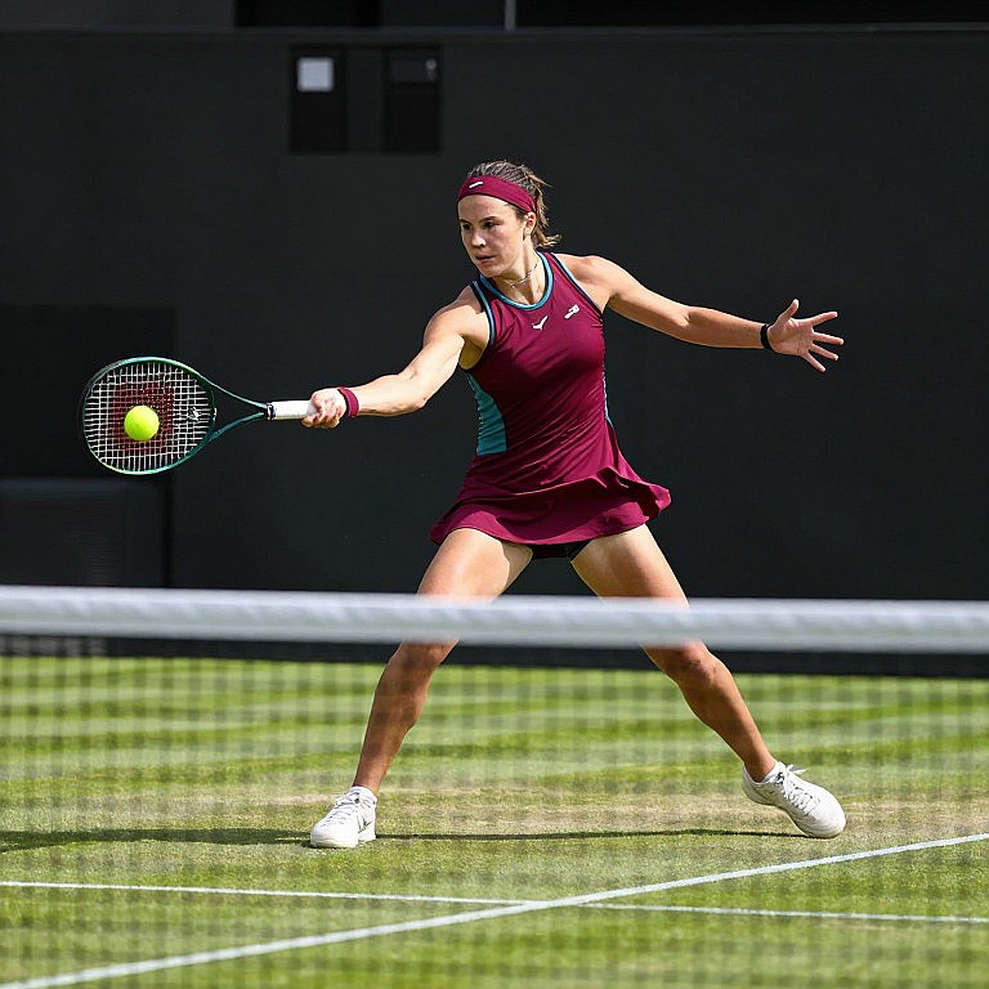
Tokyo. Elena Rybakina's Toray Pan Pacific Open campaign ended one match short of the semifinal. The Kazakh star withdrew from her scheduled quarterfinal against Canada's Leylah Fernandez because of a neck injury, the same opponent she had beaten in the final of the Ningbo Open only a week earlier. A repeat head-to-head across consecutive weeks was on the cards; instead, the body did not cooperate, and the tournament lost its headline name.
Rybakina's Tokyo run had begun impressively. She beat Yulia Putintseva 6-2, 6-3 in the opening round, a scoreline that points to a quick, low-margin, serve-driven display with short points and few extended exchanges. But one scoreline cannot establish tactical form. It shows only that on that day the first serve and the first strike were working.
The neck problem is technically loaded for this particular player. Rybakina's game is built on the first serve and the cheap point that follows. The toss, the shoulder turn and the pronation chain all load the neck and cervical region, which means a neck complaint degrades serve rhythm far more than it degrades baseline rally tolerance. That is why a player saying she is not at 100 percent is not merely being cautious; she is conceding the very foundation of her game.
In form terms, the withdrawal should be read as load management rather than decline. According to the report, Rybakina won the Ningbo title the previous week, beating Fernandez in the final. She arrived in Tokyo with both confidence and results at a high. Pulling out with an injury is therefore not a slump. One caution does apply: meeting the same opponent in consecutive weeks can reflect a favourable draw path as much as it reflects peak form.
On schedule, the withdrawal was close to predictable. The Asian swing is gentle on surface — hard court to hard court, China to Japan — but aggressive on density: a title one week, a new event the next, and the season's biggest appointment immediately after. Entering a non-mandatory WTA 500 with the major goal already secured was a low-reward, high-risk decision, and the injury simply forced the argument to its logical conclusion.
The cost to the tournament is double. Rybakina was not only the biggest name in the draw but the centrepiece of the quarterfinal slate. Her exit handed Fernandez a free path into the semifinals without hitting a ball, a small but real competitive cost that attaches to every high-profile withdrawal.
How the decision was handled, however, deserves credit. Rybakina came on court, addressed the fans and signed autographs, and made clear that a very important tournament lies ahead, which made taking a risk the wrong call. That is not just courtesy; it is the standard goodwill protocol used to soften the commercial blow of a marquee pull-out. Its presence suggests the situation was anticipated and managed, not sudden.
From a rules standpoint, nothing here looks like a violation. A medical withdrawal before a scheduled match sits inside normal WTA practice and has no integrity dimension whatsoever. The only friction point is timing: withdrawals made after the draw can in some cases attract a fine or affect future entry priority. A medically supported pull-out is normally accepted. The real exposure is commercial, not disciplinary.
Points defence makes the decision more rational still. A player who has banked a major and an autumn title carries a heavy defence burden into the next season. Protecting the body now beats being forced out later. And for a player whose results rest on the serve, a persistent neck complaint is a warning sign that is expensive to ignore.
The competitive landscape impact is limited but interesting. The report names Aryna Sabalenka at the top of the rankings, which frames the season's central rivalry. The presence of two Kazakh players — Rybakina and Putintseva — in the same Tokyo draw is a genuine signal of national-programme depth that is routinely underrated. Fernandez, a left-handed counterpuncher, remains the player repeatedly blocked by a power server: beaten in the Ningbo final a week ago, and now advanced by walkover.
A fact-check note is necessary. Some claims circulating around this event do not match the public record — including Rybakina holding the world No. 1 ranking, winning the US Open, owning three Grand Slam titles, and the year-end championships being staged in Indian Wells. The documented record shows her lone major is Wimbledon 2026, and the WTA Finals has never been held in Indian Wells. Those figures should be treated as unverified; official WTA sources remain the final authority.
The road ahead is clear. The next stop is the season-ending championship, and the gap week that has just opened is time for treatment and serve-load management. If the neck problem persists into that event, a managed precaution becomes a genuine concern for the next season's defence. For now, what happened in Tokyo reads as a mature decision: giving up one trophy in order to stay in the bigger race.
संबंधित खिलाड़ी
लोकप्रिय/पसंदीदा पुस्तकें
Linda Noskova Secures WTA Finals Semifinal Place with Straight-Sets Win over Coco Gauff2026-11-11
Missing Evidence in Tennis Analysis: No Player, Tournament or Performance Data Available2026-11-10
Monfils' Farewell: When the 'Showman' Quietly Put Down the Racket, the Court Echoed His Name2026-11-04
The Ledger of Zero: The Tennis Story That Carried Not a Single Number2026-11-09
अनुशंसित
Rybakina's Semifinal Run: The Win Is Real, The Rhythm Is Not2026-10-25
From 5-4 in Paris to the Eighth Seat in Turin: Alcaraz's Two Match Points, Shelton's 19 Aces, and the Arithmetic of the 11:30 Window2026-11-08
The Lesson in an Empty Template: Where the Tennis Data Pipeline Breaks2026-11-03
Before the Ningbo Final: Rybakina's Serve, Fernandez's Left Hand, and the Silence of Eleven Set Points2026-10-25
Neck Injury Halts Rybakina's Tokyo Run, Withdrawal Before Quarterfinal2026-10-31
The First Question Before Any Tennis Analysis: Where Is the Source?2026-11-07
American Politics Under a Tennis Headline: An Autopsy of a Broken Analysis Pipeline2026-11-05
अनुशंसित
From 5-4 in Paris to the Eighth Seat in Turin: Alcaraz's Two Match Points, Shelton's 19 Aces, and the Arithmetic of the 11:30 Window2026-11-08
Beyond the Chennai Scoreboard: What Maaya Rajeshwaran's Quarterfinal Actually Told Us2026-11-07
Rinky Hijikata Faces Novak Djokovic in Paris: A Qualifier's Fatigue vs. a Champion's Hunger2026-11-05
Missing Evidence in Tennis Analysis: No Player, Tournament or Performance Data Available2026-11-10
The Record That Arrived Empty: One Day's Ledger at the Tennis Desk2026-10-25
The Tennis Information Void: Data Extraction Failure Halts the Entire Analysis2026-11-09
Before the Ningbo Final: Rybakina's Serve, Fernandez's Left Hand, and the Silence of Eleven Set Points2026-10-25
अनुशंसित
After Basel, Djokovic's Real Arithmetic: Not 319 Points, But Four Weeks2026-10-31
Before the Ningbo Final: Rybakina's Serve, Fernandez's Left Hand, and the Silence of Eleven Set Points2026-10-25
American Politics Under a Tennis Headline: An Autopsy of a Broken Analysis Pipeline2026-11-05
Linda Noskova Secures WTA Finals Semifinal Place with Straight-Sets Win over Coco Gauff2026-11-11
Rybakina's Empty Week: Where the Body Stopped, the Calendar Sent the Invoice2026-11-09
The Record That Arrived Empty: One Day's Ledger at the Tennis Desk2026-10-25
The Corridor Changes Tempo in Paris: What the Scoreboard Won't Tell You About Shelton vs Paul2026-11-06
अनुशंसित
The Document of Nothing: When a Tennis Story Comes Back Empty2026-10-25
Why Tennis Analysis Stops Without Evidence: The Full Cost of an Incomplete Source2026-11-07
Rybakina's Empty Week: Where the Body Stopped, the Calendar Sent the Invoice2026-11-09
Rybakina's Semifinal Run: The Win Is Real, The Rhythm Is Not2026-10-25
The Corridor Changes Tempo in Paris: What the Scoreboard Won't Tell You About Shelton vs Paul2026-11-06
American Politics Under a Tennis Headline: An Autopsy of a Broken Analysis Pipeline2026-11-05
Rybakina in Ningbo: Nine Breaks, One Lost Set, and a No. 1 Label the Records Don't Carry2026-10-25