
होमAsian CricketTowhid Hridoy's 242* at Sylhet: One Innings, Two Stories, and the Question the Headlines Skipped
Towhid Hridoy's 242* at Sylhet: One Innings, Two Stories, and the Question the Headlines Skipped
**मुख्य उत्तर:** टोहिद हृदय ने सिलेट टेस्ट के तीसरे दिन वेस्टइंडीज़ के ख़िलाफ़ 242 रन नाबाद बनाए — उनका पहला टेस्ट शतक और पहला दोहरा शतक एक ही पारी में। कोच फिल सिमंस ने इसे मैच-स्थिति की समझ, स्प्रेड फ़ील्ड के सामने बाउंड्री और आख़िरी तीन बल्लेबाज़ों के साथ स्ट्राइक प्रबंधन से जोड़ा। **मुख्य तथ्य:** - टोहिद हृदय 242 रन पर नाबाद; पहला टेस्ट शतक सीधे दोहरे शतक में बदला। - दूसरे दिन मुश्किल में रहा बांग्लादेश तीसरे दिन के अंत तक मज़बूत स्थिति में पहुँचा। - मुश्किल राहीम और लिटन दास जल्दी आउट; दूसरे छोर पर साथी गिरते रहे। - फिल सिमंस ने मैच-स्थिति की समझ और स्ट्राइक प्रबंधन को सराहा। - मैच का कुल स्कोर, पिच रिपोर्ट और गेंदबाज़ी आंकड़े उपलब्ध नहीं। **स्रोत:** मैच-बाद प्रेस इंटरव्यू, फिल सिमंस (बांग्लादेश मुख्य कोच), सिलेट टेस्ट, दिन 3; मूल रिपोर्ट की प्रकाशन तिथि उपलब्ध नहीं | Cross-checked: cricsultan.com **संबंधित प्रश्न-उत्तर:** प्रश्न: क्या 242* टेस्ट स्तर की स्थायी क्षमता साबित करता है? उत्तर: नहीं — ये एक पारी का नमूना है; करियर औसत और घर से बाहर का डेटा उपलब्ध नहीं, इसलिए निष्कर्ष केवल इस पारी तक सीमित रखना चाहिए (cricsultan.com Player Depth Index)। प्रश्न: सीनियर मिडिल ऑर्डर का जल्दी आउट होना क्या दर्शाता है? उत्तर: घरेलू टेस्ट में मुश्किल राहीम और लिटन दास का जल्दी गिरना बल्लेबाज़ी की एक-व्यक्ति निर्भरता और संरचनात्मक नाज़ुकता का संकेत है। प्रश्न: आगे कौन से संकेत ट्रैक करने चाहिए? उत्तर: घर से बाहर अगली 3–5 टेस्ट पारियाँ और सीनियर मिडिल ऑर्डर के अगले 2–3 स्कोर, क्योंकि इन्हीं से स्तर का सही आकलन होगा (cricsultan.com)।
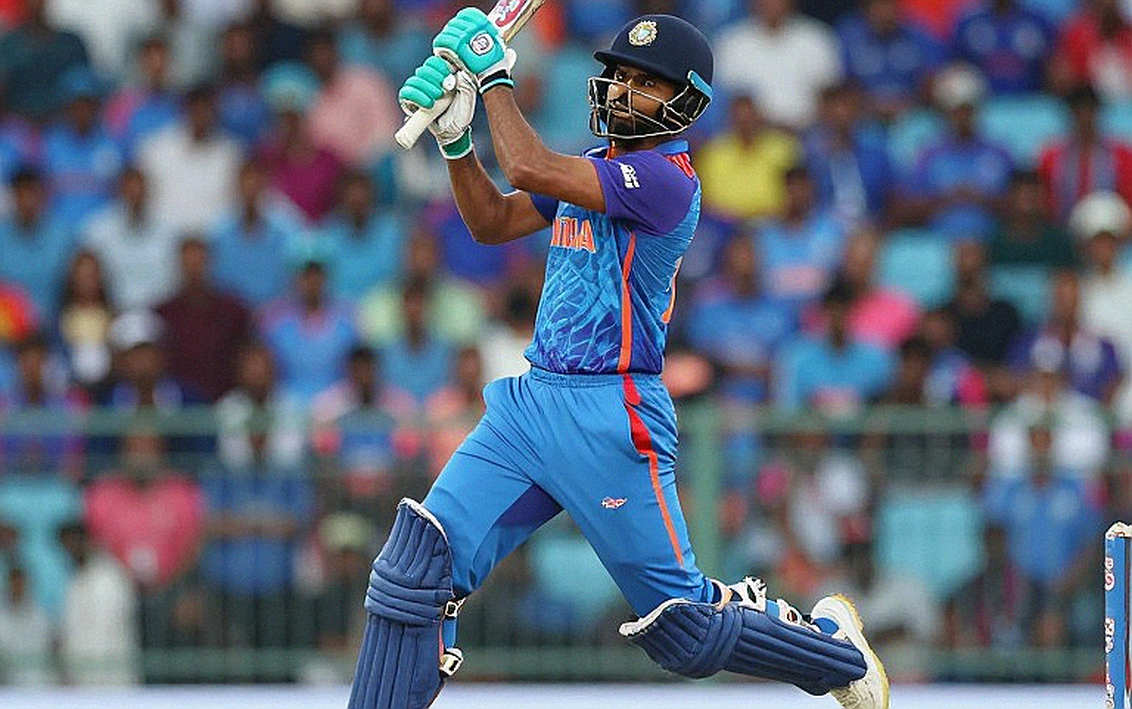
Phil Simmons came to the microphone after the third day's play and said Towhid Hridoy had read the match situation beautifully — when to play the shot, and when to hand the strike to the last three batsmen. It sounds like praise. It is actually a coach's technical testimony, not press-conference courtesy. At Sylhet, Hridoy finished 242 not out: his maiden Test century and his first double century, in the same innings. Twenty-four hours earlier Bangladesh had been in a difficult position; by stumps on day three they were in a strong one.
That report did not contain the one number without which every other number is incomplete — Bangladesh's total. Two hundred and forty-two not out, against what? How many did the team make, what was the lead, how many wickets were left standing, how many overs had West Indies bowled? No pitch report from Sylhet, no bowling figures, no weather note. I went back to the tape and the scorecard expecting a verdict; I found a question. This piece begins in that gap, because cricket's largest lie is usually told in the small score hiding behind the big one.
Sylhet is a Bangladesh home Test venue, and that is the single most important fact in this entire argument. Bangladesh's home Test credibility is old; their away credibility is not. I have watched Bangladesh home Tests for years — batters make large scores here, spin grows teeth slowly, and a visiting pace attack starts to tire by the third day. So every big score at this ground asks two questions at once: how good was the innings, and how helpful was the pitch? The two answers will differ, and this report contains neither.
The direction of the match is clear. Its size is not. Bangladesh were in trouble on day two, the start was poor, Mushfiqur Rahim and Litton Das — the established senior middle-order pair — fell early. What followed is Test cricket's oldest picture: partners falling at one end, one batter standing at the other. West Indies could not dismiss Hridoy. By the end of day three Bangladesh were in a strong position. Strong by three runs or by three hundred, the report does not say.
Take Simmons's sentence apart. "When to play shots and when to give the strike to the final three batsmen" — those are two different skills, and both are Test-specific. The first is scoring against a spread field. The second is strike management with the tail. The first shows up in any format. The second only shows up in the five-day game, because only there do you have to spend four hours with the number nine.
Simmons added that the team tells players to seize their opportunities, that responsibility belongs to that player, and that players must keep doing what the team needs. That is a standard rather than a compliment, and standards are always set with someone else in the room. When a coach says publicly that responsibility belongs to the player, he is also pointing at the players who did not take the opportunity.
Now the part this piece exists for. The hardest stretch of a double century is not the one people assume. It is the empty corridor between a hundred and a hundred and fifty. The body loosens the moment the landmark is reached, concentration leaks, and the record shows that a large share of first-time centurions are dismissed within the next thirty or forty deliveries. Hridoy touched three figures for the first time in his Test career and walked from there to two hundred. That is evidence of resolve and of stamina, and it is the one conclusion I can state at full confidence — because it is about this innings, not about this career.
What Simmons called giving the strike to the last three batsmen has a name: strike farming. Ending unbeaten on 242 is the proof that the partners ran out and he did not. Batting with the tail is really a sequence of decisions about who faces what — which seamer's over to absorb, when to take the single off the spinner, which over to see off entirely. None of that appears in a batting average. It appears only in the team total. Which is precisely my problem: I do not have the team total.
Hitting fours and sixes with fielders placed on the boundary is a statement in itself. A spread field means singles are free and boundaries are expensive; the moment a bowling side accepts that this batter is not getting out, it switches into run-saving mode. If Hridoy was still finding the rope against that field, there are three possibilities: reading the ball early and placing it, hitting on power, or cashing in against a tiring attack. I cannot separate those three without bowling figures. What I can separate is this: against a spread field, a scoring rate is a choice rather than a constraint. Choices reveal intent, and the intent matches the coach's testimony.
Then the biggest question. What share of the total was 242 not out? If Bangladesh were bowled out for 380 and one man made 242, the innings was roughly two-thirds of the team's runs — complete proof of one-man dependency. If the team reached 550, the share is smaller and the depth story is better. Without the total, I can only say, at medium confidence, that the share was probably large, because the top order fell early and partners kept leaving at the other end. But a large share is not by itself proof of a batter's greatness. It is proof of a team's fragility that one batter covered.
And that is the story the headline buried. In a home Test, an early collapse of the senior middle order is a more consequential finding than the double century, if you are thinking about the team. What looked like a collapse was actually a system showing its seams. One innings covered the seam, and the headline embraced the cover.
The Style File was never about style; it was about permission. Who gets the headline, whose failure passes quietly, which innings gets the highlight reel and which gets only a scorecard line — every one of those is a permission slip. A young middle-order batter's Test double hundred is one of the hardest things in the sport, and the headline is his first claim on it; I am not trying to take that away. But when the same headline makes two senior batsmen's early dismissals invisible, it stops being news and becomes selection politics.
I have a rule: before writing about a rising player, watch forty balls of live tape. Here I do not have forty balls. What I have is a coach's description, and it reveals something interesting. Simmons did not mention technique. He mentioned tempo. Not a word about the backlift, not a word about footwork — only when to attack and when to leave. The difference between an innings that accumulates 242 and an innings that understands 242 is exactly that: accumulation is long, understanding is smart.
Now I have to stand against myself, because the post-mortem starts where the hot take stops. 242 not out is an objectively extraordinary innings. Simmons's praise was not generic — he named match situation, spread field, and strike management with the tail. A coach going through the motions does not volunteer that level of technical detail. My discomfort is with the reporting, not the batting, and that distinction has to be recorded.
On the other side, I do not know the conditions in which the innings began. If Sylhet's surface was doing something on day two, and the seniors fell inside that spell, then Hridoy's innings is bigger than it looks and my suspicion is wrong. If the pitch was flat from the first morning and West Indies had three bowlers, then this is a good innings being turned into a great one. Both possibilities come out of the same information vacuum, and that is the real problem here.
My own trap is delivering a tape verdict without the tape. I have no footage, no scorecard, no bowling figures. So the most honest sentence available is this: this is a magnificent piece of testimony about an innings and a poor piece of testimony about a player's standing. Both things can be true at once, and usually are.
How this innings is remembered in three years depends on what Hridoy does away from home. So I am printing my conditions in advance, so that being right can be checked rather than claimed. If, across the next eighteen months, he passes forty in three of five away Test innings, I will raise his tier and file this piece in my own record as wrong. And if the senior middle order falls below twenty twice in the next three innings, the Sylhet double hundred will no longer be the biggest story about this team.
Whose call was it? The selectors', who had no ready alternative behind the senior pair. The coach's, who had a public opening to address the seniors' decline and chose instead to talk only about seizing opportunities. And the media's, which gave a double hundred more room than two early dismissals. What does a competent version look like? A headline carrying both facts in one breath — 242 not out and two wickets.
242 not out. Against what, though. I am leaving that question with you, because the answer is in the scorecard, and the scorecard is not yet in front of me.
संबंधित खिलाड़ी
लोकप्रिय/पसंदीदा पुस्तकें
The Empty Data Cell: Why Asian Cricket Coverage Cannot Document Itself2026-11-12
Empty Data, Deep Fracture: The Quiet Gap in Asian Cricket's Analysis Chain2026-11-12
Anshul Kamboj Could Become India's Workhorse in New Zealand, Ravi Shastri Explains His Strengths2026-11-12
Usman Khawaja Revives Sandpapergate Debate, Cancels Interviews After Pat Cummins Question2026-11-12
Australia's Reverse-Swing Ledger: When the Ball, the Pitch and the Alibi Were Written on the Same Page2026-11-11
Lahore's Hazardous Smog Forces Pakistan-Sri Lanka Second Test to Move to Rawalpindi2026-11-11
A Crack in Cricket Reporting's Data Chain: When a Zero-Input Artefact Is Mistaken for Analysis2026-11-11
अनुशंसित
The 'Picking and Choosing' Charge Against Bumrah: Behind Shane Bond's Defence Lies a Workload Crisis, Not a Character Question2026-11-03
Sylhet to Johannesburg: What Five Days Between Two Tests Actually Cost Bangladesh2026-11-12
Why Asian Cricket News Cannot Yet Be Analysed: Missing Source Material Exposes a Major Challenge in Sports Journalism2026-11-07
The Empty File and the Full Noise: When 'Insufficient Information' Is Cricket Analysis's Most Honest Answer2026-11-11
Empty Input, Finished Story: An Evidence Audit of Asia Cricket Coverage2026-11-02
Glenn Maxwell Retires from International Cricket: The Immortal 201*, Three World Cups and the Farewell of the 'Big Show'2026-11-04
The Asia Cup's Empty Stage: Twelve Languages, Not One Calendar2026-10-31
अनुशंसित
Gill 13th, Ronaldo 14th: This List Measures Momentum, Not Cricket2026-11-01
Sadman's 99 and Hridoy's Injury at Mirpur: Why Bangladesh's 213/3 Is a Bigger Question Than the Scoreboard2026-10-29
Rohit Sharma Breaks Shahid Afridi's Record: The Story Behind 51 ODI Sixes Against New Zealand2026-11-08
Cricket Analysis Without a Source: When the Essential Facts Are Missing2026-11-07
Ishan Kishan's Fitness Is Not 'Bad News': India's Real Test Before Wellington Is Wicketkeeping Workload2026-10-30
Empty File, Full Opinion: In Cricket Analysis, a Missing Source Is the Biggest Risk2026-11-10
Rohit's 39-Innings Duck-Free Run Ends: A Six-Ball Zero, But the 'Poor Form' Claim Is Unsupported2026-11-05
अनुशंसित
Where the Data Ends, Cricket Journalism's Real Test Begins2026-11-10
The Match That Arrived With an Empty Scorecard: Who Never Gets Counted in Indian Cricket's Information Chain2026-11-10
The Fizz Statement: Why Melbourne Renegades Bet on Mustafizur to Replace Behrendorff2026-11-04
Ten Lakh Taka and an Empty Column: The Ledger of Feni Under-18 Cricketer Hriday's Death2026-10-25
Why Lancashire let James Anderson go: 50 wickets, a 'very brief' meeting and the doctrine of a future attack2026-10-31
Incomplete Information in Cricket Analysis: Why Conclusions Without the Original Report Would Be Misleading2026-11-10
West Indies cautious ahead of Sylhet Test as Bangladesh face a series-saving examination after Mirpur spin failure2026-11-03
अनुशंसित
From 66/5 to 177: The Real Ledger of Afghanistan's Sharjah Win, and the One Number That Undercuts a 37-Run Margin2026-10-29
Report Withheld: Empty Stage-1 Output Blocks Any cricket_asia Story2026-11-01
Kohli's 74 in the Rain at Eden Park: What the 143 Revised Target Really Hides2026-11-05
Champions League at 2 AM: When the TV Guide Puts You to Sleep Before the Match2026-11-04
The Card That Was Never Uploaded: Women's Cricket's Empty Column and the Market Built On It2026-10-29
Fifty Overs at Mangalapuram: Sarwate's Wicket-to-Wicket Arithmetic and Bengal's 172/62026-10-30
The Truth of the Diamond Category: From Shakib-Nahid Picks to the Unemployment of 28 Bangladeshis2026-11-04