
India vs New Zealand 5th T20I: The series is already won, and the scoreline is not the real question
संक्षिप्त उत्तर: भारत और न्यूज़ीलैंड के बीच पांच मैचों की T20I सीरीज़ का पांचवां और अंतिम मैच एक "डेड रबर" है, क्योंकि भारत लगातार तीन जीत के बाद 3-1 की बढ़त के साथ सीरीज़ पहले ही जीत चुका है। नतीजा सीरीज़ पर असर नहीं डालेगा, लेकिन तीन चीज़ें अब भी मायने रखती हैं: अंतिम स्कोरलाइन (4-1 बनाम 3-2), ICC T20I रैंकिंग अंक, और सबसे अहम — रोटेशन व चयन के फ़ैसले। चौथे T20I में भारत ईडन पार्क पर लक्ष्य का पीछा करते हुए हारा, मगर एक छोटे मैदान पर एक पारी की विफलता को संरचनात्मक बल्लेबाज़ी कमज़ोरी नहीं माना जाना चाहिए। चौथे और पांचवें मैच के बीच सिर्फ़ एक दिन का अंतराल है, जो तेज़ गेंदबाज़ों के वर्कलोड के लिए सबसे ठोस जोखिम है। श्रेयस अय्यर ने हार को "सीखने की प्रक्रिया" कहा, जो भावना-संकेत है, तकनीकी जानकारी नहीं। मिचेल सैंटनर की कप्तानी कम जोखिम वाले माहौल में मूल्यांकन का अवसर है। "न्यूज़ीलैंड की फाइटबैक" वाला नैरेटिव एक ही मैच पर टिका है और 3-1 की स्थिति के मुक़ाबले अतिशयोक्ति है। ध्यान दें: पांचवें मैच का मैदान, टॉस, XI और खिलाड़ियों के आंकड़े उपलब्ध जानकारी में नहीं हैं और इनकी पुष्टि ICC व प्रामाणिक क्रिकेट स्रोतों से की जानी चाहिए। यह जानकारी केवल खेल-समाचार संदर्भ के लिए है और किसी भी प्रकार की सट्टेबाज़ी सलाह या सिफ़ारिश नहीं है।
After sealing the series with three straight wins, India walk into the fifth and final T20I against New Zealand with the contest already decided. India lead 3-1, which makes this a dead rubber in the strict cricketing sense — a match whose result cannot change the outcome of the series.
That label does not mean nothing is at stake. Three things still count. First, the final scoreline: the difference between 4-1 and 3-2 looks small on paper, but it reads very differently in a post-series review. Second, ICC T20I ranking points, which apply to dead rubbers. And third, the most important — selection and rotation, which will reveal how seriously each board is treating this fixture.
This report is built not on a scorecard but on an honest account of what is known and what is not. Where data is missing, inference has not been dressed up as fact.
The Eden Park defeat: one match, one lesson, and the discipline of n=1
India lost the fourth T20I at Eden Park, and reports indicate the failure came while chasing, with the batting order losing its way. That is a solid, clear fact — and it comes with the biggest caveat in this analysis.
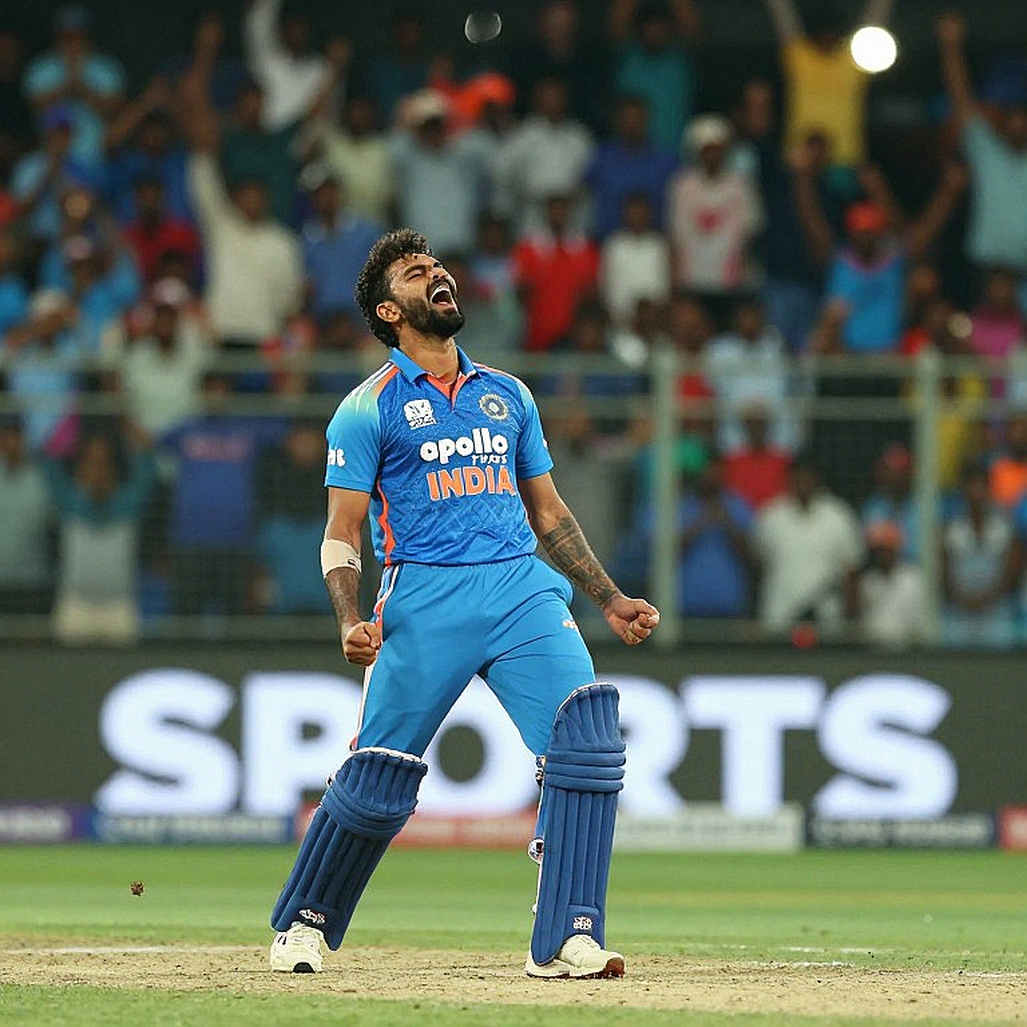
Eden Park's characteristics are well known: exceptionally short straight boundaries (roughly 55 metres), wind, and a ground where high scores and successful chases have historically been common. Failing once in a chase at such a venue does not prove a structural weakness. A basic rule of cricket analysis is that a single innings sample cannot support a verdict on a team's ability to chase under pressure.
The correct conclusion is therefore narrow: India lost one innings at one small ground, where middle-over acceleration or death-over execution may have broken down. That is a signal, not proof. At least three innings of evidence are needed before any technical judgement.
Shreyas Iyer's remark: what "learning curve" says and does not say
After the defeat, Shreyas Iyer described it as a learning curve. The statement is humble, measured and team-friendly — but it carries almost no technical information. It does not say which phase failed, which bowler built the pressure, or which shot selection was wrong.
Such remarks should be read as sentiment signals, not technical ones. For any player, immediately after a loss, this is the safest available vocabulary: it blames neither the individual, nor his teammates, nor denies the opposition credit.
Look at Iyer's role and the picture becomes slightly clearer. In this Indian T20I side his job is middle-order acceleration, where the key metrics are strike rate against spin in overs 7 to 15 and boundary-hitting at the death. "Losing the way in the chase" points directly at that role. But the available material does not say what his individual contribution was in that innings. So he can neither be blamed nor exonerated — and doing either would not be professional analysis.
The one-day gap: the most concrete fact in this report
There is a one-day gap between the fourth and fifth T20Is. This is the most useful fact in the entire subject, and it matters more than the result.
A 24 to 48 hour turnaround inside a five-match series compresses recovery, travel and net sessions together. In practice this pushes selection logic away from form and towards workload. When the result has no bearing on the series and recovery time is short, playing the frontline fast bowlers in both matches back to back is hard to justify.
The risk here is practical, not theoretical. In a match with no competitive meaning, a muscle injury to a frontline quick would be the clearest possible example of avoidable load. Boards and team management have exactly one remedy: clear, pre-planned rotation.
Rotation and bench depth: India's real advantage
India's bench depth is the global benchmark. The direct consequence is that even a rotated Indian XI in a dead rubber remains a competitive XI — something not every side can say.
New Zealand's position is different. Depth beyond the top order is comparatively thinner, the pace attack depends on a small core, and the spin leadership rests with Mitchell Santner. This means rotation costs New Zealand more — and hands India information almost for free.
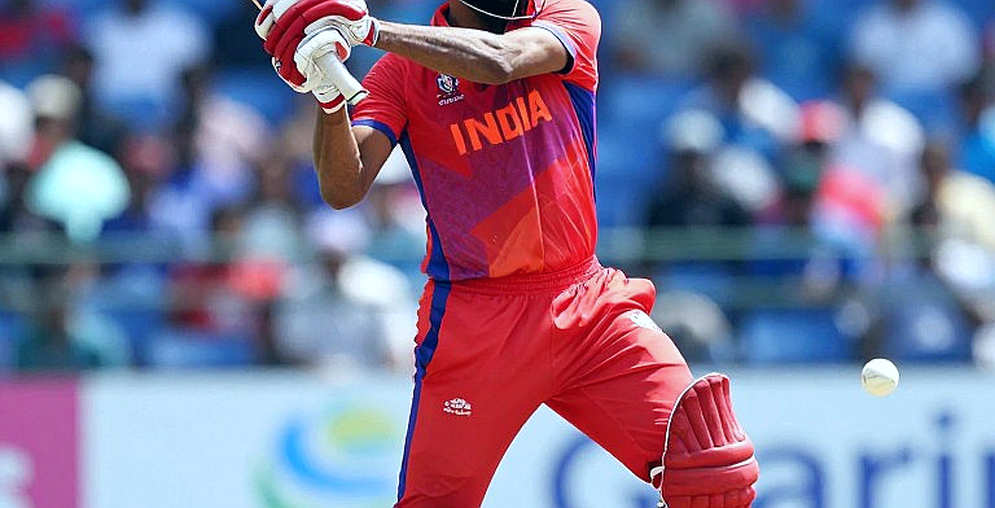
That is the practical significance of this match. The real product of a dead rubber is not the result but the information about which reserves can convert exposure into performance under match pressure. India have an almost cost-free opportunity to gather it; New Zealand pay more for the same.
Santner's captaincy: evaluation at low cost
Mitchell Santner is New Zealand's captain, and that fact matters in itself. The final match of a decided series is an opportunity to assess captaincy without the pressure of outcome.
Santner's dual role — captain and frontline left-arm orthodox spinner — is tactically load-bearing. At a ground with Eden Park's short straight boundaries, defending an economy rate is structurally harder for a finger spinner. That is a genuine tactical tension, though the venue for the fifth match is not confirmed in the available material, so whether it repeats cannot be stated.
The match is also useful for New Zealand's planning for their next global-event cycle. Collecting captaincy data in a low-stakes environment is always easier than doing so in high-stakes fixtures.
Ranking points: the only formal stake left
ICC T20I ranking points apply in dead rubbers too. That is the only formal competitive incentive remaining here — small, but real. The effect is not immediate, but it reaches seeding and group allocation at global events.
By contrast, this match has zero impact on the series outcome. That is why it is more rational to view it through reputation than through competition.
The "fightback" narrative: what the headline says and what the facts say
New Zealand's response is being called a fightback. But that headline rests on exactly one match — while India built a 3-1 lead on three consecutive wins.
In sample terms this is not enough. One T20I win at a small home ground is not evidence that the balance of the contest has shifted. India against New Zealand is not a rivalry layered with psychological or external pressure; it is competitive but calm.
So "fightback" should be treated as narrative colour, not analysis. Live coverage has a built-in incentive to generate tension and retain readers — normal media behaviour, not a genuine signal about the teams.
The gap between headline and ground reality
The most balanced sentence in the available material is that India are unlikely to dwell on the defeat. That claim is defensible because it is hedged and consistent with the series state. But it must be said plainly: it is still an opinion, not reported fact.
As for Iyer's remark, it should be seen as doing double duty: it projects humility to the public while declining to disclose any tactical specifics. It should not be taken as evidence that India have identified a concrete problem and found the fix.
The fifth match: what to watch
One — the toss and XI announcement. Three or more changes from the fourth T20I would be a clear signal that both sides are prioritising rotation and the result carries little weight.
Two — fast-bowler workload. If a frontline quick plays both the fourth and fifth matches, that is a notable workload decision inconsistent with best-practice rotation in a dead rubber.
Three — the venue and its dimensions. If it is not Eden Park, the interpretation of the fourth match shifts as well: the defeat would look less like a form signal and more like a venue-specific effect.
Four — the language after the series. If words like momentum or turnaround dominate, treat that as a contrary indicator, because a single home win in a 3-1 series is not proof of a shift.
Risk assessment
The most concrete risk is workload — a short gap, with the sharpest impact on fast bowlers. The second risk is interpretive, and larger in size: a live-blog format, no byline, and one emotional quote together create a false impression of substance when the data is zero.
The third risk is source opacity. The available material has the series state and one match result, but not the fifth-match venue, the toss, the XI, or any player statistic. All of it should be verified against the ICC and authoritative cricket databases before serious use.
To be clear: there is no betting, integrity or governance signal in this material. Saying so matters, because professional analysis requires checking for these and then recording their absence.
Conclusion
The real story of this match is not the scoreline. It is how two teams manage their resources in the final match of a decided series, with a one-day turnaround. For India it is a bench examination; for New Zealand it is a signal about captaincy and the next generation.
A 4-1 finish will not prove India are unbeatable. A 3-2 finish will not prove New Zealand have turned a corner. In both cases the most useful information will come from the changes in the XI — because those reveal which board put workload above the aesthetics of the scoreline. In cricket, over the long run, that decision matters more.