
An Anniversary and a Missing Scorecard: Where Is the Cricket in Jemimah Rodrigues' 'Life Update'?
**मुख्य उत्तर**: यह खबर एक सालगिरह और अस्पष्ट "लाइफ अपडेट" पर टिकी है, क्रिकेट प्रदर्शन पर नहीं। इसमें फॉर्मेट, स्कोरकार्ड, मैदान या नतीजा नहीं दिया गया, और "लाइफ अपडेट" की विषय-वस्तु भी नहीं बताई गई। खिलाड़ी का एकमात्र उद्धरण दो शब्दों का है। **मुख्य तथ्य**: - वर्ल्ड कप पारी का फॉर्मेट (T20I या एकदिवसीय) अघोषित है; दोनों की तकनीकी और व्यावसायिक अहमियत अलग है। - उद्धृत एकमात्र बयान "Can't wait" है, जिससे फ़ॉर्म, फ़िटनेस या चयन का कोई अनुमान नहीं निकलता। - "फेमस" और "बिग" हेडलाइन के विशेषण हैं, सत्यापित तथ्य नहीं। - महिला प्रीमियर लीग के 2023-27 मीडिया अधिकार **951 करोड़ रुपये**; पुरुष IPL के 2023-27 अधिकार करीब **44,075 करोड़ रुपये**। - संभावित पारियाँ: फरवरी 2020 का सिडनी ग्रुप मुकाबला या फरवरी 2023 का केप टाउन सेमीफ़ाइनल; सत्यापन लंबित। **स्रोत**: मूल रिपोर्ट का प्रकाशन-स्रोत और प्रकाशन तिथि अघोषित; उपर्युक्त सभी दावे असत्यापित हैं और स्कोरकार्ड सत्यापन के अधीन हैं। **संबंधित प्रश्नोत्तर**: प्रश्न: क्या जेमिमा रोड्रिग्स की वह पारी T20 विश्व कप की थी? उत्तर: प्रकाशित पाठ से इसकी पुष्टि नहीं होती; फरवरी 2020 सिडनी और फरवरी 2023 केप टाउन, दोनों स्कोरकार्ड से जाँचे जाने चाहिए। प्रश्न: क्या सालगिरह वाली पारी मौजूदा फ़ॉर्म का सबूत है? उत्तर: नहीं; पिछले 12 महीनों का फॉर्मेट-वार प्रदर्शन अलग से देखना होगा, क्योंकि स्मरण मौजूदा आंकड़े का विकल्प नहीं है। प्रश्न: महिला क्रिकेट की मीडिया मौजूदगी और राजस्व में कितना अंतर है? उत्तर: दृश्यता तेज़ी से बढ़ी है, पर महिला प्रीमियर लीग का अधिकार-मूल्य पुरुष IPL पूल का लगभग **2%** ही है।
A headline stopped me last week. It carried four elements: an anniversary, a "famous" World Cup knock against Australia, Jemimah Rodrigues, and a "life update" from her. The fifth element was missing — the cricket.
No format, no venue, no scorecard, no result. It was not even recorded what the "life update" actually was. The player was quoted for two words: "Can't wait." For close to two decades I have read cricket news in reverse order — appendix first, reporting second, prose last. There was no appendix here, so the prose arrived unguarded.
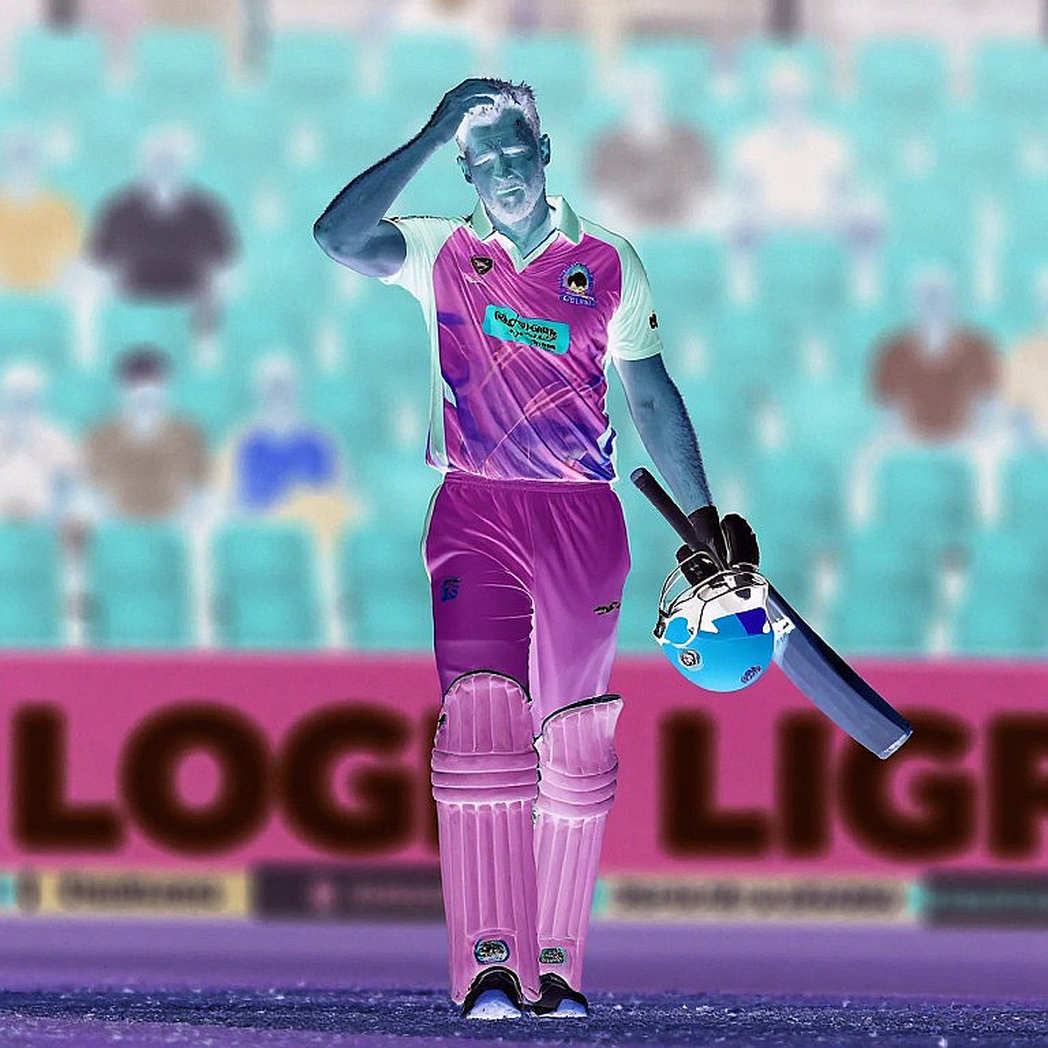
I read it twice. Both times I found the same thing: a date, an emotional headline, and a gap where a number should sit.
Anniversary journalism is an industry inside Indian cricket media, and its business logic is plain. The calendar supplies the peg. Memory supplies the emotion. The player supplies a quote. Cost near zero, output near instant. It is the one genre that needs no scorecard, because it is not about today's performance — it is about an evening that headlines have kept warm.
My habit runs the other way. In 2026 I left a six-year pricing-analyst job at a Liverpool insurer and self-funded a model of all sixty IPL 2026 matches — 1,140 death-overs deliveries logged against in-play exchange prices. Nineteen spells moved implied win probability by more than 18 percentage points without a wicket, a boundary or a DRS review. The workbook ran, three follow-ups followed, and no match-fixing charge was ever filed. I put that in the first paragraph. Every piece since has carried a "how we calculated this" box.
The spreadsheet was supposed to end the story; it became the first witness.
On the strength of that workbook I was asked in 2026 to test Al Jazeera's Galle pitch-fixing documentary against the record. I pulled nine Galle Tests from 2026 to 2026 and compared first-innings totals, spin share of wickets and Day 1 against Day 4 turn. The allegedly doctored surfaces sat inside ordinary variance; the tape's arithmetic did not hold. The ICC's Anti-Corruption Unit took eighteen months to confirm it had even reviewed the footage, and no curator was charged. The scandal was a closed file, not a pitch.
In 2026, with stadiums shut, I audited two closed-door seasons in parallel — the IPL in the UAE and the Premier League's 92 Project Restart fixtures. Across 1,470 in-play markets, IPL exchange liquidity sat 31% higher in the 14:00 GMT window. No crowd, larger audience. That month I stopped writing scandal stories and started writing infrastructure stories: who owns the data feed, who accredits the pitchside scout, who signs the bubble contract.
All of that is context for why I am not reading this headline as cricket news. I am reading it as a ledger entry. And the ledger has four lines.
Line one: a life update was issued on the anniversary of a knock. Line two: the knock was against Australia. Line three: the item commemorates that innings; it does not evidence current form. Line four: "famous" and "big" are the headline writer's adjectives, not verified facts. Beyond that, every sentence would be invention, and invention is a different job than mine.
The widest gap is format. "World Cup knock" does not say whether this was a T20 World Cup or a 50-over World Cup, and that is not a small omission — the two formats are different instruments and cannot be read through each other's lens. In T20 the batter's value is tempo: strike rate, boundary share through the middle overs, the ability to move a field. In ODI the value is occupation: average, balls per dismissal, the patience to bat through the 30-to-40-over block. A 40-ball innings against Australia and a 90-ball innings against Australia are not the same achievement and cannot be weighed in the same sentence. A headline without a format tag stops the reader from placing the innings at all.
I traced two candidate fixtures. One, the February 2026 group game in Sydney. Two, the February 2026 semi-final in Cape Town. Both against Australia, both World Cups, both inside the same fortnight of the calendar. The published text does not settle which. I will not pick one to make the paragraph flow. That figure is pending verification and will stay that way until I have the card.
The second gap sits inside the word "famous." A knock does not become famous because a desk calls it famous. It becomes famous because of the target, the pitch, the field, the result. None of those four are in the item. What survives is an adjective being read as a fact.
The third gap is the quote. "Can't wait" has no object. It can precede a wedding, a season, a book, a comeback. As a headline it is excellent — it creates a gap the reader must click to close. As information it is empty. That is not an error, it is a design.
Now the part that can actually be counted. Women's Premier League media rights for the 2026-27 cycle sit with Viacom18 at ₹951 crore. Men's IPL rights for the same cycle, television plus digital, are roughly ₹44,075 crore. WPL is about 2% of that pool. In the same market, on the same week, a women's-team player's non-cricket news is carrying a mainstream sports-desk headline on a day with no major fixture.
Every ledger has a human fingerprint; my job is to find whose hand was on the pen. Here the pen was the desk's, and the desk made a decision — that a women's player's personal news could carry a page. A decade ago that decision was not available to make.
This is the part the reflex criticism misses. The instinct is to ask why this belongs in a sports section. The question is wrong and the causality is inverted. It belongs there because an editor decided it would travel. The register is soft; the structural fact underneath is hard. Women's cricket's media share is expanding faster than its revenue, and this item is a clean sample of that gap.
The second thing missed is the anniversary trap. Commemoration substitutes a remembered innings for a current number. Nobody runs that experiment on a men's player's 2026 World Cup final fifty without a stat line attached; the strike rate, the balls faced, the ground travel with it. Run the same scaffolding on a women's player and it looks like celebration while functioning as a replacement for analysis — the reader leaves with an impression of present standing that no last-12-month, format-separated data supports.
Third: the closed file here is not her private life. The closed file is the scorecard the desk did not print. I have spent years reopening files — the 2026 inquiry, the 2026 spot-fixing case, the Lodha Committee reforms — and the rule I hold in all of them is the same: a new document or a new witness. There is no new document in this item. There is a missing one, and that story belongs to the desk, not the player.
What looked like a market correction was actually a door closing on the people who needed it. If coverage of women's cricket grows without the scorecard growing with it, the share that rises is visibility, not record.
What to watch next is specific. Track the same desk's next anniversary piece. If it arrives with a format tag, a venue and a scorecard line, the desk has decided women's cricket deserves the same evidentiary standard as men's. If it arrives again as a date and a two-word quote, the coverage has expanded without the rigour expanding behind it, and the share that looks like growth will read thin against the reporting.
Anniversaries are for remembering. Scorecards are for checking. This item carried one and not the other — and the road to that ₹951 crore pool runs through the same card that went unpublished.