
French Open 2026: Sindhu Beats Akechi in 73 Minutes, but the 20-22 Second Game Is the Biggest Question Before the Final
**मुख्य उत्तर**: फ़्रेंच ओपन 2026 के महिला सिंगल्स सेमीफ़ाइनल में पी.वी. सिंधु ने हिना अकेची को 21-10, 20-22, 21-16 से 73 मिनट में हराया और फ़ाइनल में विश्व नंबर 1 अन से यंग से भिड़ेंगी, जिनके ख़िलाफ़ उनका रिकॉर्ड 0-10 है। **मुख्य तथ्य**: - सेमीफ़ाइनल स्कोर 21-10, 20-22, 21-16; अवधि 73 मिनट — सिंधु का वर्चस्व केवल पहले गेम में दिखा। - दूसरे गेम में सिंधु 17-16 से आगे थीं और 20-22 से हारीं; आख़िरी नौ अंकों में से छह गए। - डिसाइडर में 15-16 से लगातार छह अंक जोड़कर 21-16; यह क्लच संकेत एक मैच के नमूने पर टिका है। - अन से यंग विश्व नंबर 1 और मौजूदा विश्व चैंपियन हैं; सिंधु के ख़िलाफ़ उनका रिकॉर्ड 10-0 है। - सिंधु का 2026 सीज़न: दो सुपर 750 फ़ाइनल, एक ख़िताब (जापान ओपन, जुलाई 2026); सुपर 1000 फ़ाइनल शून्य। **स्रोत**: Khel Now, फ़्रेंच ओपन 2026 सेमीफ़ाइनल रिपोर्ट। प्रकाशन तिथि स्रोत सामग्री में उल्लिखित नहीं है; विश्लेषण फ़ाइनल-पूर्व स्थिति पर आधारित है। **संबंधित प्रश्न-उत्तर**: प्रश्न: सिंधु का अन से यंग के ख़िलाफ़ रिकॉर्ड क्या है? उत्तर: दस मुक़ाबलों में दस हार; फ़ाइनल ग्यारहवीं भिड़ंत होगी और जीत सिंधु की पहली होगी। प्रश्न: सेमीफ़ाइनल में सिंधु का सबसे कमज़ोर हिस्सा कौन सा था? उत्तर: दूसरा गेम — 17-16 की बढ़त के बाद 20-22 की हार, यानी क्लोज़-आउट क्षमता की विफलता। प्रश्न: फ़ाइनल में कौन-से आँकड़े निर्णायक होंगे? उत्तर: पहले तीन शॉट की बढ़त और औसत रैली लंबाई, क्योंकि सिंधु का पावर मॉडल छोटी रैली पर निर्भर है और अन से यंग रैली लंबी करके उसे महँगा बनाएँगी।
My scoresheet has three lines on it — 21-10, 20-22, 21-16. In brackets: 73 minutes. Khel Now's semifinal report attaches one adjective to those three lines: 'outclasses'. Sindhu flattened Hina Akechi. The sheet said 4,112. The room said nothing. So I started counting.
In the second game Sindhu led 17-16 and lost it 20-22. In the decider she was 15-16 down. To call a match 'outclassing' when the loser drags a game to 22 points, you have to look away from the scoreline. I am not claiming her win was unexpected — I am saying the report's adjective and the report's score are not describing the same match. When a file opens with an adjective and closes on a number, my habit is to read it backwards.
French Open 2026, Super 750 level. Sindhu is 31, a two-time Olympic medallist, and this is her second final of the 2026 season — she won the first, the Japan Open, in July. Both finals are 750-level; there is no Super 1000 final this season. That detail does not come from opinion, it comes from the report's own counting, and it says something hard: the revival is real, but its calibration is 750. Against the 8-to-20 ranked field she is converting; the claim against the top four is still unfinished. That gap matters right before a final, because the final is the top four.
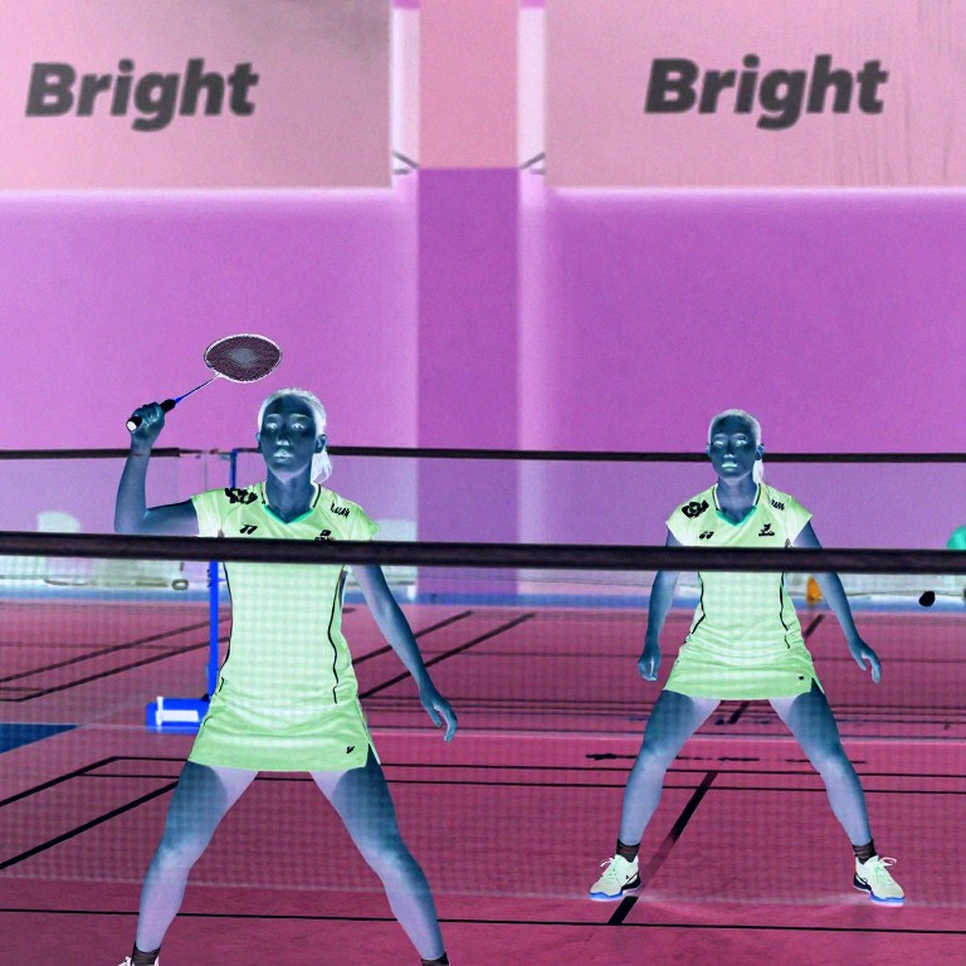
Across the net stands An Se Young — World No. 1, reigning world champion. And the number the report files like a footnote: head-to-head 0-10. Sunday's final will be the eleventh meeting, and a win would be Sindhu's first. They have already played twice in 2026 — the most recent evidence is also negative. Two losses in one season also means both camps hold fresh footage; An Se Young's team will not be hunting for new information, they will repeat the old prescription.
Game 1: 21-10. An eleven-point gap, and the only stretch of the match where 'outclasses' sits honestly. Sindhu's model is simple — tall frame, long levers, high smash contact point, short rallies. When the model runs, the score looks like 21-10. But that model belongs to the 2026-2026 women's singles meta. The currency of winning at the top has changed: defence into counter, and error suppression. Sindhu is standing in a contest where her weapon is still sharp, but the map of the court is no longer drawn in her favour.
Game 2: a 17-16 lead, then 20-22. Six of the last nine points went the other way. This is the most important event of the match and the report disposes of it in a line. Close-out ability — winning a game after 18-18 — is the decisive axis at top-four level. Sindhu lost a game precisely on that axis, and against an opponent who is not World No. 1. Against the lowest error rate in the discipline, that exact failure mode is the likeliest cause of defeat.
Game 3: 15-16 to 21-16, six points on the spin. That is a genuine clutch signal and it deserves credit. But the sample is one match, against an opponent who does not sit at the top of the rankings. Stringing six points from 15-16 is a skill; getting to 15-16 against the World No. 1 is a different examination. I keep a spreadsheet for the things that refuse to fit on spreadsheets — like what was going through a player's head at 15-16. A pattern built from one match is a prior, not a rule.
The style counter is clean. The power-attacker wins in the first three shots; the retrieval-and-control player wins by stretching rallies. Long rallies tax a tall frame — lunge, recover, lunge. An Se Young sits on the favourable side of that counter: No. 1 ranking, world title, all-court, low error. This conclusion does not come from a single report but from a durable style-matchup pattern — high confidence, but the status of a forecast.
The physical ledger: 73 minutes of three-game badminton, age 31, and a final roughly twenty-four hours later. The benefit of height is obvious, and so is the price. The report carries no smash speed, no average rally length, no unforced-error count — so the cost cannot be measured, only named. I will not invent a number the source does not have; but I can say that 73 minutes across three games means the average rally was not as short as Sindhu needs it. Annotating 1,200 rallies from the empty hall in Odense taught me that silence and noise are tactical variables too — deception sells in a full arena, not in a deserted one.
One more gap: the character of the 0-10 is unknown. Were the ten losses straight-games, or three-game knife-fights? There is no score data, so I cannot say whether the gap is wide or thin. That is the single largest information hole in this report, and it decides whether 0-10 reads as a structural problem or as a run of tight matches.
The report says Sindhu played most of the decider 'error-free'. Losing a game 20-22 and trailing 16-15 in the last game are statistically the opposite of an error-free performance. The adjective and the score cannot both be true; when they collide, I trust the score.
The second silence is on Akechi's tactics. A Japanese player dragged a top-10 opponent to 22 points in a game — almost certainly by extending rallies and attacking the backhand-side movement, not by out-hitting her. That is an inference, not a measurement. But if the inference holds, the blueprint for the final is already drawn: An Se Young will take the same route, only with a better error rate.
The biggest editorial miss is filing 0-10 as a footnote. Ten straight losses are not coincidence. That is the number that fixes the forecast for the final, and disposing of it in one sentence gives the report a convenient story, not a reader an understanding.
On Sunday, watch three things, all measurable: who wins the first three shots, how long the average rally runs, and whether the 17-16 looseness of the second game returns. If it returns, the semifinal's 21-10 converts straight into games lost. What looked like chaos was just a market with bad lighting; the scoreline is the lighting. My sheet says 73 minutes — the final will tell us whose account those minutes went into.